

Why Aldi Shoppers Complain About Goldhen Eggs
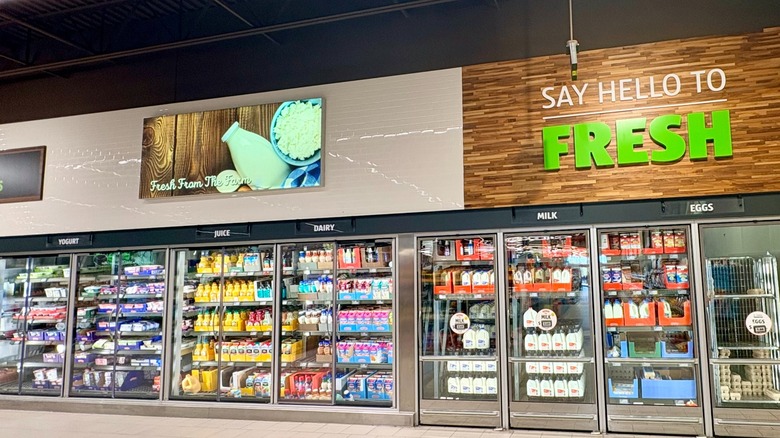
Aldi runs a tight ship. The grocery store's efficient supply chain uses a multitude of tactics to keep prices low. However, even in this model of meticulous streamlining, things can go awry. With Aldi's Goldhen eggs, according to some shoppers, things have gone awry. Goldhen is Aldi's store brand for cheaper, nonorganic eggs (for organic, the label is "Simply Nature"). The eggs come in regular, cage-free, and pasture-raised. The complaints about these eggs from customers are varied and are the reasons we have them on our list of foods you may want to avoid buying from Aldi.
First, customers have posted on Reddit that the label "Large Eggs" may not be correct. A few compared their Goldhen purchase with other brands that claim the same size and found the Goldhen eggs to be smaller. Other egg purchasers feel the size is inconsistent — one crate of "Large Eggs" will be medium and the next jumbo. Commenters on a Facebook post about the eggs reported the same problem. "My egg this morning was small, one a couple days ago was almost extra large," wrote one egg eater.
A second issue posters on Reddit have brought up is a change in the pasture-raised shell's thickness. "Have the shells on these eggs gotten noticeably thinner to anyone else recently?" asked a poster. Thin eggshells have several causes — two common ones are poor nutrition leading to calcium deficiency, and stress. These issues could point to the egg supplier for Goldhen, Rose Acre Farms, which has a poor track record of humane treatment of its chickens.
Some background on the eggs sold at Aldi
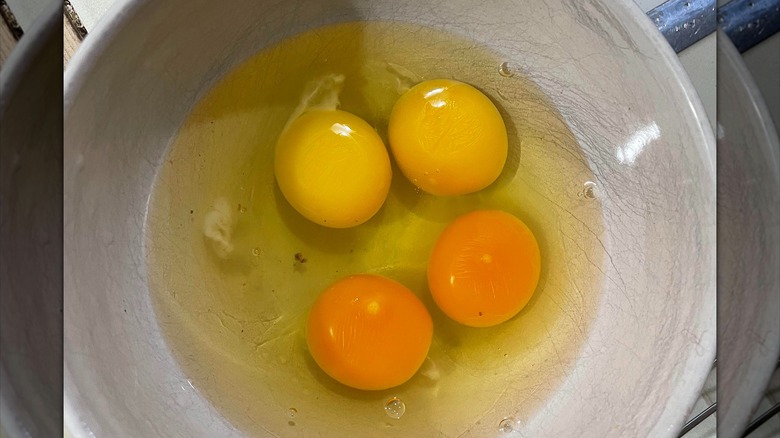
"Goldhen eggs from Aldi are a SCAM!" wrote an upset poster on Reddit with a picture of different-colored egg yolks in a bowl. In the comments, people pointed out that farmers can change the color of the yolks. Many shoppers believe dark yolks mean more nutrients in the egg due to a better, more natural diet from a pasture-raised hen. What it signifies is better marketing through added ingredients to the feed (like marigold) which dye the yolk. Terms like "cage-free" and "pasture-raised" sound humane but don't always mean much. Cage-free eggs come from chickens that aren't in cages, but can still live in crowded barns with no access to the outside. Pasture-raised is unregulated, but when included with a stamp saying "Certified Humane" or "Animal Welfare Approved," the term means each hen has 108 square feet of outdoor space and some indoor space.
Despite the company's presented image with a Bible quote on the package and a website saying it is "committed to animal welfare, food safety and quality, and sustainability," Goldhen's supplier, Rose Acre Farms, may not always live up to its lofty goals. The company has been found keeping chickens in overcrowded cages with rotting, dead chickens (via Humane World for Animals). Eight years after Humane World for Animals' investigation, a salmonella outbreak uncovered unhygienic conditions at one of the company's egg production facilities (via Food Safety News). This occurred after a 20-year fight against the USDA on its salmonella regulations (via Bloomberg Law). A paper from the Temple Journal of Science, Technology, and Environmental Law, reprinted in MSU's Animal Legal & Historical Center, found Rose Acre Farms used misleading imagery on its packaging. All this from the company that calls itself "The Good Egg People."