

The Difference Between Cinnamon Rolls And Cinnamon Buns, Explained
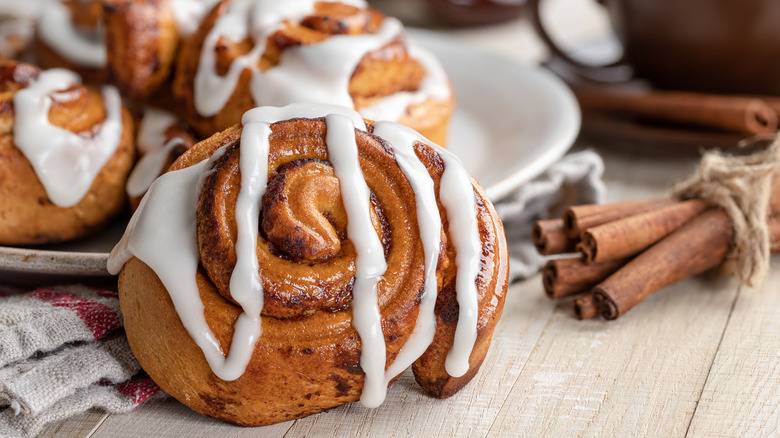
Soft, comforting, and filled with sugar, cinnamon rolls and cinnamon buns are popular pastries among lovers of sweet treats. But is there a difference between the two confections? Or are they simply separate names for the same sweet? While you may use the terms interchangeably, as the word choice often comes down to regional preference, there are some differences between the two.
These differences begin with how they're formed. Both use a yeasted sweet dough that is proofed and then filled with butter, cinnamon, and sugar before being shaped. Cinnamon roll dough is rolled into a log shape before being sliced and placed in a baking dish. Cinnamon buns, on the other hand, can be made into more unique shapes by twisting, knotting, or braiding the dough after it's been filled. The rolls or buns are then left to proof again before being baked.
Furthermore, some cinnamon buns are sometimes baked over a layer of brown sugar, butter, and chopped nuts like pecans. Once finished, the pan of cinnamon buns is turned out onto a plate, with the syrupy topping covering them. These buns are generally not topped with any type of icing. In contrast, once baked, cinnamon rolls are usually covered with a thick, sweet cream cheese frosting or a vanilla glaze. Both have roots in European baking traditions, notably those of Sweden (where cinnamon buns are called kanelbullar) and Germany. These recipes later spread to other parts of the world, including the U.S., with regional variations emerging.
From traditional to modern, cinnamon rolls and buns vary widely
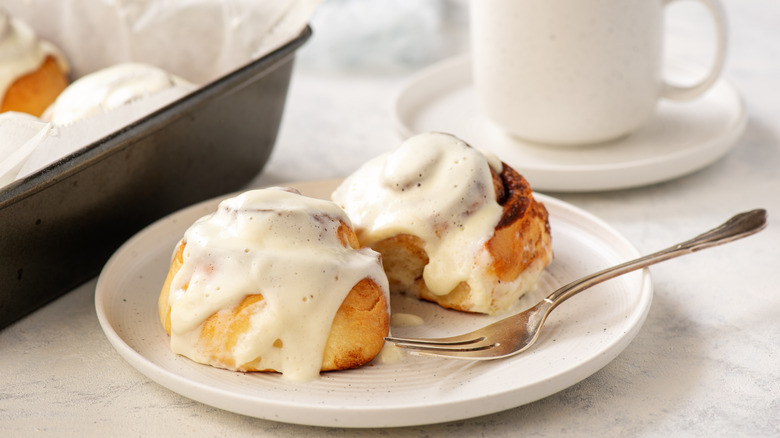
Having covered the differences between cinnamon buns and rolls, do either come in other variations? Or are their recipes, including toppings and fillings, pretty standard? Looking first at old-fashioned cinnamon rolls, the combination of a cinnamon, sugar, and butter filling, plus a cream cheese frosting or vanilla icing, is the most common. However, gourmet cinnamon rolls are increasingly popular.
These updated versions may use different spices, such as apple pie or pumpkin pie spice blends, or capitalize on food trends, like Dubai chocolate cinnamon rolls. There are even versions that replicate other beloved baked goods, such as carrot cake or red velvet cake. Interestingly, thick cream cheese frosting is a primarily North American addition. Those made in other places, like Sweden, are often topped with pearl sugar instead.
Cinnamon buns are also commonly seen in their traditional forms, though some variations feature a topping of butter, brown sugar, and nuts. A simple twist involves adding maple syrup to the topping mixture for an extra layer of flavor. As with cinnamon rolls, other spices may also be incorporated, such as cardamom. Currants or raisins are sometimes added to the filling or topping as well. Ultimately, both cinnamon roll and cinnamon bun flavors can be adjusted to your tastes. You can also find other variations of these treats to try, like honey buns and British Chelsea buns.