

5 Downsides To Gas Grills
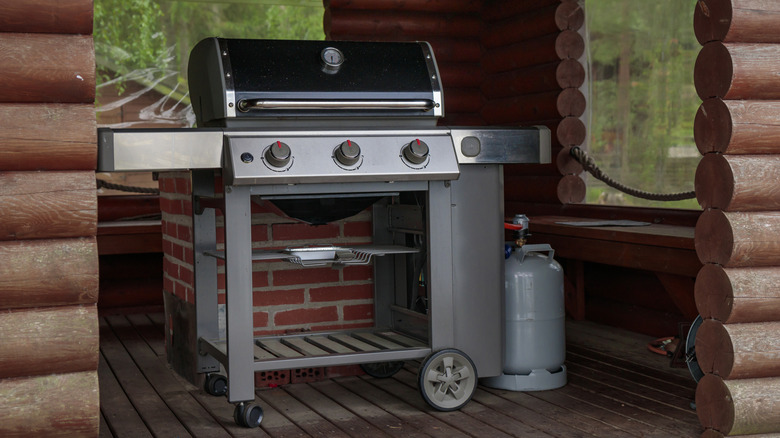
Gas grills are a popular choice for a number of reasons. They're convenient, easy to use, and, in the words of a famous salesman of propane and propane accessories, you can taste the meat, not the heat. But that last one is a matter of taste that not everyone may agree with, and some of these subjective opinions can actually become downsides.
Many consequences flow downstream of a gas grill's choice in fuel, and some are more objective than whether or not one likes the smoky flavor of charcoal. And since they can be such a significant investment, it's important to weigh the pros and cons before locking into a decision.
If not handled correctly, these downsides can negatively affect everything you cook, from undercooking meat to starting grease fires. And while a grease fire is one of the last problems any grillmaster wants to deal with, this is perhaps never truer than with a gas grill.
Price
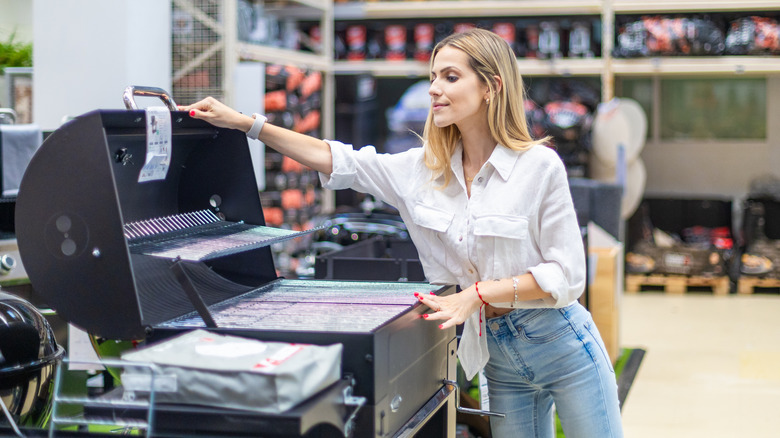
Gas grills are generally more expensive than the charcoal competition for one obvious reason: They're far more complex devices. Among other additions, gas grills have ignition systems, burners, and valves that all cost money to make. Charcoal grills have none of that; they're simpler to make and sell for less.
The story doesn't end there, though. Over several years of use, gas grills are likely cheaper to operate. Usage varies by grill size and cooking method, but the average lifespan of a grill's propane tank is about 20 one-hour cooking sessions, while a 20-pound bag of charcoal yields half of that or less. If refilling a tank costs roughly $20, that's a big advantage — unless you have a line on suspiciously cheap charcoal. That's not the end of price considerations, either.
Assuming proper lifetime usage and upkeep, a gas grill is likely to have higher ongoing maintenance costs for the same reason it was more expensive to buy. Each additional component is a potential failure point in the future, one that might not only cost the money of a replacement part, but also a skilled technician to install it. You don't need safety certifications to fix a charcoal grill.
Limited cooking flexibility
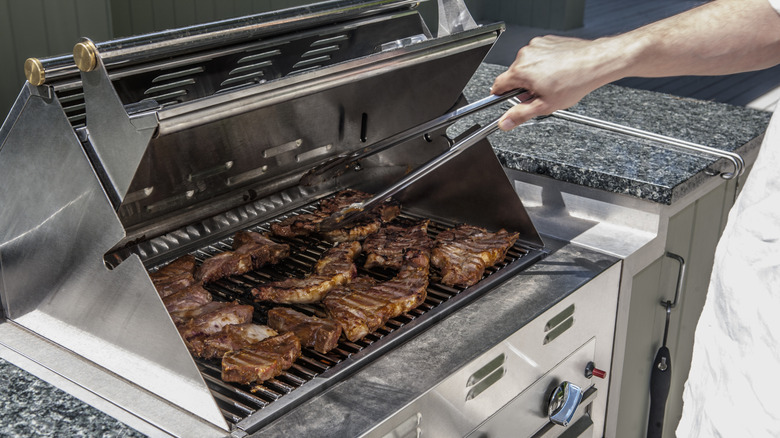
Any gas grill can reach perfectly suitable temperatures to cook almost anything one might grill, but it does have its limitations. A common gas grill's temperature range is about 225-600 degrees Fahrenheit, whereas a charcoal grill can cook as low or high as you want — well past 1,000 degrees Fahrenheit (essentially as hot as the metal can take).
Such scorching temperatures can be great for cooking steaks in a flash, as high heat is one of the best tips for cooking steakhouse-style steaks at home. A common charcoal grill probably won't reach the temperatures of a steakhouse broiler, but it's the easiest way to get close without buying an infrared-capable gas grill.
Gas grills arguably fall short on indirect heat as well, essential for large cuts like pork shoulder and brisket. With gas, it's as easy as turning only the middle burner off, but there's a greater possibility of briquette arrangements with charcoal for more custom results, like ringing food with charcoal or making a slow-burning snake for extra-long sessions.
Grease buildup and disposal
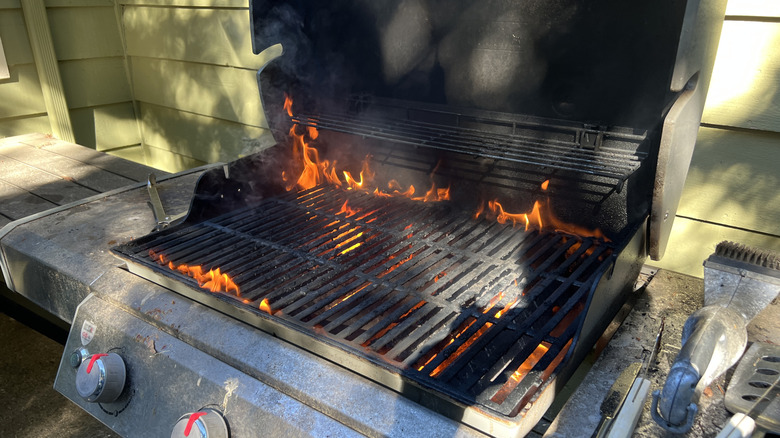
Grease is a natural byproduct of cooking meat, and it's an unavoidable fact of grilling. When excess grease drips down into a grill — gas or charcoal — it causes flare-ups. These brief rises in the flame level are less common on gas grills, thanks to the heat plate covering the burners (which also helps to distribute heat), but there's a downside to this advanced fire management.
Gas grills also have more spots where excess grease can build up and must regularly be cleaned, including the heat plate, burners, drip trays, and grease traps. Failure to do so increases the chances of a grease fire. In comparison, although a charcoal grill should also be cleaned regularly, most of the excess grease burns up on the coals while cooking.
Once the gas grill has been degreased, the grease itself must be disposed of, another step charcoal grills largely lack. Take it either to a recycling center with the facilities to process used cooking grease, or in a sealed container with household trash. And while she's usually one to emulate for household matters, don't copy Martha Stewart's (one-time) unconventional choice for grease disposal: dumping it on train tracks.
Greater safety hazards
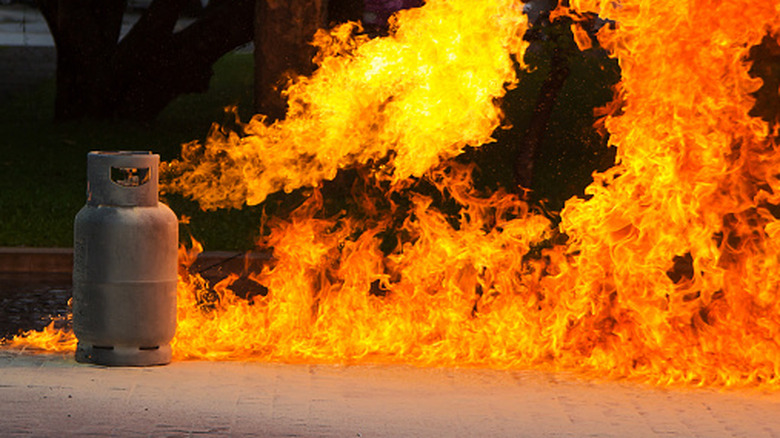
The most obvious thing that sets gas grills apart from charcoal is their fuel source, most often a small tank of propane. It's easy to safely use and maintain a grill's propane tank, but it's still a highly pressurized can of flammable gas. Propane leaks, fires, or explosions can be significantly more destructive and lethal than a non-explosive bag of charcoal.
To mitigate these severe risks, strict safety protocols must be followed. Among these are to check the tank and valves for rust, dents, or other damage before each use. Be vigilant for the rotten egg-y smell of propane, which should never be present. And always be sure to turn the valve all the way off when cooking is complete.
It's not just using the tank — it's also storing it. Strict handling and storage guidelines are needed to mitigate their explosive potential. Keep the tank outdoors, where complete ventilation eliminates the risk of fume buildup. Store it upright on a flat surface. Keep it out of direct sunlight and extreme weather conditions — but do not, under any circumstances, bring it inside. These are only some of the safety rules with propane tanks; they're easy to follow, but charcoal is a lot simpler.
Flavor complexity
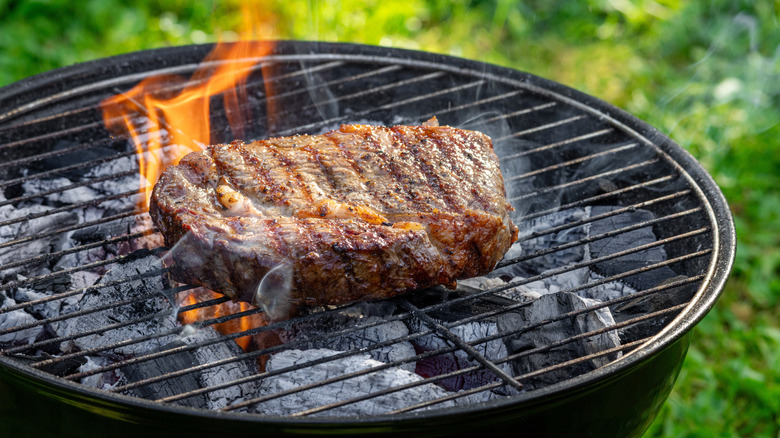
Nobody is denying that good food can be cooked on a gas grill, but a charcoal grill has greater flavor potential for two reasons — the first being the fuel itself. Despite the name, you can also cook with various woods in a charcoal grill, either by itself or in combination with charcoal. The different coals or woods each carry their own unique flavors through reason number two: the smoke.
Charcoal grills give smoky flavors to certain foods that a gas grill simply cannot replicate, because gas fires do not smoke. The flavor difference may not be apparent in fast cookout fare, as taste testers have found that the difference is indistinguishable among quickly cooked foods.
It is, however, more apparent in denser cuts of meat like pork shoulder, which benefit from the longer time they need to cook. The fire's smoky flavors also need time to soak into the food. It can be mimicked on a gas grill by buying or making your own smoker box with aluminum foil, but it's not the quite the same. Charcoal grills develop more complexity from direct combustion of the wood or coals. You don't get that from a clean burning fuel.