

Butter Vs Cooking Spray: Which Is Best For Greasing Cake Pans?
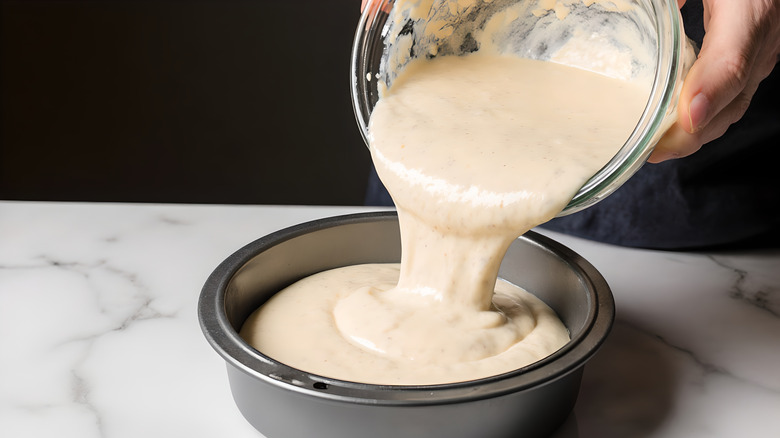
Baking the perfect cake may very well be a daunting task in itself; from mixing just enough until no lumps form without overbeating the batter into a dense and tough mess, or choosing the right pan for your cake recipe for a consistent bake. But even the most perfectly executed sponge will suffer if you don't grease the pan properly. What's more nightmare-inducing than a beautifully baked cake that refuses to release itself from the pan?
To solve this problem, home bakers have traditionally turned to the practice of smearing softened butter inside the cake pan (making sure to get all the crevices), followed by a dusting of flour that forms a protective barrier between the cake batter and the pan itself. However, another popular cake-release alternative used by home bakers and professionals alike involves coating your cake pan with cooking spray and proceeding with the flour dusting. Between the two, which is better? While butter gives cakes a delicious flavor, we recommend cooking spray once again as the better cake pan-greasing method in terms of consistency, ease of use, and reliable release for practically every style of cake.
Cooking spray provides an effortlessness, clean, and seamless application that just cannot be beat. Most cooking sprays utilize plant-based oils (such as canola or vegetable oil) combined with lecithin, an emulsifier added to make sure the oil sticks smoothly and evenly to your cake pan walls without pooling at the bottom. The same can't be said of melted butter, as brushing this fatty liquid can result in uneven application and a pool of butter at the bottom of the pan.
Cooking spray takes the top choice as a preferred way to grease a cake pan
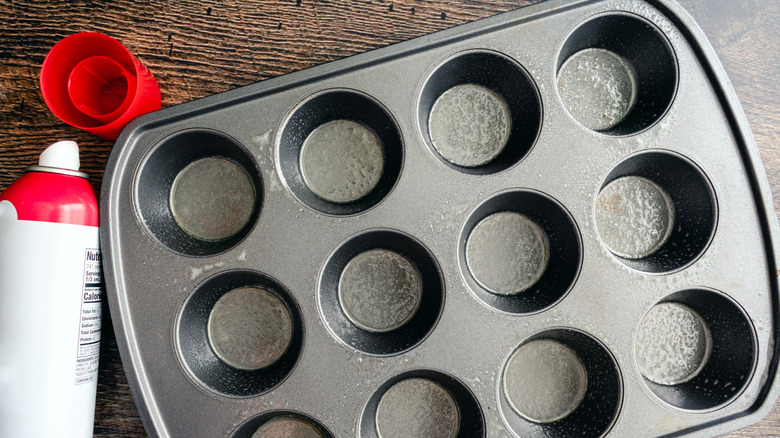
When you spray a cake pan with cooking spray, it creates just enough of a liquid barrier between the metal and the batter to prevent stickage. Unlike butter, which contains water and milk solids that can brown prematurely or create greasy, sticky patches on the exterior of your cake, cooking spray allows the cake batter to grip the sides evenly for a perfect rise without sticking completely — yielding neat edges and a clean release.
While standard cooking spray is our top choice for things like cakes baked in round tins, square pans, and sheet cakes, it is worth noting that baking spray — a specialized option formulated for bakers that combines cooking spray with a bit of flour or starch — serves as a great alternative. Baking sprays are particularly useful when working with patterned pans like Bundt pans, geometric cake tins, or even mini cake molds with deep grooves or fluting. Ultimately, the added starch or flour in baking spray eliminates the messy step of carefully hand-flouring a pan after greasing.
Standard cooking spray provides the fastest, cleanest, and most effective solution for the big majority of cake baking needs. It saves time during cake pan preparation, leaving no sticky residue on the sides of your finished cake, and ensures your sponges slide out of their pans effortlessly. By keeping a can of cooking spray on hand, you guarantee yourself a stress-free release and perfect tear-free cakes every single time you decide to bake this specific type of sweet treat. Now that you know how to grease your pans properly, consider the most ignored cake baking advice we think you should follow.