

5 Downsides To Using A Drip Coffee Maker
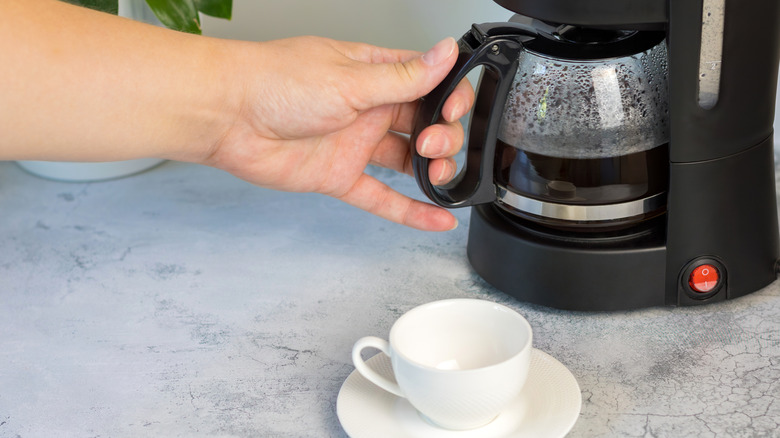
Coffee. Java. Mud. Whatever you call it, enjoying a nice cup of joe is the way a lot of people like to start their day. There are a truly astounding number of ways to make coffee, from the commonplace, like a French press or pour-over, to the more esoteric, like the Turkish method of heating sand to make the water boil. One of, if not the most, popular ways of brewing a cuppa is using a drip coffee machine, where heated water passes through grounds in a filter, and the resulting liquid drips into a pot. It's understandable why this method is so widespread: it's an easy and convenient way to make large batches of go-juice (have we run out of synonyms yet?) in a short amount of time. But despite its ubiquity, drip coffee is far from everyone's favorite. While there are things you can do to improve your home brew, there are still some clear downsides to this particular way of preparation. We've outlined a few of them below.
Lack of control
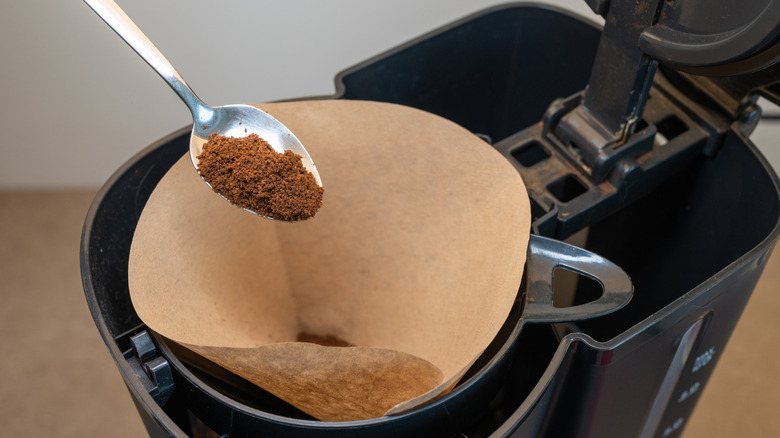
If you're a true coffee snob who is trying to wring the purest flavor from every bean, you are likely to prefer a different preparation than drip coffee. The reason for this is that you have less control over how the cup turns out than you would with other methods, particularly with the water temperature. While high-end machines can allow you to control the heat, your typical drip coffee makers don't have this functionality (though it should be noted that there are some models out there that do allow this). Unchangeable temperature settings can have an effect on the coffee's taste, with light roasts getting burned and dark roasts losing their complexity. As one coffee enthusiast on Reddit put it, "Most drip pots do not reach a sufficiently high temperature to fully extract the coffee. Only extracting the most easily soluble acids which leave you with a underextracted, sour brew."
Difficulty with cleaning
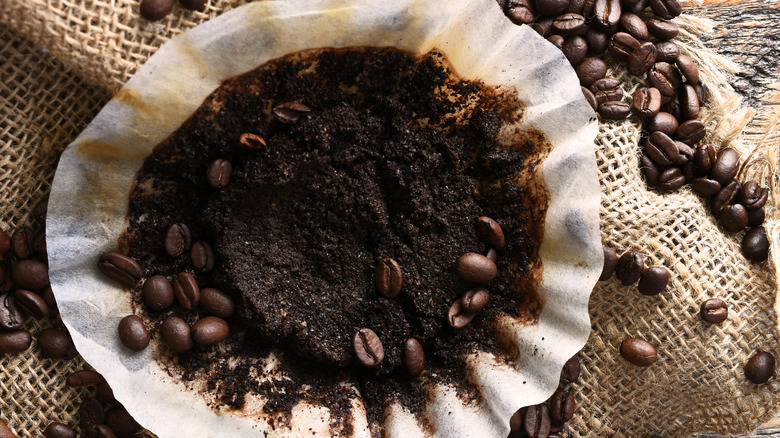
While coffee brewing methods like Nespresso definitely have their downsides, one advantage is that they're pretty easy to clean. On the other hand, drip coffee involves dealing with the damp grounds stuck inside the coffee filter after every brew. Sure, there are grosser things in life than having to scoop out a waterlogged paper and throw it in the trash, but it's still not the most pleasant way to clean a machine.
And that's not all the cleaning you'll have to do. While the majority of the coffee grounds go into the filter when you're loading the machine, it's inevitable that a few loose pieces will get into the nooks and crannies of the filter basket. Over time, these will build up, and you'll have to clean the basket out as well. When one Reddit user asked for the best method to clean their filter basket, responses included scrubbing with a toothbrush or stiff paintbrush, which doesn't sound like fun.
Potential plastic taste
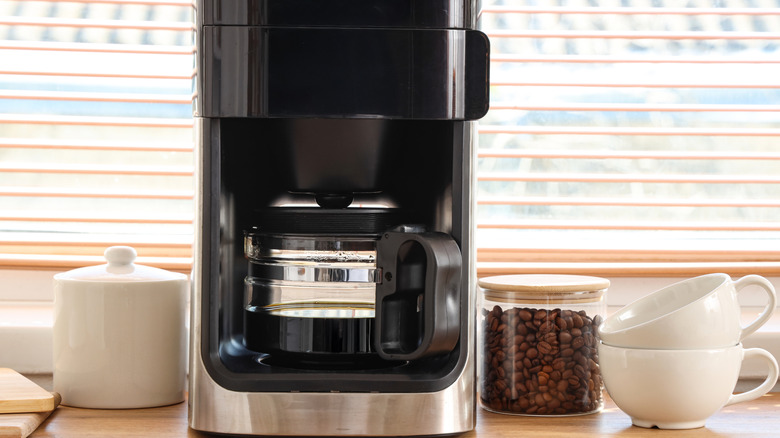
You might want to reconsider buying plastic coffee makers for a number of reasons. There are concerns about microplastics leaching from the components and into your bloodstream. There are also the challenges associated with recycling plastic. But one of the most obviously noticeable reasons to stay away is the potential for the taste it could be giving your coffee. Many drip coffee machines utilize plastic in their construction, and that material might be contributing to the flavor profile of the resulting cup.
A number of drip coffee users have expressed their frustration about this problem on social media, reaching out to ask the best way to avoid the plastic odor and taste. Ultimately, their best bet may be to get a different kind of machine. As one Reddit user noted, "If you're that sensitive to the taste of plastic, you'll probably have to get a glass or ceramic drip cone, or an all metal french press."
Stale coffee
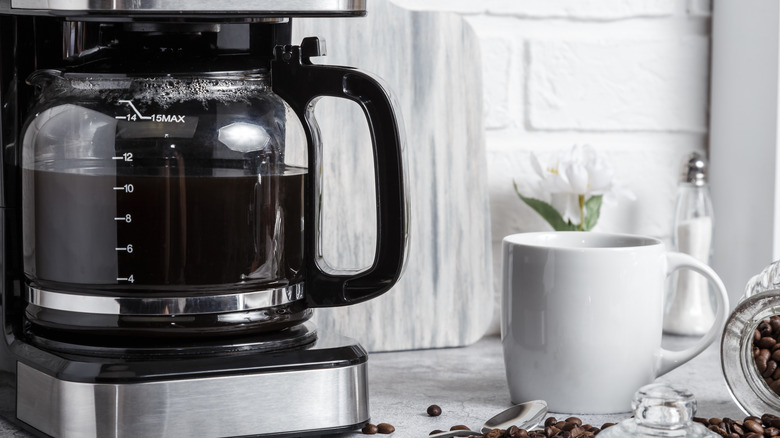
This next downside is just an inherent challenge with a preparation method that is designed for large batches. If you have a coffee machine that uses individualized cups, you're going to be getting a freshly brewed cup of coffee every time. If you're using a standard drip coffee machine, that's not necessarily the case. Most filter coffee machines are designed for making several cups of coffee at a time. That's great if you have a large group of people who all want to drink it right away, but it's less great if there are only a few takers and the remaining coffee sits there, growing stale in the pot. Eventually, someone will be drinking less-than-fresh coffee, or tossing the remainder before brewing more, which feels a little wasteful.
Of course, there are smaller models of drip coffee makers that are made for one person, but this isn't the standard. If you're looking for the freshest possible brew, you might want to consider another coffee-making method.
Low-quality machines
There's a reason that the stereotypical roadside diner is known for serving drip coffee instead of espressos or pour-overs. It's because drip coffee makers are a cheap way to produce large amounts of java fast. Of course, there are higher-quality filter coffee machines available, but the abundance of low-priced equipment on the market means that you might be rolling the dice with how your coffee turns out, and how long the machine that makes it lasts.
As one java aficionado put it on Reddit, "the proliferation of bad drip machines in America has given drip a bad name, which is unfortunate, because drip coffee can be quite good." Another user shared a cautionary tale about low-quality drip machines, saying: "My parents' [Ninja] coffee maker that they bought less than a year ago just sh*t the bed...The one they had before that also lasted less than a year...if you're eying a drip coffee maker (especially Ninja), think twice about buying it."