

10 Thanksgiving Dishes That Younger Generations Don't Understand
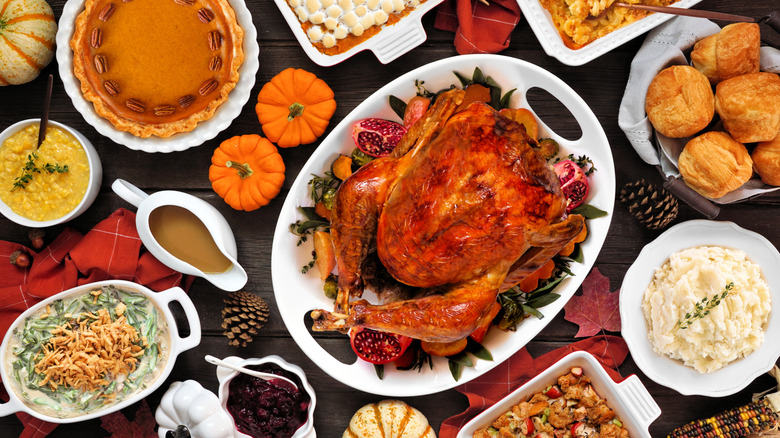
Thanksgiving is all about tradition — especially when it comes to food. At the vast majority of Thanksgiving dinners, you'll likely find a host of dishes that have been served year in, year out, for generations: roasted turkey, mashed potatoes, green beans, and pumpkin pie are all staples of this feast. That doesn't mean they haven't changed over time, though. Throughout history, new food traditions have been created, while old ones have fallen out of fashion. The result is a lost menu of sorts: A selection of Thanksgiving dishes your grandparents might remember fondly, but which you or your kids may have never even seen.
Many of these dishes are just as embedded in the traditional flavors of the holiday, but they deliver them in different forms. Desserts like fig-and-cranberry pie or sides like corn pudding may feel instinctively familiar, but offer more antiquated flavors that speak to another time. Others, like scalloped oysters or tomato aspic, highlight food trends that have since taken on an antiquated feel. Pull up a chair with the older members of your family, and check out some of the dishes they may have eaten on Thanksgivings past.
Ambrosia salad
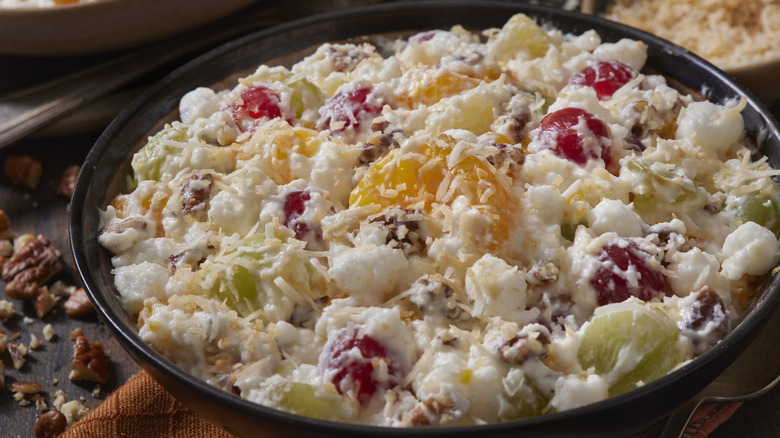
While pumpkin and pecan pie may be the predominant Thanksgiving desserts today, another sweet dish once ruled the roost. That dish was ambrosia salad (also known more simply as ambrosia), a fruit salad which started appearing on menus in the late 19th century, and which over time revealed itself to be an amorphous and adaptable menu item. Ambrosia salad, which is also closely associated with older Christmas menus in the South, first developed due to the then-rapidly-increasing availability of oranges and coconuts, which in the 19th century were still considered unique and exotic. As such, in its earliest forms, it was a simple concoction of oranges, grated coconut, and sugar mixed in a bowl.
As time went on, ambrosia salad developed to incorporate more fruits like pineapple, banana, and cherries, as well as additions like marshmallows and heavy cream. Exactly when it became associated with Thanksgiving is unclear, but its use of harder-to-find ingredients demarcated it as a dish for special occasions — and now, plenty of people remember eating it as children, or their grandparents whipping it up. These days, though, it's hardly a staple of Thanksgiving meals.
Mashed turnips
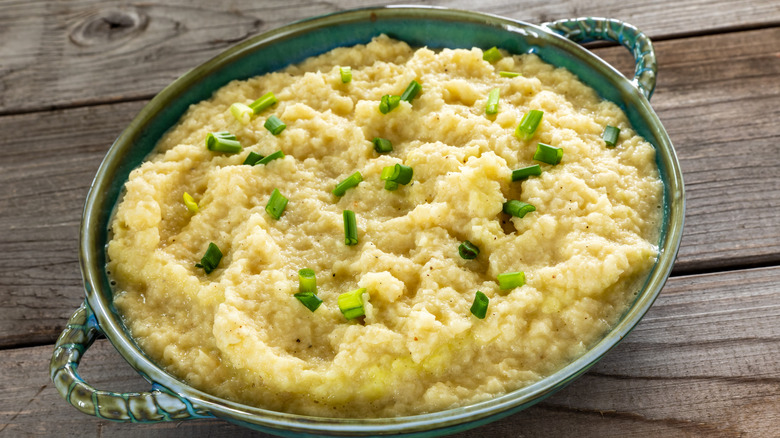
Potatoes and sweet potatoes aren't the only vegetables you can mash. A less-common, more old-school side dish of Thanksgivings past was mashed turnips. Mashed turnips appear frequently on Thanksgiving menus from the late 19th and early 20th century, and while the modern perception of turnips can be of a lumpy, inexpensive, somewhat unappealing vegetable, the mashed version was a feature of both hotel dinners and home-cooked feasts. In fact, they may have even been served at the first Thanksgiving: According to Smithsonian Magazine, historical sources point to turnips being grown in gardens planted by English colonists as early as 1620.
While some people may still serve mashed turnips at Thanksgiving, they've arguably been overtaken by other mashed vegetables. Now, folks are far more likely to serve up a bowl of steaming mashed potatoes rather than the butter-infused mashed turnips their grandparents would cook. Having said that, it's a dish that carries a real sense of nostalgia for some.
Scalloped oysters
Seafood is now less common on Thanksgiving tables, but this wasn't always the case. Back at the turn of the 20th century, one type of seafood in particular could be found everywhere: oysters. Oysters were abundant in waters in the American Northeast during the early 1900s, and they were way more common (and a lot cheaper) than they are today. Despite their ubiquity in this part of the country, however, elsewhere they were viewed as more luxurious, due to the difficulties of transporting them safely across the nation.
These two traits came together at Thanksgiving in dishes like scalloped oysters. This simple but special dish (which would sometimes feature other seafood like crab) combined fresh oysters with butter, milk or half-and-half, crackers or bread, eggs, and flavorings like Worcestershire sauce, before being baked. The result was a rich, creamy, hearty casserole that balanced out the land-bound dishes on the table with a touch of brininess. As the years rolled on, oysters started to be valued as a delicacy, and they gradually disappeared from Thanksgiving tables. If you want to give your dinner a pop of old-school class this year, though, you know what to make.
Corn pudding
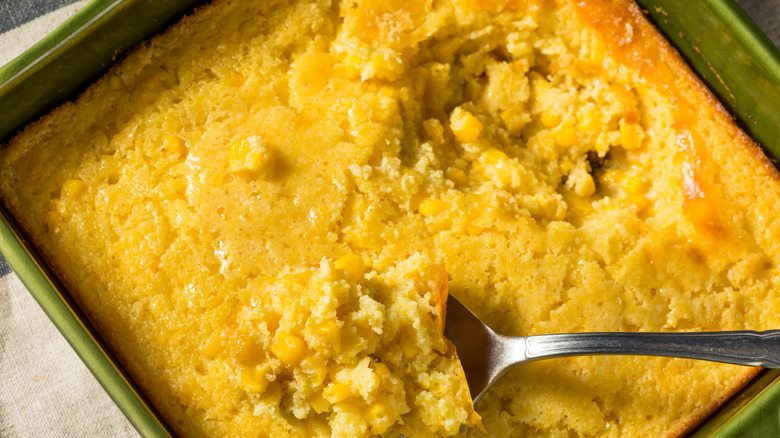
Corn pudding is one of those old-school Thanksgiving dishes you may well have tried. Although it's certainly not a staple of every Thanksgiving table these days, the fading of its popularity has been slower and more recent than other retro menu items, and some people still lean into its old-school nature and make it today. In a sense, it's one of the oldest Thanksgiving dishes. In New England, the earliest Thanksgivings featured a dish known as "Indian pudding," which is thought to have developed from British hasty pudding, and which was made with cornmeal and molasses.
As time went on, corn pudding began to incorporate refined sugar, eggs, and spices, and spread to other parts of the country. It subsequently became a dish that many families made their own versions of, passed down from generation to generation. Other forms, like cream corn casserole, also began to appear — and arguably became way more popular than this more vintage dish. Now, traditional forms of corn pudding are few and far between, but it's not difficult to make if you want to revisit the past.
Chestnut stuffing
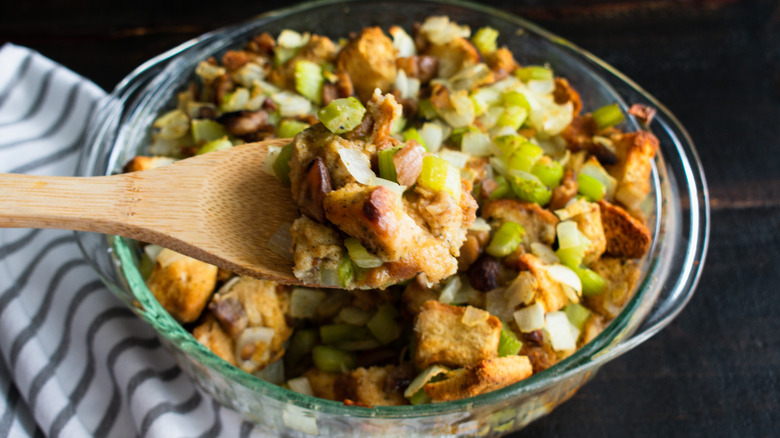
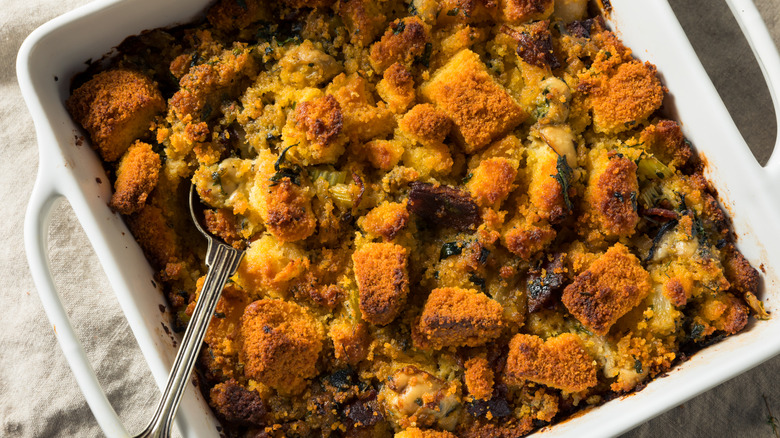
Thanksgiving stuffing may not be going anywhere, but chestnut stuffing has definitely taken a backseat. Chestnut stuffing was especially popular during the first half of the 20th century, particularly during the Great Depression – which is hardly surprising, given how abundant and inexpensive chestnuts were during the early 1900s. Before boxed stuffing was everywhere, chestnut stuffing was the traditional choice, made with roasted chestnuts and combined with croutons, eggs, stock, and herbs before being baked.
Then, two things happened: Instant stuffing mixes surged in popularity, and chestnuts became harder to find. The chestnut blight in the early 20th century significantly decreased the population of trees in the Eastern United States, and the appeal of more convenient cooking methods was just too strong. Now, though, if you have the time, chestnut stuffing is definitely worth the effort. It has a chunkiness and a full-flavored nature that makes it way more hearty than stovetop stuffing, and it's also arguably more satisfying to make.
Tomato aspic
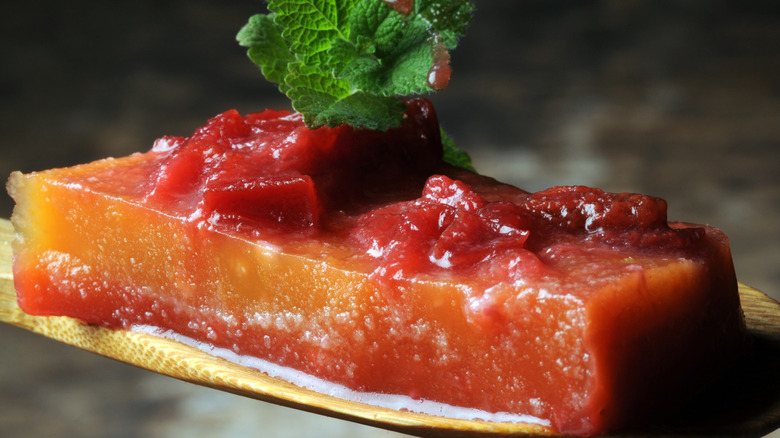
One of the more curious old Thanksgiving dishes out there is tomato aspic — and one of the more curious moments in American food history is the rise of aspic itself. Molded, shaped dishes held together with aspic or gelatin were bizarrely common in the mid-20th century, and a form made with tomato juice, gelatin, and various seasonings like lemon juice and Worcestershire sauce emerged as a Thanksgiving favorite. Also known as tomato jelly salad, this forgotten retro dish (which was particularly popular in one state) brought a touch of mid-century flair to any Thanksgiving table, and this savory side dish was a chance for home cooks to show off their artistic skills.
However, it's probably no surprise younger generations are somewhat haunted by tomato aspic, in all its strange, vintage glory. "When I was little my aunt would bring this to every Thanksgiving but would serve it with a dish of mayonnaise in the center," said one person on Reddit. "I still have nightmares." It's highly unlikely that tomato aspic will ever make a comeback, but if you're planning a Thanksgiving built around kitschy old-school dishes, it should be at the top of your list.
Fig-and-cranberry pie
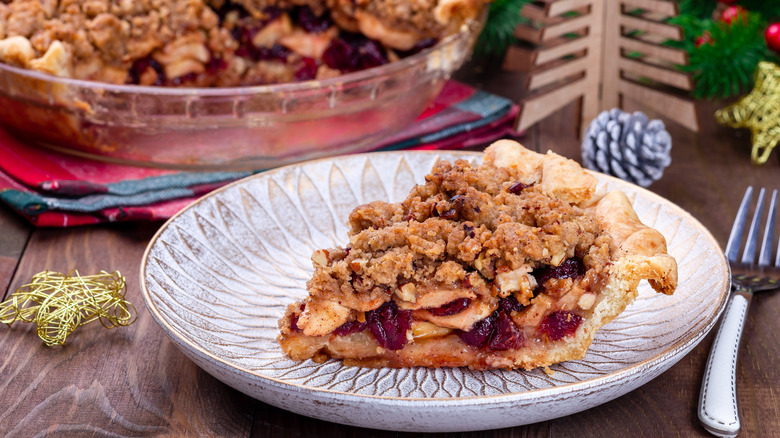
Fig-and-cranberry pie may not be the most popular vintage Thanksgiving dish, but it's one your grandparents may remember. This dessert falls within a rich tradition of pies and tarts at Thanksgiving, which have been present on festive tables since the very first iterations of the holiday, in both sweet and savory forms. Fig-and-cranberry pie is, of course, a sweet version, and its incorporation of cranberries was also a common move: The berry has frequently been added to pies throughout Thanksgiving's history.
Fig-and-cranberry pie, which appears in cookbooks in the early 1920s, also makes use of another fruit that's in season during fall. As such, it's a good example of how many traditional Thanksgiving foods are built around seasonality and what was fresh during the later months of the year. Nowadays, of course, it's a fairly rare find at a Thanksgiving dinner table, and pies tend towards being way sweeter and slightly less fruity — while cranberries are more typically found in a jellied sauce. It's a lovely dish to cook if you prefer desserts built around fresher flavors, though, and it's not difficult to put together.
Apple and grape salad
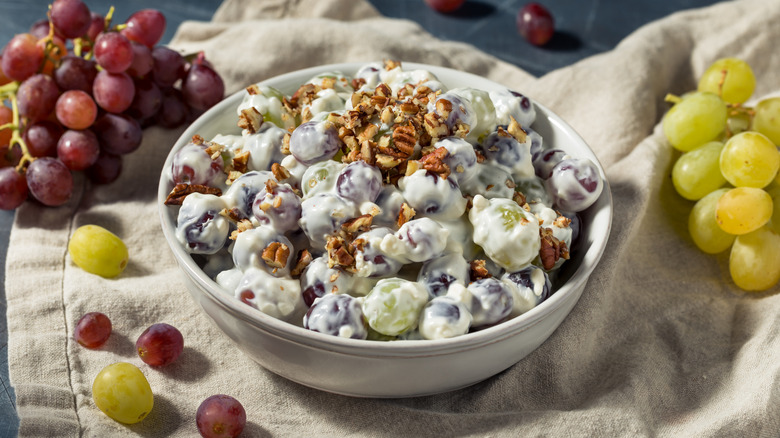
Apple and grape salad is arguably one of the most obscure Thanksgiving dishes around — so much so that even your parents or older relatives might not remember it. This side dish appears in 1921's "American Cookery" as an option for formal Thanksgiving dinners, and over time, it's shown up in various iterations on Thanksgiving and Christmas tables, but never as a particularly standout feature. Perhaps that's because it doesn't have the same wow factor as other desserts, including other fruit salads like ambrosia.
In our opinion, that's a shame. Apple and grape salad may not be extravagant, but it has a few traits that make it a worthy addition to a Thanksgiving table. First, it takes advantage of two seasonal fruits; second, it's the work of mere moments to pull together. It's also incredibly adaptable: Generally speaking, it's a combination of sliced grapes and apples, whipped cream, pecans, and some form of sweetener, but it can also incorporate other fruits, shredded coconut, spices, or whatever you have on hand. It's not a showstopper, but it's definitely reliable.
Plum pudding
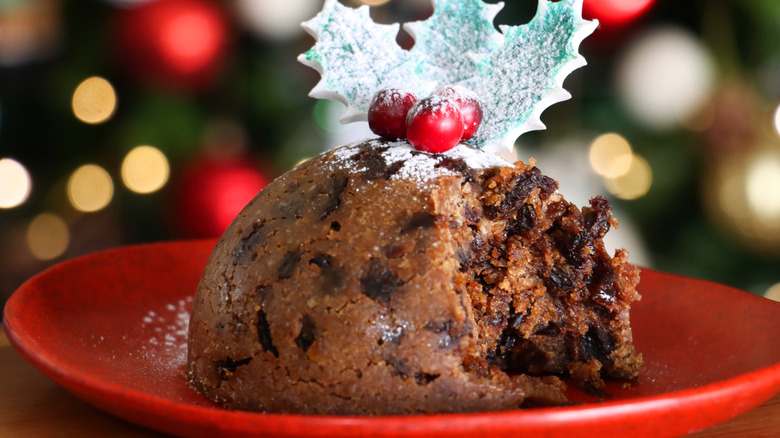
Of all the desserts served at former Thanksgivings, plum pudding might be the most antiquated, purely in terms of how it looks and feels. Plum pudding has its roots in British cuisine, and in its country of origin, it dates back to the early 15th century. It was traditionally a Christmas pudding, and it remains more associated with that holiday — but it's also been a feature of Thanksgiving tables since the late 18th century. It was especially common as an option on formal Thanksgiving menus in the late 19th and early 20th century, and it was often served at restaurants and dining halls.
Perhaps it's no surprise plum pudding is now way less common, though. This is a boiled pudding, typically cooked in a cloth bag, which incorporates suet in its traditional recipe (although some versions can be baked and suet-free). It's a hearty, somewhat stodgy dish, and there's nothing modern about it. All of these traits make it ill-suited to an arguably more vibrant modern Thanksgiving table — but there's also an argument to be made that plum pudding is wholly underrated. It's warming, it's comforting, and it's a link to our shared past.
Mince pie
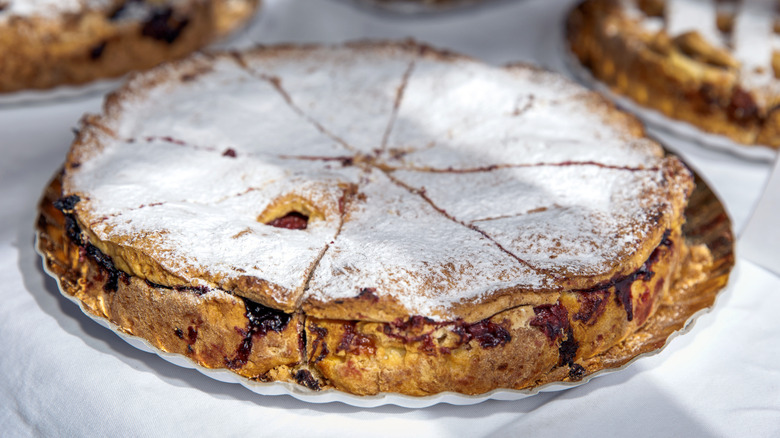
Several Thanksgiving dishes older generations might remember are also arguably the most divisive. Mince pie is one of them. This pie, which was a traditional feature at Thanksgiving dinners through the 1800s and right into the mid-20th century, has been made in various ways throughout the years — but in its original form, it contained mincemeat, so called because it was a combination of chopped meat, dried fruit, sugar, and spices. This mixture was then pressed into a pie crust and baked, and the result was a sweet-savory, wholly unique dish.
As time went on, mince pie would subsequently remove the meat and instead be made solely with dried fruits mixed with spices, zest, and alcohol. This follows a move also seen in the United Kingdom, where mince pies were (and still are) popular at Christmas, and where they were commonly made with meat before a fruit base took over. Now, though, if you're thinking about Thanksgiving pies, pecan and pumpkin pies are probably what you consider first. The mince pie may be a link to the past, but it's hardly the most common dessert these days — especially if it contains chopped-up beef.