

5 Downsides Of Kitchen Islands
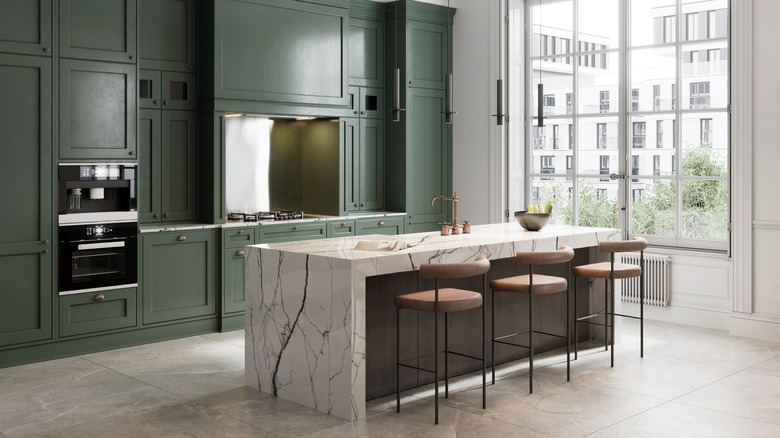
Kitchen islands can make for attractive centerpieces in a room, and they increase storage options, expand your culinary workspace, and if installed, increase homeowners' resale value. What's not to love? Well, more than you might think. For all their potential beauty and utility, kitchen islands have their drawbacks — whether the furniture is built-in or not.
Some of these downsides appear before the purchase is even made (and unless you're getting the smallest and simplest models, it's likely to be a big one). Will it fit the budget? Or even the room? And what if you want to move it later? Further anxieties flow from these basic questions, potentially dissuading new buyers.
Some or all of these questions may persist after buying, along with new disadvantages, particularly if the installed island includes appliances. It turns out that there are practical reasons why ovens, sinks, and dishwashers are often located along a kitchen wall, and not put in the middle of the room.
Size issues
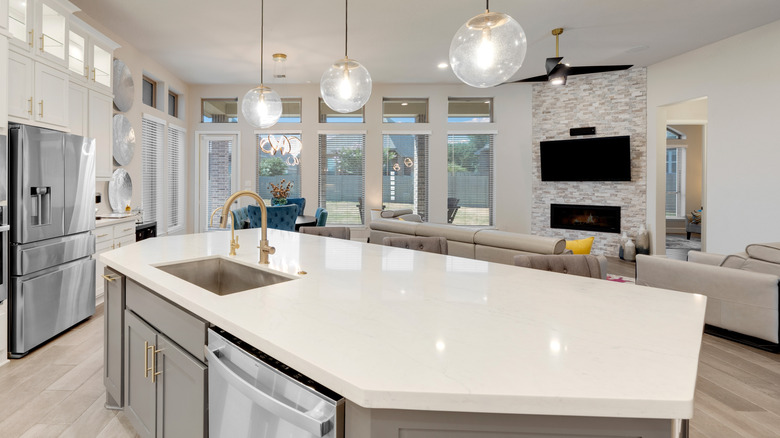
It's easy to eyeball a kitchen and think that an island will fit, and it might. But experts might recommend more space than you expect. Kitchen designers often follow a rule of thumb that you need a bare minimum of 42 inches between an island and wall-mounted counters. If you want seats on the island or a proper walkway, it's even more space.
In the average home kitchen, which measures about 13 feet by 13 feet (via The Spruce), asking for all that extra room can be a lot. Then there's the island itself, which is often 3 feet wide or more. With other things to consider — cabinets, garbage cans, freestanding shelves, pet feeding areas, whatever might commonly be in a kitchen — space can get tight, fast.
But there's an HGTV host with a solid alternative for small kitchen owners. Christina Haack recommends peninsulas over islands for small kitchens. Attaching one end of the furniture to a wall or countertops takes up less space than a full island, eliminating some of that minimum clearance. This idea works with freestanding islands, too — simply push one side against a wall.
Cost issues
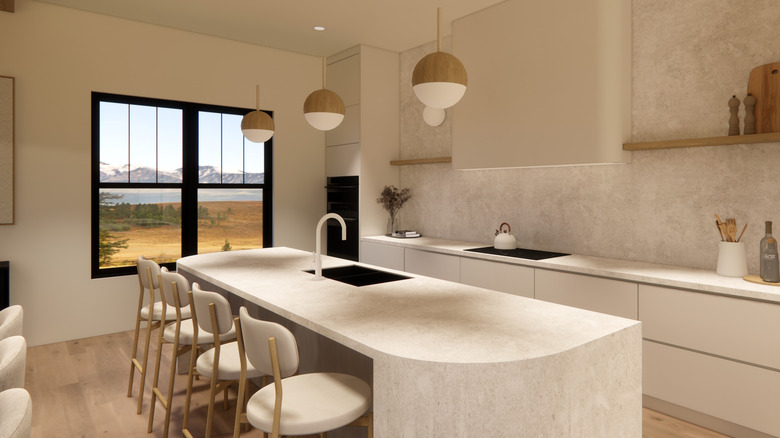
There's no way to dance around it: Kitchen islands can be quite expensive. The simplest, DIY built-ins with ready-to-assemble cabinetry start around $1,000 and can cost up to 3 times as much. Custom work begins around $4,000 and, depending on options, can soar over $15,000. If the island has a built-in sink or appliances, utility lines add their own cost, often making projects run over on time and budget.
With construction work easily being prohibitively pricey, many people turn to buying a freestanding island. There are affordable options in this space, and they might look good, but build quality will likely leave something to be desired. It's a tough compromise to make for something that will be used daily. Unfortunately, even a quality freestanding kitchen island will probably not be cheap. The Vadholma island with rack is a showstopper among the IKEA finds that will instantly upgrade your kitchen, with great design and excellent functionality. But it's almost $800, and that's at a store known for affordability.
Cleanliness
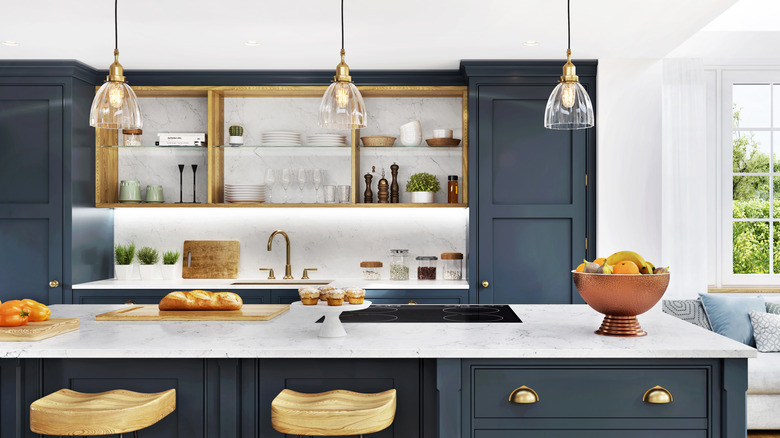
You might not think of kitchen islands having a cleanliness problem, making this perhaps one of their least expected drawbacks. Putting a stove in a kitchen island means grease sputtering all over it as you cook. This also happens when the oven is against the wall, but such placement doesn't double as a natural gathering area. You'll probably feel like you have to clean the island and stove more often. There's a similar problem with island sinks. It's not uncommon to pile dirty dishes in the sink, even in homes with dishwashers. But just as a kitchen island becomes the focal point of the room, so too do any dirty dishes in or around the island sink.
Choosing an island without appliances takes care of both of these, but it shares another cleanliness problem with any design. If you have a dining room table covered with random household items, you know any flat, open space can easily become a clutter magnet. Kitchen islands are no exception, with the addition of foodstuffs and nonperishables you maybe didn't feel like putting away. Even things you decide should live on the island, like bread or a fruit bowl, can take up a lot of space.
Permanence
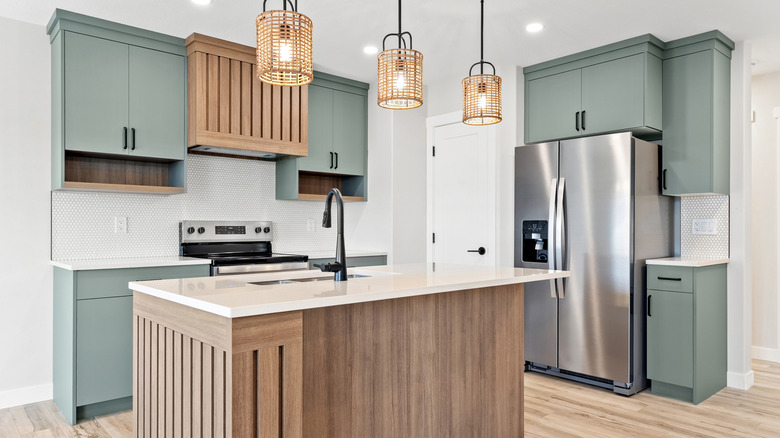
Kitchen islands are often a fixture of the room, literally. If you want to make slight alterations to the clearance around the island, or even move it somewhere else, a built-in cannot be relocated without a lot of expensive work. If the measurements came out wrong and the space was too tight, many would find changes cost prohibitive and have to simply live with the inconveniences.
You might think this is one big advantage for freestanding islands, especially ones on wheels, and you wouldn't be wrong. They can be moved, but will they? A freestanding island can be quite heavy when loaded up with dishware, small appliances, and food storage containers, even one on wheels. It's not the easiest thing to "just" move somewhere else.
Removing everything first would make a freestanding island easier to move around, but where is all that stuff going to go while you do it? Small kitchens in particular may not even have the counter space to temporarily stack the island's contents for a few minutes. It's easy to see how one could procrastinate on the task, or decide it's not worth the effort at all.
Appliance issues
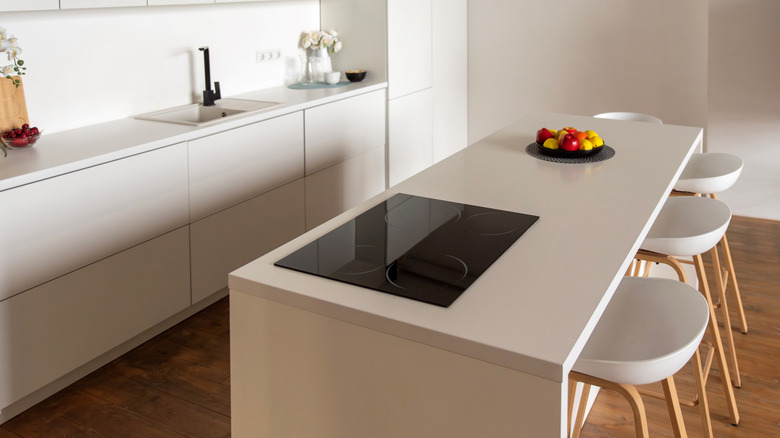
Kitchen appliances can face certain issues simply from being on the island. For instance, stoves need range hoods for proper ventilation, but these are more complex and expensive to install over kitchen islands than against a wall. And without that wall to partially muffle noise, some complain that island hoods also run louder. The alternative is no hood, a bizarre choice that fills the room with particulate matter.
These are big potential headaches, especially if you bought an oven with its own problems, like one of the most overpriced kitchen appliance brands out there. It's not just the range, either. Dishwashers generally have to be located close to the kitchen sink. Putting one in the island but not the other requires extra plumbing work and more potential failure points.
There's arguably an organizing problem with island appliances as well. Many would say that kitchen islands function best as storage and work spaces, like a prep table in a professional kitchen. Cluttering the space with bulky appliances cuts down on both, drastically so in all but the largest kitchen islands.