

The Difference Between Lager And Stout Beers
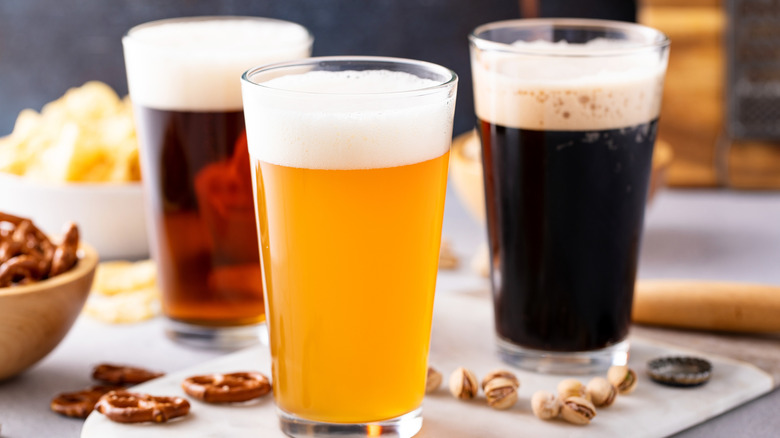
If you've ever perused a beverage menu and wondered what the difference is between a stout and a lager, this guide is here to answer that. To start, let's look at color. Stouts are almost always dark, from rich brown to black (think Guinness). Lagers are usually a lighter, golden shade (though some can be amber or dark brown). In terms of taste, lager is often crisp and smooth, with a decent amount of carbonation. Stout is richer and heavier, with hints of strong flavors like coffee, and less carbonation.
Production differs in a few ways as well; stouts use top-fermenting yeast while lagers use bottom-fermenting yeast. The former is fermented at higher temperatures than the latter (59-75 degrees Fahrenheit compared to 39-53 degrees Fahrenheit), and uses heavily roasted barley, as opposed to lager's lighter, mildly roasted malts.
Even their origins are different; stout originated in England, and lager is from Germany. In the U.S., lager is unquestionably easier to find than stout. English and Irish pubs are a great option if you're looking to drink a stout at a bar or restaurant, and there's a better chance you'll find them at more locations throughout the Midwest.
What is lager beer?
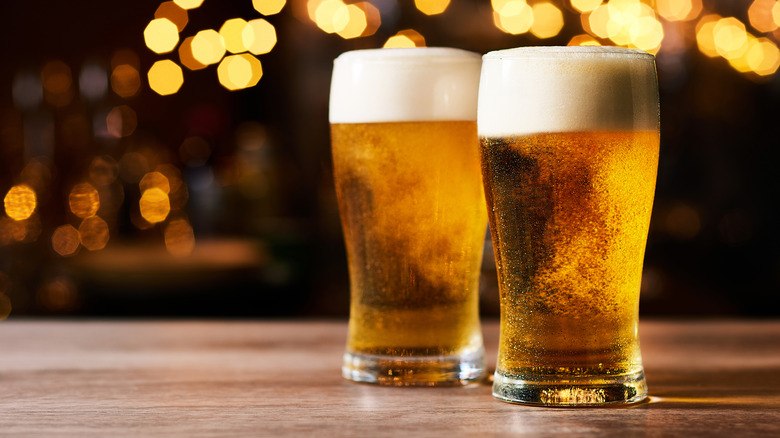
Lager is the most popular type of beer in the United States; common types include pale, bock, and dark. These are then categorized as North American, European, German, and Other by the Brewers Association. Some also wonder if IPA is a type of lager due to similarities in color and flavor, but there are distinct differences between IPA and lager, with IPA actually being an ale.
As covered, lager is made with a bottom-fermenting technique at low temperatures. This process uses light malts, which is why lagers are paler in color. Once brewed, the drink undergoes "lagering," where it's placed in cold storage for a few weeks to months, allowing the flavors to mellow and creating lager's signature crispness.
The best lagers to try depend on personal taste preferences. Pale lagers are easy to drink and fresh, with hints of bread or hops paired with floral or fruity notes. Bock lager features hints of toasted bread and caramel. Dark lagers are malty with stronger notes of toasted bread, and can have touches of chocolate or coffee. While the richest and most bitter lager, dark lagers are still smoother and lighter than stout. If you're searching for the healthiest beers to drink, lagers rank well, with light lagers being a good choice for those wanting the lowest amount of calories and carbs.
What is a stout?
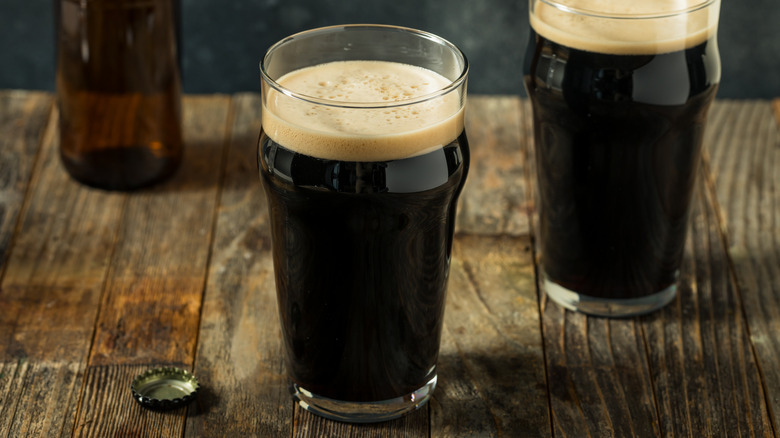
Stout is a rich beer, with a distinct taste and hints of flavors like chocolate, coffee, molasses, or dark fruits. This beer ranks fifth in terms of popularity in the U.S. As with lagers, there are a few varieties of stouts, including milk, oatmeal, imperial, and dry Irish. Some also include porter beer under the stout umbrella, but there are differences between porter and stout, including the barley used; which results in slightly different flavors.
Oatmeal and milk stout are sweet and smooth, with the former made with oats and the latter with lactose. Imperial stout has a high alcohol percentage for a beer (8 to 12% ABV) and a strong flavor. Irish stout is likely the best known, thanks to Guinness, and has a dry flavor with hints of roasted barley and chocolate. While many stouts have notes of chocolate and coffee, you can find specialty chocolate and coffee stouts that capitalize on these flavors.
Stouts are produced with roasted unmalted barley (which contributes to stouts' dark, opaque color and strong taste). Unlike lager, stout is not left long to age after fermentation is complete. You can get barrel-aged stouts, but this isn't a common production technique. If you're new to this beer, beginner guides to stout recommend starting with a lighter variety, like oatmeal, milk, or Irish stout. A barrel-aged imperial stout is an excellent choice for those more used to this beer who want something deep and flavorful.