

15 Meals Middle Class Families Ate In The '60s
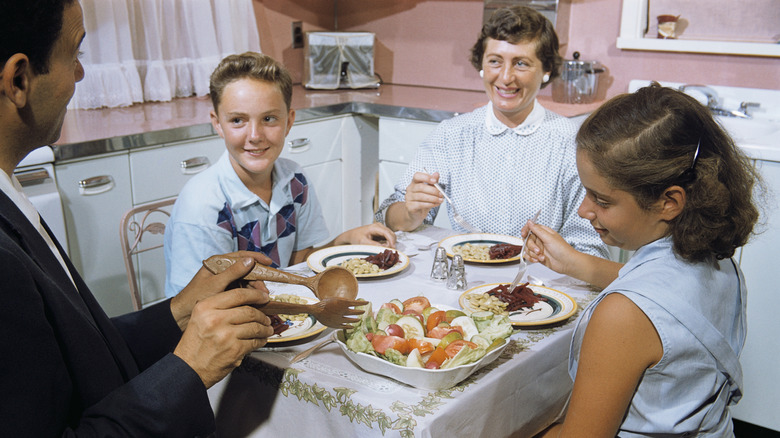
The 1960s were a booming time for the American middle class. Rapid economic growth that began in the 1950s reached its apex, with family income rising by an average of 33% throughout the decade (via OpenEd CUNY). This led to a surge in home ownership, which in turn beget the sprawling suburbs. Plus, there was the continued rise of car culture, television, and home appliances transforming the American landscape.
This reflected itself in middle-class tastes. Of course, some timeless dishes carried over from previous decades. But between the explosion of convenience and focus on simpler food prep, the arrival of Julia Childs and other TV chefs, the revival of forgotten dishes, and foreign trends arriving stateside, a new culinary scene took shape. In retrospect, the food people ate says as much about mid-century America as the houses and cars people owned.
We've written before about middle-class meals that were popular in the '60s, but it's such a fascinating, diverse topic that it bears a comprehensive roundup. With that in mind, here are 15 meals that were frequently found on middle-class tables in the Swinging '60s.
Casserole
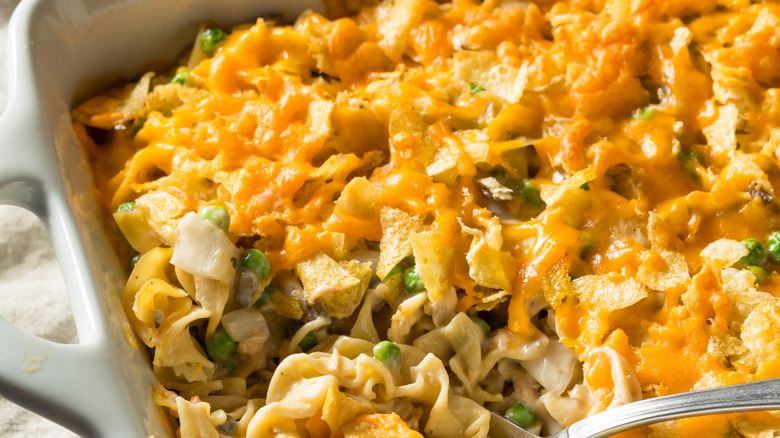
Casseroles first appeared on American tables as early as the 1830s, perhaps spurred by a casserole-like dish that appeared in the 1824 cookbook "The Virginia Housewife" by Mary Randolph. They gained more traction during the Great Depression and World War II to make the most of limited foodstuffs. But the invention of green bean casserole in 1955 by Campbell's test kitchen worker Dorcas Reilly, using condensed cream of mushroom soup as a binder, gave the dish its massive foothold.
This led to a casserole explosion that continued throughout the 1960s as people found creative ways to fill a 13-by-9 baking dish. You could enjoy tuna noodle casserole, cheeseburger casserole, potato casserole, sloppy Joe casserole, and more in homes and schools. People even made breakfast casseroles! All of them revolved around a convenience-focused formula that could be thrown together in minutes. It reached the point where university extension programs created charts for people to invent casseroles. You can still view the Montana State University chart online. The ubiquity of casseroles has endured to this day — yet it's hard not to argue that the 1960s were the zenith.
Pork chops
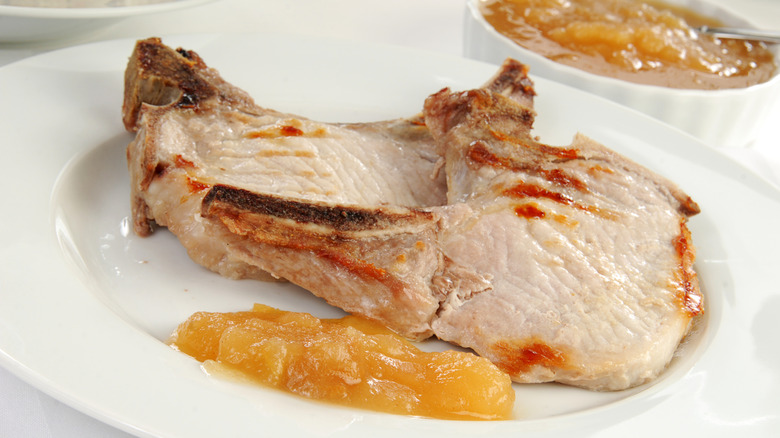
As an entrée, pork chops and their cousin, pork steaks, were a common choice in the 1960s. Pork always had a commanding Midwest presence in the United States, and the term "pork chop" to refer to a loin cut dates to at least 1752. It had a major national moment in the 1960s, though, as an affordable alternative to steak. Perhaps not coincidentally, the USDA published its first Nutritive Value of Foods report in 1960, which detailed how pork chops are a great protein source while being leaner than other dinner meats.
Another reason for pork chops' popularity was that they could be prepared and served many ways. Pork chops and applesauce were particularly popular — so much so that they were later featured regularly in "The Brady Bunch" TV show, spawning one of the sitcom's catchphrases.
Cooks could get fancy, though, with recipes such as stuffed pork chops and pork chop supreme for special occasions. Pork chops over rice, with tomato sauce, and smothered pork chops are a few other fondly remembered recipes — it makes us hungry just thinking about it.
Swiss cheese fondue
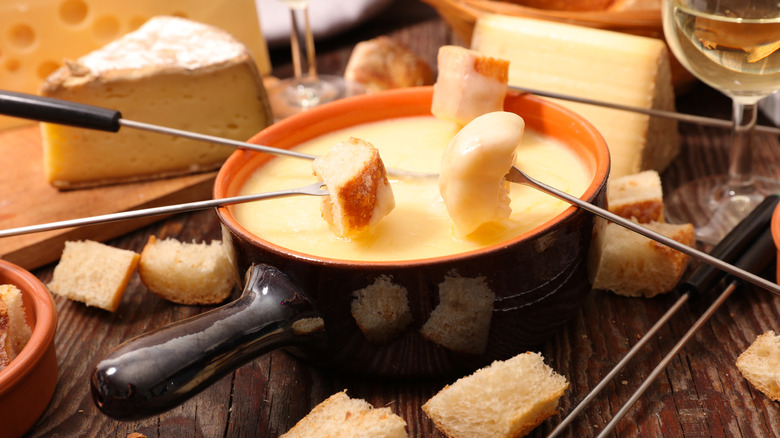
The rise of fondue was thanks in part to events from decades before. Two World Wars in close succession exposed millions of American service members to international cuisine. When they returned stateside, they brought those expanded tastes with them. Not only did this lead to already-popular dishes from countries like Italy and China becoming trendier in the U.S., but it left Americans eager to pounce on new food trends.
Such is the case with Switzerland's national dish where people dip small pieces of meat, fruit, or bread into a pot of melted cheese, which often also includes white wine or kirsch liqueur. Swiss fondue had been a niche item among French enclaves in the United States since the late 19th century. However, when the Le Chalet restaurant served fondue at the 1964 World's Fair in New York, it ignited a cultural phenomenon.
Soon Swiss fondue was at seemingly every middle-class gathering — mainly cheese fondue, but also variations such as hot oil, broth, and chocolate fondue. The fondue fad burned out in America after the 1960s, but you can still find it at certain artisan and international restaurants.
Swedish meatballs
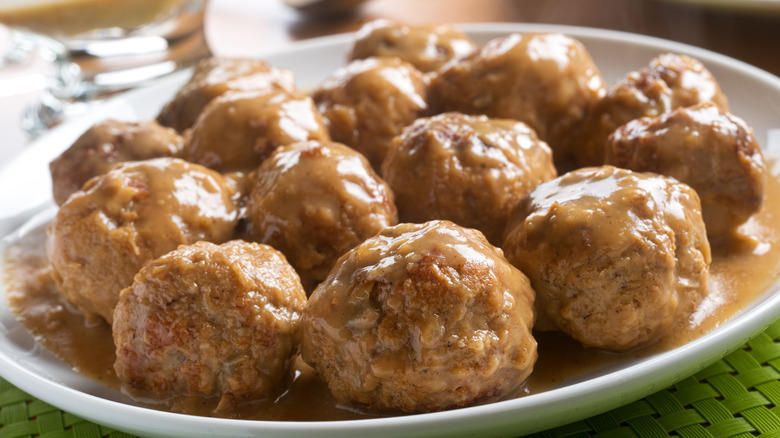
Another food that benefitted from an appetite for international fare was Swedish meatballs — and like fondue, it became a go-to at party buffets. The 1960s saw massive American interest in Scandinavian design for homes and businesses. Its use of minimalism, clean lines, and neutral colors formed the core of what's known today as mid-century modern. The demand for Scandinavian cuisine, such as these meatballs, was a natural byproduct.
Ironically, there's debate over whether Swedish meatballs are actually Swedish. A 2018 post by the official Sweden X account says they were brought to Sweden from Turkey by King Charles XII, but some have disputed this. Either way, Swedish meatballs became a must-have for middle-class Americans, as the gravy-like sauce made them distinct from Italian meatballs. As it turns out, cream of mushroom soup wasn't just for casseroles, as it made preparing the meatball gravy easier.
Unlike fondue, Swedish meatballs have stood the test of time here. This is thanks in part to IKEA, the home goods conglomerate that serves Swedish meatballs at its food courts and sells them in frozen bags. You can even make IKEA's famous meatball recipe at home.
Meatloaf
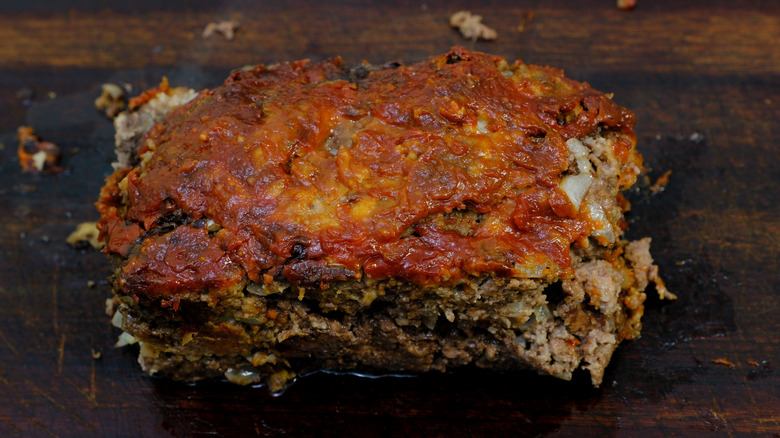
In any decade, there's room for classic comfort food. Meatloaf certainly qualifies with a recorded history going back to Ancient Rome. It first gained traction stateside in the late 1800s after the invention of the meat grinder, and like casserole, meatloaf became more common in the 1930s and 1940s as people tried to stretch what they had.
Even with prosperity and culinary upheaval, meatloaf didn't fade when the 1960s rolled around. Instead, this is arguably the period when it began transitioning from basic plate-filler to a source of kitchen experimentation. Those who have tried the '60s-era meatloaf recipes that replaced traditional eggs and breadcrumbs with evaporated milk claim that the result is exceptionally juicy and flavorful compared to the modern version.
Other recipes from the era include Louisiana-style meatloaf with a mix of veal, chuck, and pork that also incorporated new convenience ingredients like soup mix. Ketchup had become a budget-friendly way to flavor meatloaf during the Great Depression, so brands like Del Monte piggybacked with their own recipes. Along the way, meatloaf became an enduring trope in American TV shows to represent working-class families.
Wedge salad
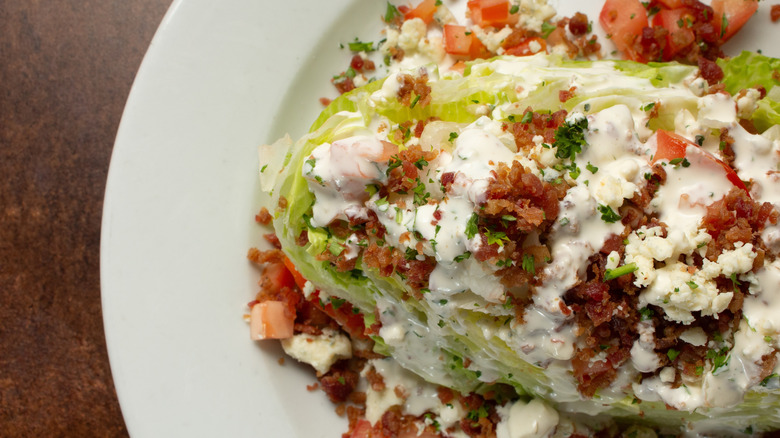
Pretty much every country and culture has its takes on the classic salad — but an unmistakably American salad sprung up in the mid-century. Wedge salad wasn't invented in the '60s, as a similar recipe appears in the 1916 cookbook "Salads, Sandwiches and Chafing Dish Recipes" by Marion Harris Neil. After being refined at Delmonico's Restaurant of New York, the wedge salad emerged on the steakhouse scene in the 1950s as a palate cleanser before the main meal. By the following decade, it was a middle-class staple.
The basic recipe consists of a quarter-head of unchopped iceberg lettuce covered in bleu cheese dressing and toppings such as bacon bits, tomatoes, and onions. Many variations exist, with different dressings and toppings that can make the salad a meal in its own right.
Wedge salads were considered a symbol of sophistication that was still simple to prepare. And with refrigerators now in nearly every home, Americans could easily store the necessary ingredients. Their consumption among the middle class has faded, but you can still find wedge salads at the original Delmonico's and many other fine dining establishments.
Spaghetti and meatballs
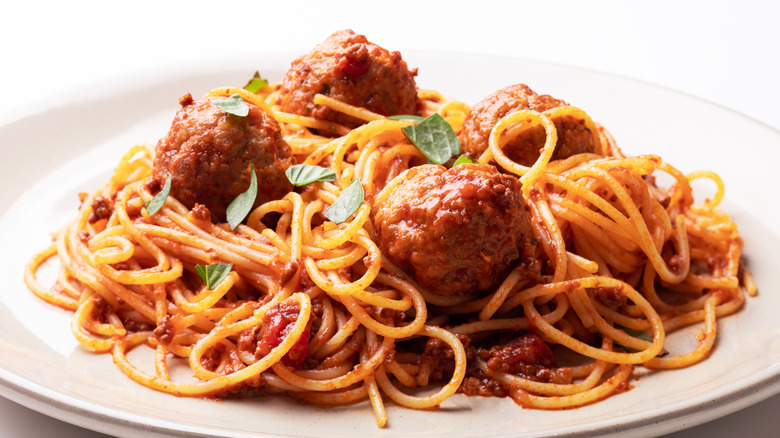
Italian food had made significant inroads into American culture during the first half of the 20th century, and by the '60s, those efforts had borne fruit. Originally considered a fine dining option, by the 1960s, spaghetti and meatballs were established as an accessible American meal. Meatballs had been around worldwide for ages, possibly dating to ancient Persia. Pairing them with noodles and marinara sauce proved a dream combination for hungry Americans.
How did this dish go from the upper crust to something for everyone? It mirrored the shift toward convenience options. This began with Hector Boriardi — you know him as Chef Boyardee — transitioning from running an Italian restaurant in Cleveland to mass-producing canned pasta. His spaghetti was even included in WWII rations, giving soldiers a taste of the then-unfamiliar product.
The opening of the first Ragú canned tomato sauce factory in 1946 also accelerated demand, and in the 1960s, Swanson added spaghetti and meatballs to its TV dinner lineup. Admittedly, no one would consider this authentic Italian food. But it helped lead to the massive Italian-American and authentic Italian foodscape we see today.
Beef Wellington
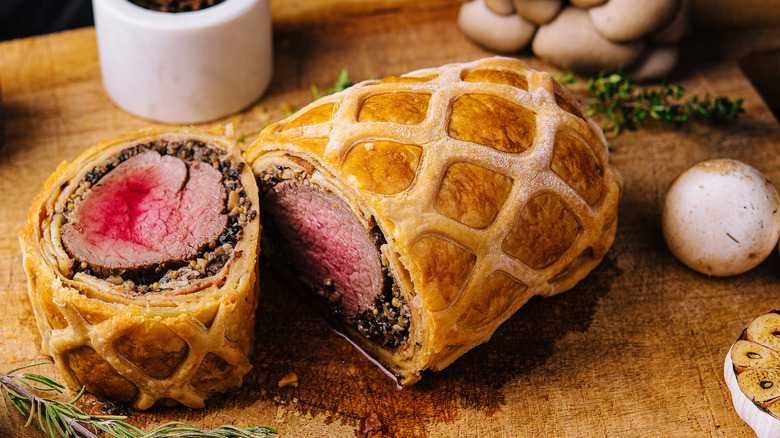
What did middle-class Americans do in the 1960s if they wanted a luxurious meal without blowing their food budget? Many of them assembled a Beef Wellington, consisting of a beef tenderloin with mushrooms and duxelles wrapped in a pie-like pastry. It's a classic European dish with origins dating to 17th-century venison pasties. (Contrary to legend, it appears to have no connection to the first Duke of Wellington.)
Beef Wellington was served at upscale American restaurants as early as 1903, but two circumstances catapulted it into the national consciousness: The first is that René Verdon, the head White House chef during the Kennedy and Johnson administrations, was an unabashed fan. He even included a Beef Wellington recipe in his 1968 White House cookbook. Before that, Julia Child featured it on a 1965 episode of her show "The French Chef," unofficially making Beef Wellington mainstream.
For a while, you couldn't turn your head without finding Beef Wellington recipes and references. American Express even featured it in an ad campaign as a symbol of opulence. Beef Wellington signified a way to affordably add class and style to a meal — which perhaps is why the dish has recently made a comeback.
Swedish pancakes
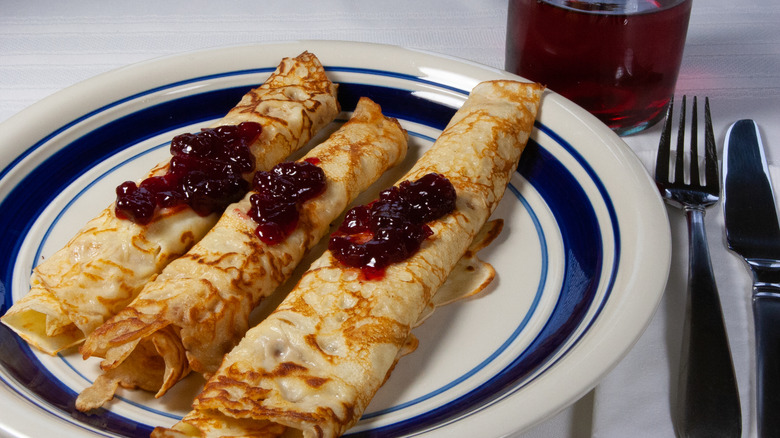
Dinner wasn't the only 1960s middle-class mealtime that piggybacked on the Scandinavian craze. Pancakes are one of humankind's oldest prepared foods — evidence has been found of people making them 30,000 years ago in the heart of the Stone Age. It's hard to find someone who doesn't like a good pancake, and this Nordic variation resembling French crepes proved a hit.
It's hard to pinpoint exactly when Americans started craving Swedish pancakes, but a flashpoint was when the Sears Fine Food restaurant opened in San Francisco in 1938. To this day, it's known for Swedish pancakes based on a family recipe. By 1962, Swedish pancakes were considered trendy enough to be featured in the Better Homes and Gardens New Cookbook. A recipe apparently was on Bisquick boxes at one point, too.
Swedish pancakes are known for having a higher ratio of eggs and milk to flour than regular pancakes, giving them a rich taste with a light and fluffy texture. Often served with fruit, preserves, or yogurt, they're a little more niche these days, but they retain a cult following.
Shake 'N Bake meals
By the 1960s, people didn't always want to dedicate hours to preparing a meal. It was also the decade when doctors began promoting low-fat diets for the general population. As such, many middle-class families were desperate for meals that could simultaneously be convenient, healthy, and tasty.
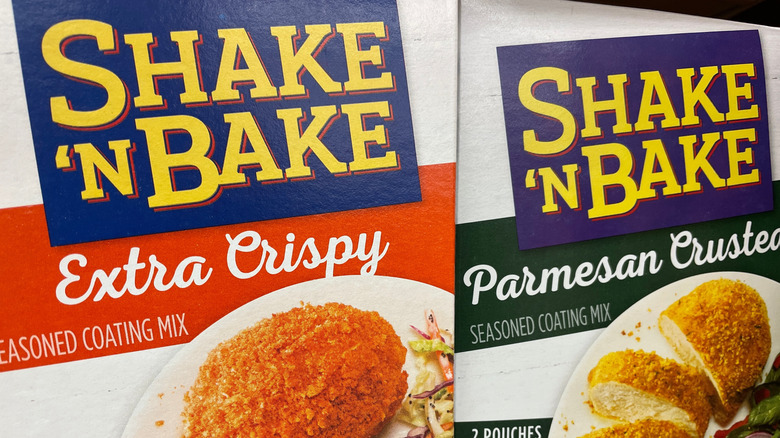
Enter Shake 'N Bake, a seasoned bread crumb mix introduced by General Foods (now Kraft Heinz) in 1965. The idea was simple: Place pieces of meat in the shaker bag, shake to coat, and then bake them in the oven. Originally touted as an easier and healthier alternative to fried chicken, people quickly discovered Shake 'N Bake worked well for pork and fish, too. There was even a hamburger coating available at one point.
Buoyed by an ad campaign showing how it also let kids assist with making dinner — generations of people can still hear, "and I helped!" — Shake 'N Bake became a middle-class mainstay. You can still buy it today, although you now have to provide your own bag — they were removed in 2022 as part of Kraft-Heinz sustainability initiatives.
Roast beef
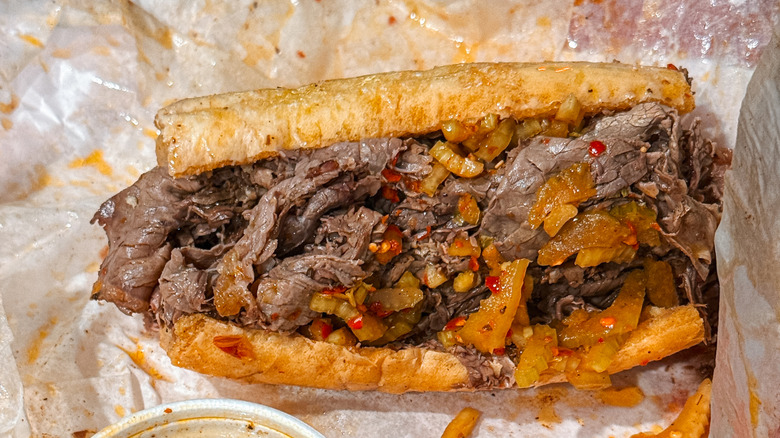
For our money, roast beef is where the cross-section of classic and convenience met for 1960s middle-class families. Roast beef was originally synonymous with British cooking to the point where 19th-century French people disparagingly referred to Brits as "le rosbifs." Colonists brought roast beef to the Americas, and by the 1960s, it and pot roast remained predominant for elaborate Sunday dinners.
Then there's the roast beef sandwich, which brought this traditional sit-down food on the go. They started appearing in the late 1800s, with Buffalo, New York's beef on weck a famous example. But credit for the modern roast beef sandwich is generally given to Kelly's of Boston, which began serving them in 1951 as a way to avoid wasting food from a canceled wedding.
Then, in 1964, two brothers visiting from Ohio loved Kelly's roast beef sandwiches so much they created their own restaurant around the concept. Arby's quickly spread nationally, and rivals/copycats like Jax/Rax, NEBA, and Roy Rogers followed. McDonald's and Burger King even tested out roast beef sandwiches, and this '60s sensation remains a middle-class institution.
Fried chicken
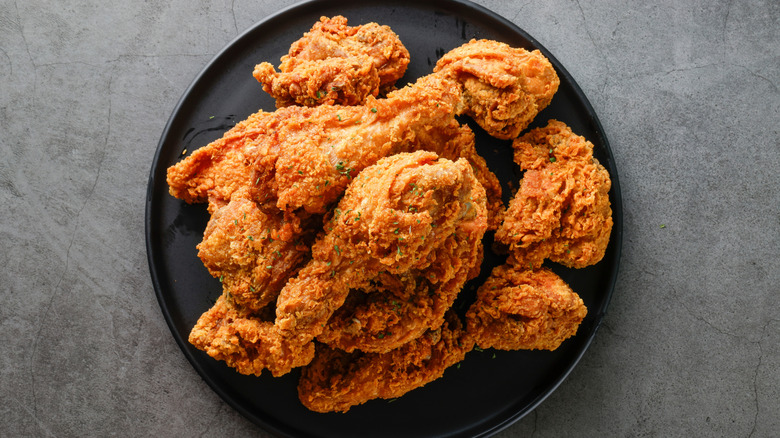
We've talked about Shake 'N Bake replicating fried chicken, but to many 1960s Americans, there was no substitute for the real thing. It's a long-standing symbol of the American South (and may actually be Scottish in origin), but up until the Second World War, it was mainly a special occasion meal. In the '60s, though, it completed a transformation to a nationally beloved dish eaten regularly.
Like other foods on this list, fast food and convenience helped drive fried-chicken fever among the middle class. Colonel Harland Sanders began franchising Kentucky Fried Chicken in 1952, and by 1963, there were more than 600 locations across the United States, with the iconic bucket helping spur sales. The introduction of a Swanson fried chicken TV dinner in 1955 also stoked the fire.
The love of fried chicken has since spread to middle-class cultures beyond the U.S., to the point where KFC is considered a Christmas tradition in Japan. Furthermore, in 1964, the Anchor Bar created what we now call Buffalo wings — and this fried chicken variation may well have since surpassed the original.
Lasagna
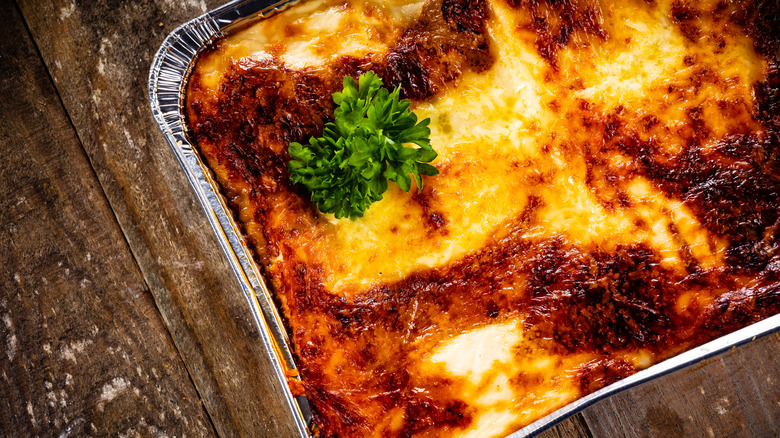
Spaghetti isn't the only Italian dish that found a place on middle-class tables. Lasagna — historically spelled lasagne — is essentially a Bolognese casserole that originated in the Emilia-Romagna region. It can be incredibly time-consuming to make at home, though, which is why even in its home country, lasagne consumption was typically limited to Christmas and other festival times.
Yet by the 1960s, it was a routine United States meal. The first thing that propelled it to the weeknight table was the Americanization of the recipe; it became more standardized to some combination of noodles, meat, red sauce, and cheese. The second was the increased popularization of Italian food we discussed earlier. And the third thing was frozen foods. It was actually the Buitoni Company of New York that first sold frozen lasagna in 1950 — but Stouffer's frozen dinners took the concept national in 1954.
Suddenly, people could enjoy a complex sit-down meal with a fraction of the time and effort. If someone wanted to make their own lasagna, they could find recipes in almost any mainstream cookbook — including Time-Life's The Cooking of Italy (1967), which incorporated ground pork and chicken liver.
Beans and franks
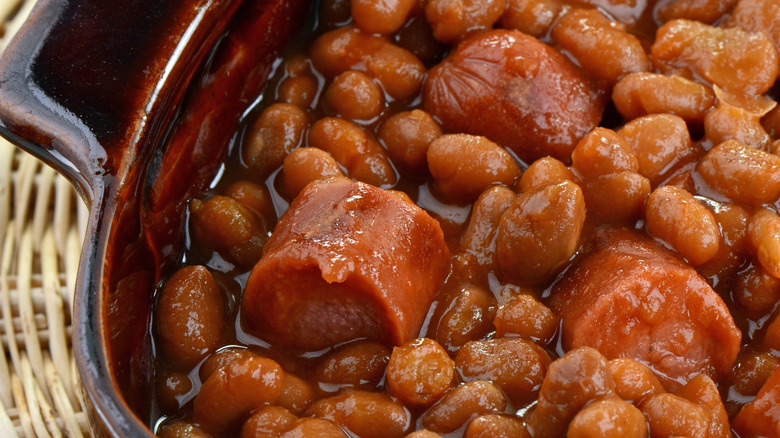
Sometimes, the classics are still the best, and that's the case with mixing together baked beans and sliced hot dogs. Pork and beans are the original canned convenience food, first being sold commercially by Van Camp's as early as the Civil War. Sometime along the way, people got the idea to use Vienna sausage or frankfurters instead.
Beans and franks were already a regional favorite in New England and the American Southwest, but they got a major boost in the 1960s. We again have Swanson TV dinners to thank in part; its version included apple slices and chocolate cake. The dish was also omnipresent at factory diners. And by 1969, Van Camp's had re-entered the canned fray with a catchy name that endures to this day: Beanee Weenee.
Additions such as brown sugar and tomato or barbecue sauce helped dress up this easy-to-prepare meal. Plenty of people look back with affection. As a Facebook user happily declared in a 1960s memories group, "Our family had this for supper at least once a week!"
Tunnel of Fudge Cake
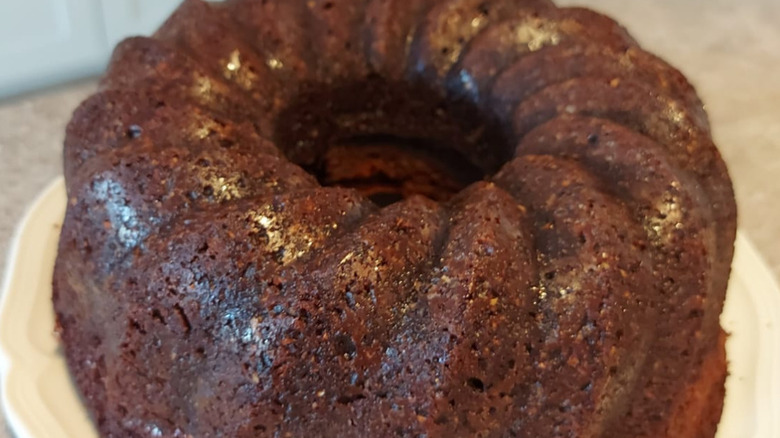
No, we didn't forget dessert. Perhaps no confection defined the 1960s middle class like the Tunnel of Fudge cake, which Houston's Ella Rita Helfrich entered into the 1966 Pillsbury Bake-Off. Considered the forerunner to the modern lava cake, the combination of a ring-shaped chocolate-nut cake, a fudgy center, and Pillsbury's Double Dutch Fudge Buttercream powdered frosting mix proved an instant hit.
Here's the irony: The cake actually finished second to Golden Gate Snack Bread. Yet Tunnel of Fudge was the winner in the public's eyes. Reportedly, Pillsbury received more than 200,000 letters asking about the recipe and the Bundt pan Mrs. Helfrich had used. As Dan Kois wrote for Slate magazine, "For a time in the late '60s, you couldn't attend a PTA potluck without finding a Tunnel of Fudge."
Not to mention, the cake saved the Bundt pan from extinction. Nordic Ware had nearly discontinued the pan multiple times due to poor sales, but soon it was producing 30,000 pans a day to meet demand. In 2024, Slate named the Tunnel of Fudge cake one of the 25 most important recipes of the previous 100 years.