

Why Grocery Stores Actually Sell Discounted Meat
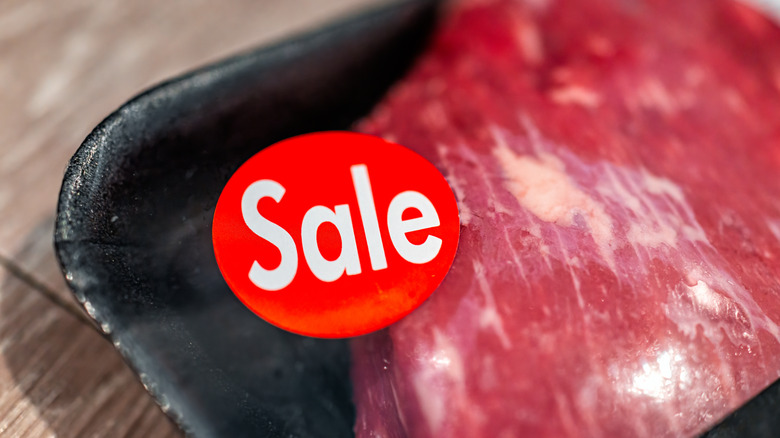
In times of inflation, a squeezed budget, and increased food prices, a bright markdown sticker on a package of steak, chicken, or ground beef can certainly feel like a relief. But as tempting as it is, it also comes with a bit of iffiness, making you wonder what, exactly, prompted the discount and whether you should throw caution to the wind. There are many valid reasons why a store would stick a sale sign in the meat aisle, and that doesn't necessarily mean that the steak or ground beef is unsafe to eat. In many cases, grocery stores discount meat not because something is wrong with it, but to sell it before it's too late.
The markdown can mean anything from the meat approaching its sell-by date, the packaging being damaged, the store having overstock, or a lower demand for a particular cut. Meat can also be marked down simply because its color or appearance has changed, even when that does not necessarily mean it has spoiled. Fresh meat can naturally change color as it is exposed to oxygen, so darker or browner beef isn't necessarily spoiled. Beef, for example, can turn brown after several days in the refrigerator because of oxidation. But, according to the USDA, the rule of thumb is that if the meat has an odor, a sticky or tacky texture, or a slimy surface, it should be discarded.
Why stores mark down meat
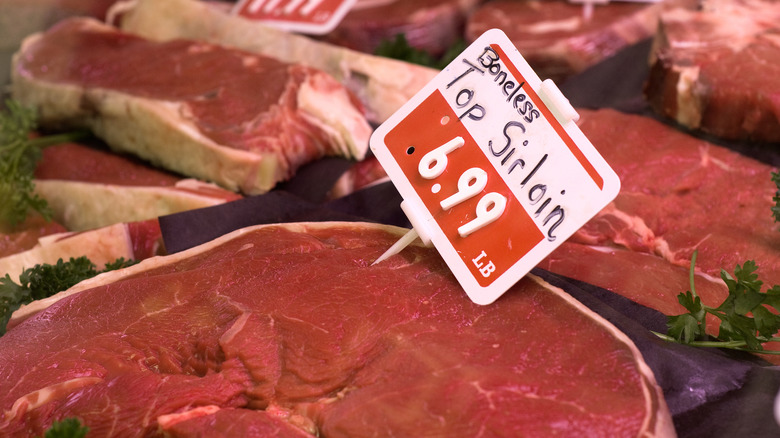
Meat has a short shelf life, and aside from the obvious safety concerns, its appearance and quality can change within days. It also depends on the type of meat. Fresh poultry and ground meat have a shorter window than whole cuts of beef, pork, or lamb, which can last longer when properly packaged and stored. A sell-by or expiration date can be another reason for discounting the meat. The sell-by date is a guide for stores on how long a product should be displayed for sale, while the "use-by" date estimates when the product peaks in quality.
Discounting the meat can also happen after the store has overstocked a specific cut or overestimated the demand. To avoid the meat spoiling and ending up in the trash, it makes more sense to put a markdown sticker on it. Appearance or damaged packaging can be another reason, as a less attractive-looking steak without a markdown would be harder to sell than a fresh-looking one. Any other factor that compromises the meat's chances of selling before it expires and eventually being discarded could be a reason for the store to mark it down.