

7 Beers Americans Drank In The '60s
We may receive a commission on purchases made from links.
Speaking broadly, humans love beer. We've been drinking it since ancient times, and despite some recent downturns in the alcohol market, we show no signs of stopping anytime soon. In the United States, prohibition and a continuing temperance movement put a crimp on Americans' beer-drinking ways for a while; but following World War II, beer exploded across the country. Many of the beer brands that Americans drank then are ones we're still drinking today, but there are some old school beers that simply don't exist anymore.
The 1960s were a unique time for beer. The decade saw the opening of the first craft brewery, and the industry was also dominated by national breweries and a few large, regional players. At this time, these companies were mostly serving up light, cheap, not super flavorful suds. Here are seven beer brands that the U.S. loved during the '60s, showcasing how far American beer has come since then!
Pabst Blue Ribbon
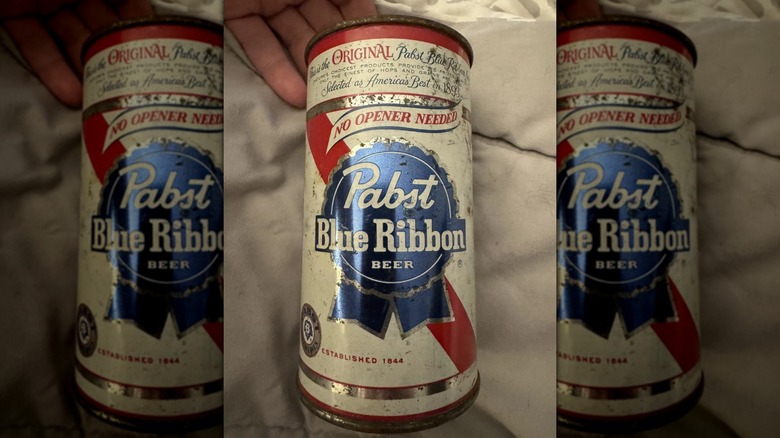
Pabst Blue Ribbon can trace its origins back to 1844, debuting in a brewery in Milwaukee, Wisconsin. The famed "Blue Ribbon" refers to a win by the brew at the 1893 Chicago World's Fair. Pabst was still considered a premium beer during the 1960s; but after management missteps and declining profits, PBR would eventually be repackaged as a cheap alternative and find some success again, going on to become one of the beer brands that defined the '80s.
Ballantine
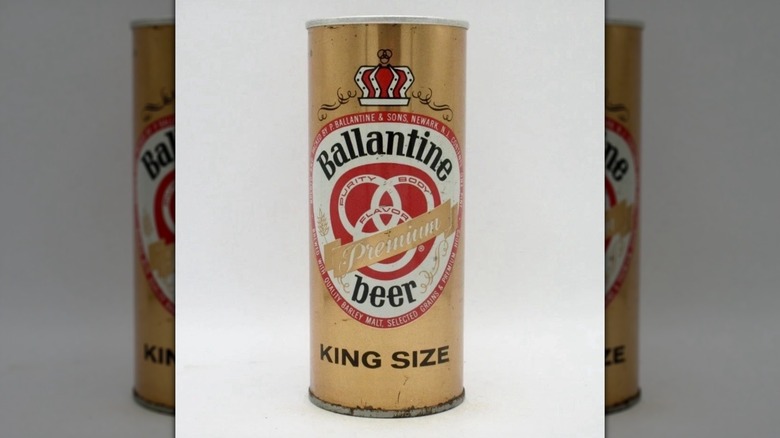
If you ever watched the TV show "Frasier," you may recall that the titular character's dad drank Ballantine beer. While you may have assumed this was a brand the writers made up, Ballantine was in fact a real beer brand and, at its height, was the third-largest brewery in the United States. Unfortunately, the company began to falter in the '60s and, by 1972, it was sold to another beer distributor. While the Ballantine brand has been brought back at times over the years, the original recipe has been lost, so any revival is only an approximation.
Budweiser
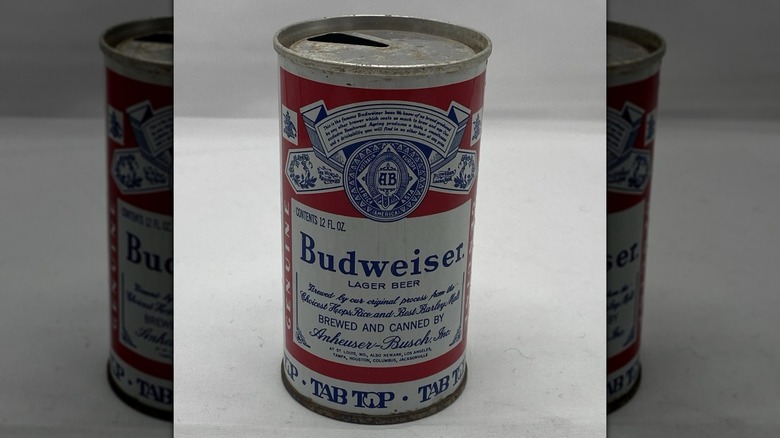
Budweiser, the flagship product of Anheuser-Busch and the so-called "King Of Beers," was a dominant brand in the post-war period. Their 1960s ad slogan – "Where there's life... there's Bud" – helped center Budweiser as a ubiquitous part of American culture. Bud was a popular choice in the '60s and remains so in modern times. Today, Anheuser-Busch InBev is the top beer distributor in the world.
Schlitz
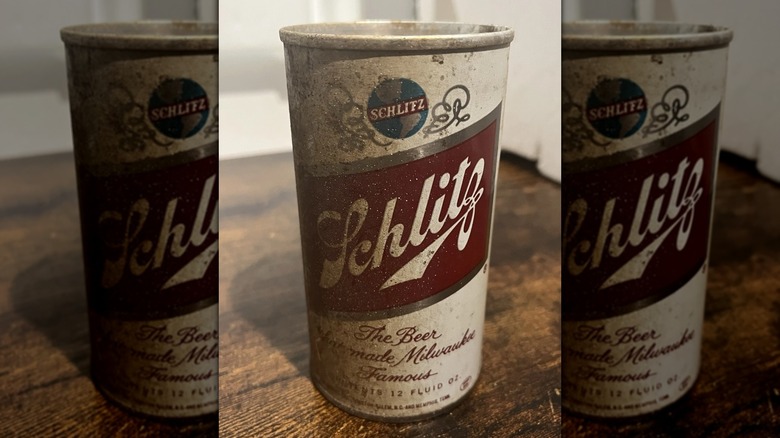
Another Milwaukee-native beer, Schlitz was founded by German immigrant August Krug in 1849 (the new owner Joseph Schlitz would rename the company after himself in 1856). Adopting the slogan "the beer that made Milwaukee famous," Schlitz continued to expand in the 1960s, eventually adding plants across the country. However, in the 1970s, the brand introduced a different brewing process that consumers felt negatively changed the beer's flavor. Further corporate issues led to the sale of the company in 1982. Current owner Pabst axed the brand in 2026, making Schlitz one of the discontinued beers we're not getting back.
Bass Ale
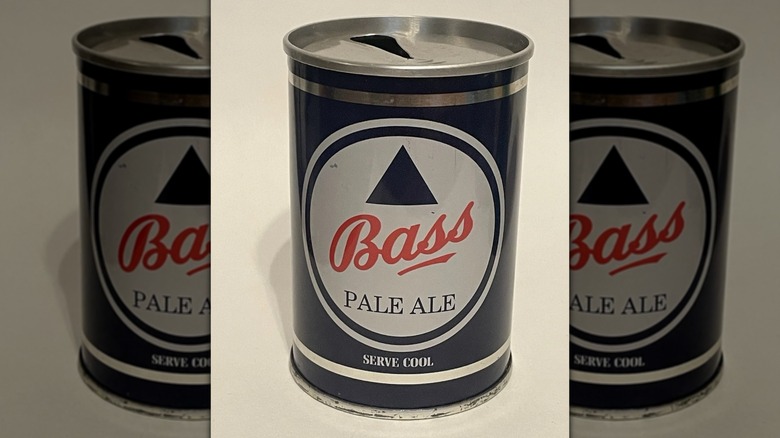
Bass Ale has the earliest origins of any beer on this list. William Bass founded the company in England in 1777, and the ale was imported to North America in 1799. The 1960s saw many mergers and acquisitions for the pale ale brand and, by the end of the decade, it was the U.K.'s biggest beer brewer. Corporate restructuring eventually led Bass Ale to be owned by Anheuser-Busch InBev, who reduced the number of barrels produced. Today, Bass Ale is no longer a major player, but you can still probably find a case near you.
Hamm's
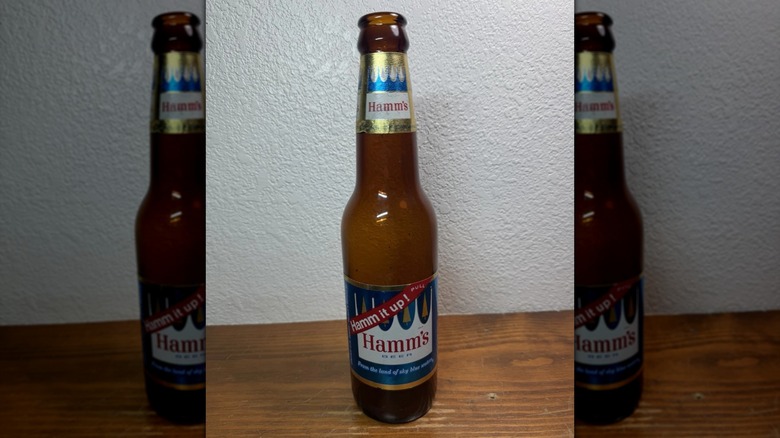
Known as "America's Classic Beer," Hamm's has been produced since 1865, when German immigrant Theodore Hamm inherited the Excelsior Brewery in Saint Paul, Minnesota. In the years following World War II, Hamm's sought to expand nationally. Despite pervasive advertising campaigns and a collection of breweries, the brand struggled with its new national profile. In 1968, Hamm's was acquired by a company called Heublein, and it has since changed corporate hands several times over.
Coors
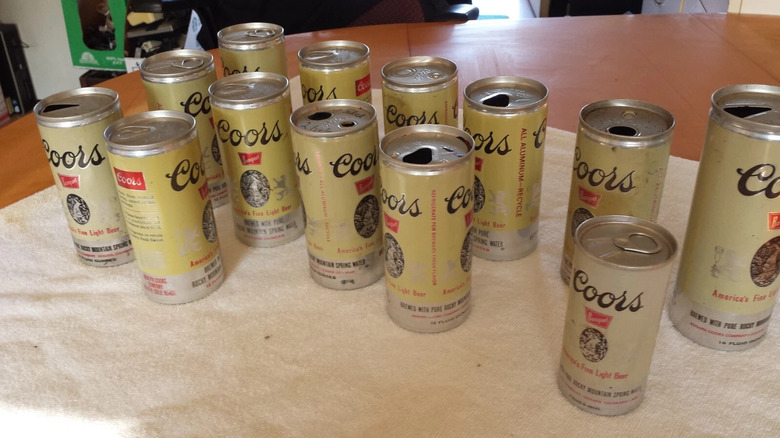
In 1959, the Colorado-based Coors Brewing Company debuted a novel product: beer in an aluminum can. Prior to this, beer companies generally used steel cans, which were heavier and not easily recyclable. Customers responded well to Coors' new container. To keep up with demand, Coors purchased a plant in 1965, becoming the first beverage company to produce its own cans.
As for the beer in these cans, it was generally regarded as a regional favorite in the 1960s. It was only available in certain markets, and the brand did little advertising during this time, adding to Coors' mystique.