

Rich Ancient Greeks Loaded Up On These Foods That The Poor Could Rarely Afford
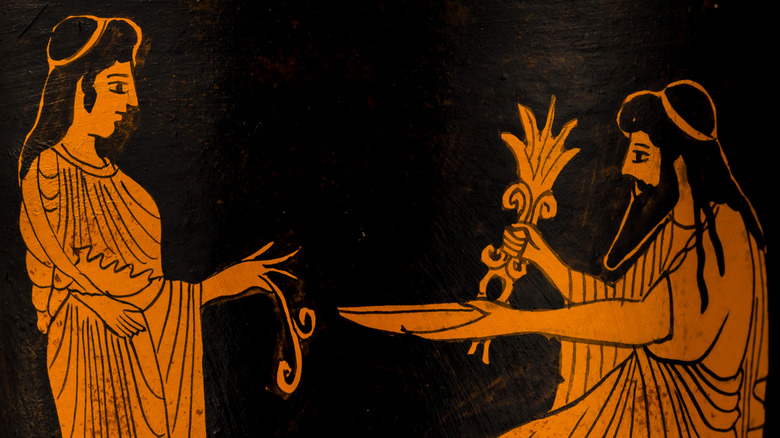
In the 21st century, we often take for granted the infinite nutritional options available at our disposal. Whether it's at the grocery store or in a restaurant, we have the luxury of selecting chicken (one of the highest-density proteins of all), beef, seafood, vegetarian, and vegan foods practically wherever we go. What's more, in the 2020s "protein" is the buzzword on everyone's lips. But 2,000 years ago, it wasn't just nutrition specialists and health-conscious connoisseurs who valued this trendy macro.
Ancient Greeks held meat in such high regard that it became a major part of their religious festivals and ceremonies. And yet, for working class Greeks of the time, these celebrations might have been the only time they ever saw a protein-heavy meal as only the upper class had access to meat and seafood on a regular basis. By comparison, most Greeks had to depend on what they could grow or raise themselves.
Was Greek food really determined by social class?
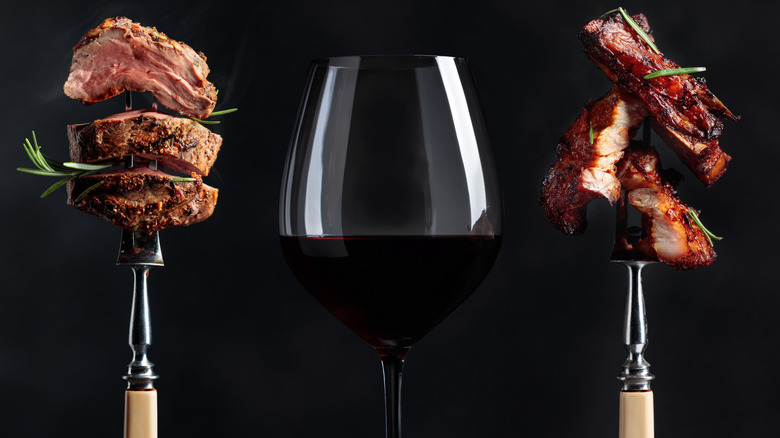
Scholars of ancient history have pointed out that Homer's "Odyssey" gives us many insights into Hellenistic Greek culture, specifically the symbolic status of meat. Warriors and leaders feasted at banquets which boasted plenty of meat and wine, eating not so much for sustenance as to display their wealth and success.
Poverty didn't necessarily mean malnutrition, though. The parties of the upper class were meat-and-wine affairs (and pairing wine with meat has certainly become an art form), but all Greeks regardless of class depended on what we know today as the Mediterranean diet. This diet emphasizes fruits and vegetables, legumes, nuts, and olive oil. Ancient Greek peasants were also particularly fond of dairy.
Despite its rarity, meat certainly wasn't forbidden in the lower ranks. On market days in the Greek agora — a kind of town square — it was very common to see souvlaki being sold to customers of every economic background. Souvlaki is pork cut into strips, roasted on a spit, then sold kebab-style. There are parallel recipes across the Middle East, including Armenian khorovats, which you can make at home. Souvlaki has been around for so long it's even mentioned in the "Odyssey," but it's still eaten in modern day Greece, particularly during the Orthodox celebrations preceding Lent.
While the poor ate a simple, generally healthy diet, the rich of ancient Greece could afford to buy expensive meats and even imported delicacies. This protein-oriented hierarchy was less concerned with personal health and more interested in showing off — sounds a lot like modern diet culture, after all!