

The Simple Seasoning That Gives Store-Bought Hot Dogs Their Color And Flavor
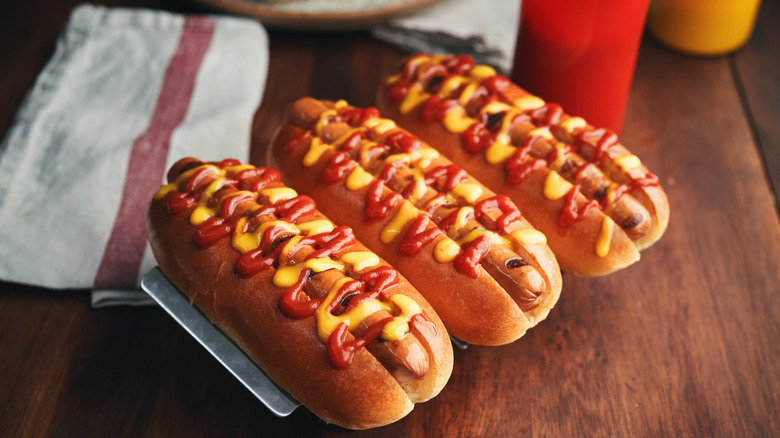
Hot dogs, with their signature reddish-brown coloring and pillowy soft buns, may bring to mind backyard cookouts or game day meals. As an American staple, they have many regional variations, including a few over-the-top hot dog styles for those who like something with a little flair. But what some may not know is that many store-bought hot dog brands get their color and flavor from paprika.
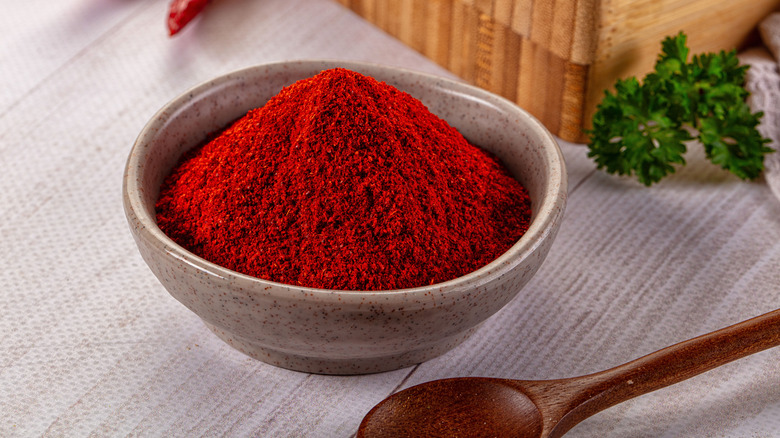
The paprika, paprika extract, or the oleoresin of paprika, often found on ingredient labels on the back of your typical hot dog package, is an integral part of the commercial frankfurter industry. Manufacturers rely on it for that appetizing visual appeal, as well as to lend some sweet and smoky flavor to their sausage links — beyond cosmetics, this spice contributes a mild earthiness that rounds out the savory notes of garlic and salt often present in a typical hot dog recipe.
The brightly colored paprika found in many kitchen pantries doesn't come from one specific pepper plant, instead often being made from a blend of chili peppers. Generally, it comes from Southern Mexico, Central America, and the Antilles Islands. Depending on the brand, the taste of paprika can vary from milder to stronger to smokier, depending on what specific peppers were used. This versatile spice is used in a wide range of foods, including goulash, chili, dry rub for grilled meats, and, of course, the ever-popular hot dogs sold in grocery stores and baseball stadiums.
Major hot dog brands owe their coloring and flavor to paprika
Major commercial producers include this spice in their formulations to guarantee consistent coloring on each hot dog. For instance, Trader Joe's Uncured Beef Hot Dogs incorporate paprika powder as a natural coloring for their rich exterior tone. Similarly, Johnsonville Hot Dogs use both paprika and paprika extracts, also balancing the flavor of their hot dogs.
Regional favorites also lean on this red seasoning in their signature house recipes and stadium-style meat blends. Legacy hot dog producers like Koegel Meats add paprika directly into their traditional meat mixtures for distinct coloration and depth of flavor. And iconic stadium suppliers like Cantella's (the retailer behind the L.A. famous Dodger Dog) rely on paprika extracts to maintain their signature game-day appeal. If you prefer, though, you can also buy Cantella's hot dogs at local grocery stores, so there's no need to go to the stadium for the full experience. If you prefer to cook your own, you may also be interested in our ranking of ways to cook hot dogs.
Ultimately, this humble ground pepper seasoning offers a clean-label alternative to synthetic dyes for the appetizing color of hot dog links, while contributing to their classic flavor. Whether tucked into a ball park bun or charred on a backyard grill and enjoyed Chicago-style, this iconic symbol of American food culture owes much of its classic look to paprika.