

Here's Exactly How HomeGoods Sources Its Kitchen Products
Bargain hunters and deal seekers flock to HomeGoods for all types of wares. However, one of the retail chain's most intriguing array of items is in its kitchen department. Here, searching through shelves of products from around the world can lead to a bounty of tasty goodies and décor. So, how does HomeGoods hunt down these ever-rotating, eclectic, and affordable food finds and cookware? The answer is a combination of numerous methods.
For starters, HomeGoods buyers regularly hunt for overstock goods from manufacturers that have either made too much of a product or have had stores cancel orders. These buyers are also often able to take advantage of end-of-season vendor closeouts. That said, sometimes the retail chain will also employ artisans to create items specifically for their shelves. Also, similarly to how HomeGoods is able to sell fancy cookware for cheap, high-end kitchenware manufacturers will sometimes create colors or styles that don't sell well. This allows HomeGoods to get heavily discounted deals when purchasing unsold inventory, which they, in turn, pass on to shoppers.
Hunting for HomeGoods kitchen offerings
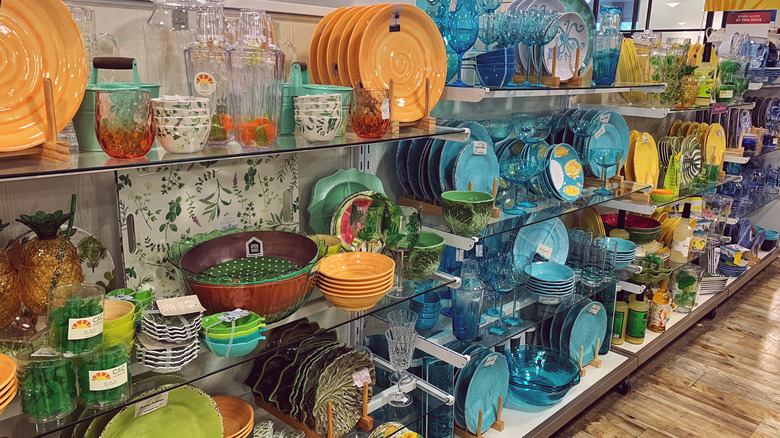
From the gourmet foods you can find at HomeGoods to kitchenware like pans, knives, and plates, the store's shelves are stocked multiple times a week. If you're lucky, you might also be able to find drastically discounted designer cookware including All-Clad, Le Creuset, and Staub, but there's no guarantee. Store buyers are opportunistic. For instance, sometimes they stumble upon sought-after items made in France and swoop them up from manufacturers, other times that's not what's available to them. In these aisles, you can also find many cheap baking must-haves to buy at HomeGoods versus at other higher-priced retailers.
In 2011, now-former CEO of TJX Companies, Inc. Carol Meyrowitz was reported by ABC News as saying that 85% of what its stores, including HomeGoods, source is directly purchased from various global manufacturers, and that not even 5% of products it sells are irregular. Thomas Sheridan, founder of gourmet food importer Kensington Foods, has worked with HomeGoods on bringing some of its edible items to market. He explained on Instagram that many of the international foods found in the stores are products from international producers that failed to catch on in America, and were therefore offloaded to HomeGoods at a fraction of the price.
The mothership of HomeGoods, TJX, also upholds a credo of responsible and ethical product sourcing anywhere it buys. So when seeking a shopping adventure, the eagle-eyed HomeGoods buyers have likely traveled the world to bring a diverse and curated cacophony of bargains that can stock your kitchen for a fraction of the usual cost.