
6 Cutting Board Colors And What They Mean In Restaurant Kitchens
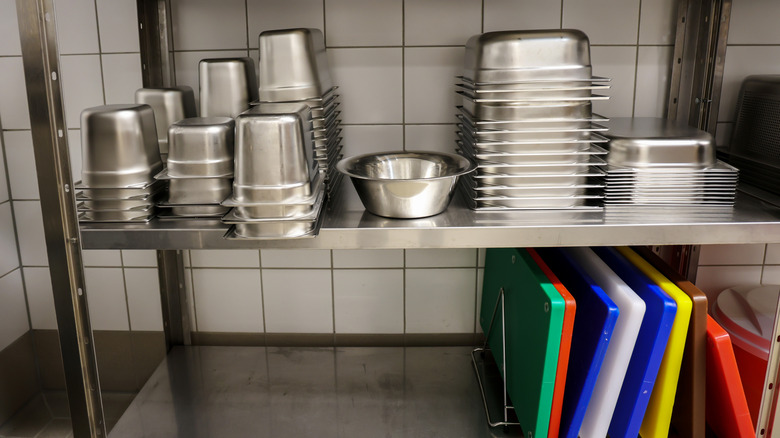
If you've ever had a behind-the-scenes peek at your favorite neighborhood restaurant, you may have seen the staff using variously colored cutting boards. Color coding in a restaurant kitchen can help reduce cross-contamination between foods, a food safety mistake that could be dangerous. One of the many issues that can arise is when you're working with raw meat․ One way to guard against potential foodborne illness is to keep a cutting board for chicken, beef, or seafood separate from the one for vegetables and other ingredients․
State Food Safety indicates some of the typical color systems used for cutting boards in commercial kitchens in the U.S. Raw red meat is normally labeled red, produce is normally green, and other colors are used for poultry, seafood, cooked meat, dairy, and baked goods, seemingly because the shades match the natural colors of the food․ Keep in mind that the U.S. Food and Drug Administration does not require uniform color coding for restaurants, so their meanings are not standardized․ Colors vary by country․ Here is how these colors are usually used in the United States․
Red for raw beef
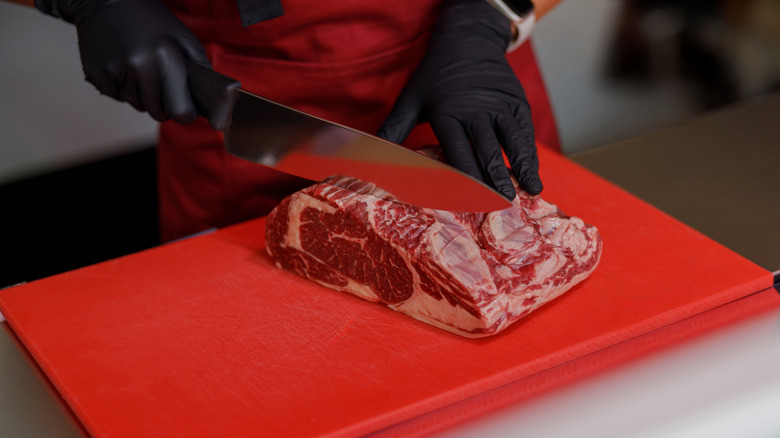
Red is often used for raw beef, pork, and lamb. Many kitchen managers choose red because raw beef is the same color. FoodDocs also offers a template with sample colors for cutting board designations, listing red as the color of choice for these raw meats.
Yellow for raw poultry
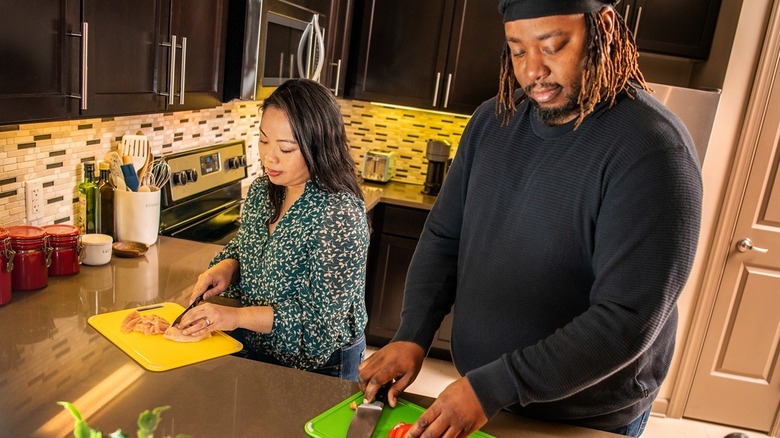
The CDC recommends a separate cutting board for raw chicken, and many people use yellow for their designated board for poultry. The World Health Organization reports that 866 million people fall ill after eating contaminated food, resulting in about 1½ million deaths each year. Bacteria, such as Salmonella, can be found in raw chicken, making it vital to avoid cross-contamination.
Blue for seafood
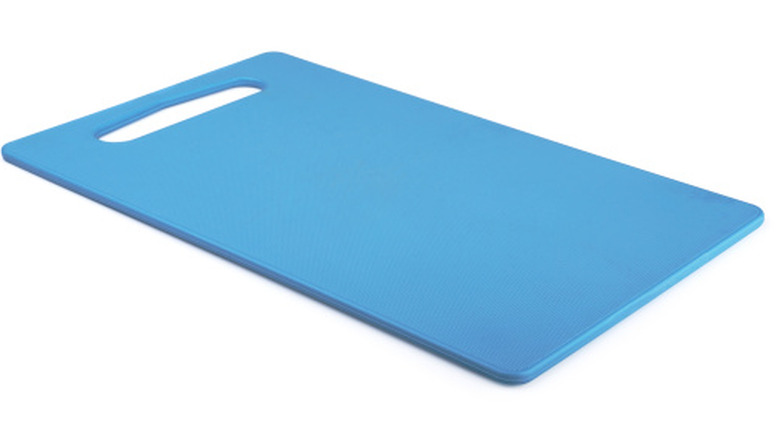
Many busy restaurant kitchens use blue cutting boards for fish and shellfish. Even though most fish aren't blue, they do come from bodies of water and are therefore associated with the color blue. Placed in the same spot each time, the food preparation color helps staff identify them quickly․ Fish should be kept separate from meat, poultry, and produce being prepared․
Green for fruits and vegetables
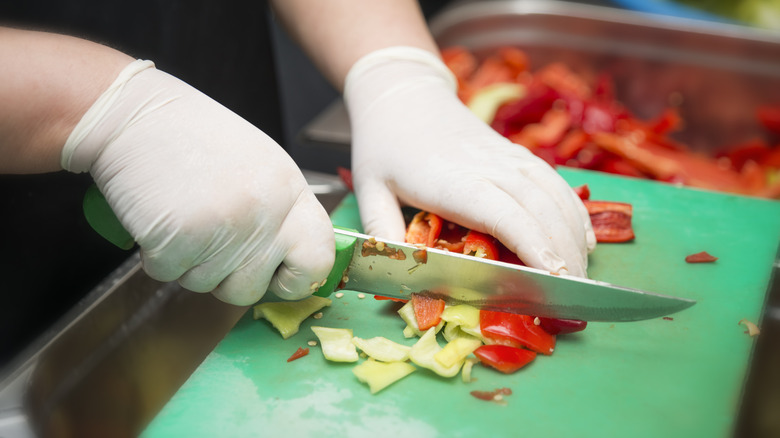
Green cutting boards are for produce, such as tomatoes and lettuce on a sandwich, onions and bell peppers on a fajita, or strawberries and other fruits for desserts․ Produce covers fruits and vegetables, so green boards are for more than salad prep.
Brown for cooked meat
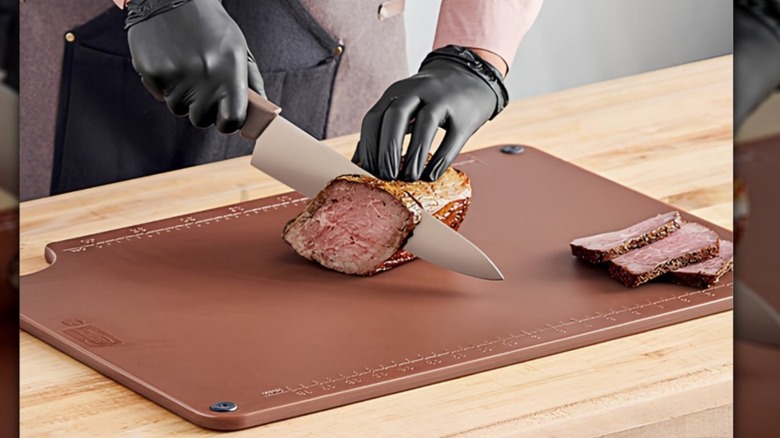
Brown-colored cutting boards are commonly used for cooked meat to match its hue. Gabriel Keith Harris, professor of Food Bioprocessing and Nutrition Sciences at North Carolina State University, explains the chemical reaction when meat is exposed to heat that causes it to turn brown. When burgers, steaks, pork chops, and other cooked meats are removed from the heat, a brown cutting board gives kitchen staff a place to slice the finished food․ This separates the cooked food from the areas on red cutting boards that have previously carried raw meat․
White for dairy and baked items
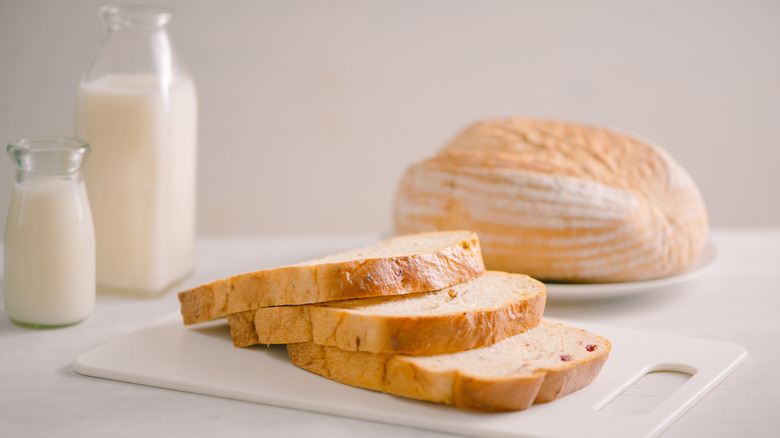
A white cutting board is typically used for cheese and baked goods. Since bread and some cheeses are white, the color coincides with the food's appearance․ These are stored separately from raw meat, poultry, seafood, and fruits and vegetables․ Clean your plastic cutting boards properly and frequently for best food handling practices.
Now that you know what the colors typically mean in a U․S․ restaurant kitchen, you can implement a similar system at home to keep home-cooked meals safe.