

You Can Cook Pizza On Your Blackstone, But There's A Catch
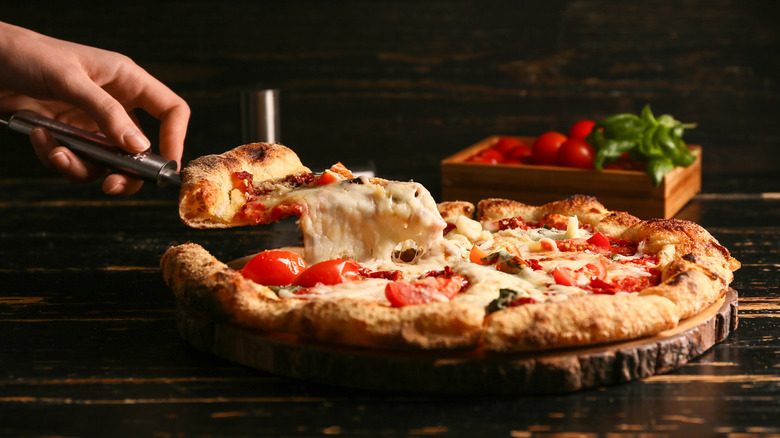
A Blackstone griddle is brilliant for making big batches of pancakes, and you can also use it to cook pizza. However, there's one catch: the crust can burn if you place it straight onto the surface without any forethought.
In a pinch, you can grill pizza to perfection on a barbecue, but there's a risk that a softer batch of pizza dough could sink down into the grates. Making pizza on a Blackstone griddle eliminates this issue because this type of grill has a flat-top made of steel, allowing the dough to lie flat. That said, if you place your dough straight onto the preheated surface, there's a risk the bottom could char before it's had enough time to rise and create those all-important air pockets that lend it a characterful texture.
The solution is to lay your dough onto the surface of the griddle before turning it on so that the base isn't shocked into crisping up immediately when it meets the fierce heat. Once your dough is in place, switch the Blackstone on to a medium-low heat, which will give the dough time to rise as the griddle slowly heats up. However, even when using this technique, it's essential to monitor the crust by lifting up the bottom with tongs to check the doneness of the underside. If any areas are browning quicker than others, rotate the pizza base to encourage even and uniform cooking.
Tips for making pizza on a Blackstone griddle
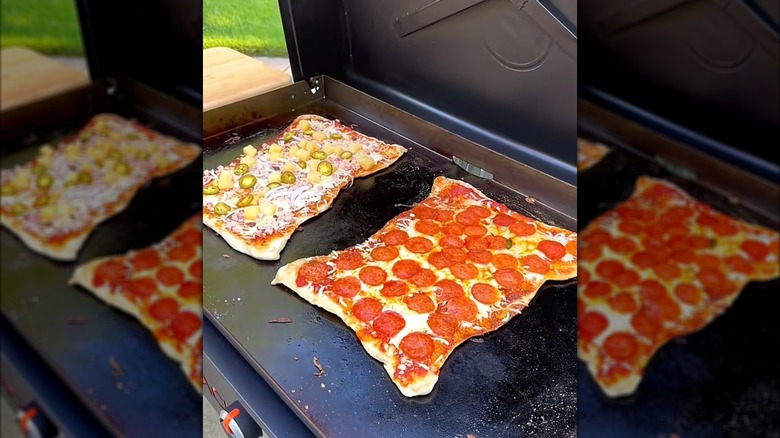
Oiling the surface of your Blackstone will ensure your crust doesn't stick and will also help it to develop some flavorful color (if you're using flatbread or a store-bought crust that's par-baked, Blackstone recommends skipping this step). You should also poke some holes into the dough itself so it doesn't bubble up too much as it cooks, allowing the base to crisp up evenly. If preferred, you can flip the dough over to help it cook through on the other side, but this isn't always necessary on thinner crusts.
Then all that's left to do is to add your sauce and toppings, close the lid, and allow the cheese to melt and the veggies to soften. However, if you want to maximize that crispy crust and prevent any steam from softening the edges, cook your toppings separately and add them at the last minute. This is especially important for raw toppings like sausage, which you can fry up on the side and crumble on top, along with any fresh herbs and a final drizzle of fruity olive oil. And if you're making your own sauce, the secret ingredient that makes homemade pizza sauce restaurant-worthy is a dash of balsamic vinegar.