

10 Baking Tools To Look For At Thrift Stores
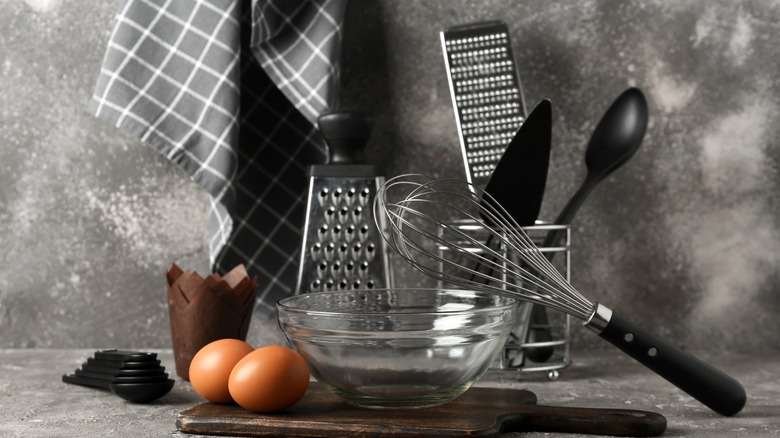
Baking can require an oddly specific collection of tools — it's a science, after all. Some tools earn a spot on the countertop or in the utensil drawer, while others come out for a specific type of holiday treat that you promised to decorate for the bake sale. Before paying full price for every new addition, it's worth checking out what's available at local thrift stores. While some kitchen items are better bought new, there are plenty of baking tools worth buying secondhand.
Of course, not everything in the thrift store's kitchen section is worth buying, and certain tools aren't ideal secondhand purchases. Since these tools will come into contact with food or be used in a hot oven, making sure they're safe to use comes first. Slight discoloration or evidence of past use doesn't automatically make an item worth skipping over, but chips, cracks, rust, warping, and missing parts can be reasons to leave it on the shelf. From sturdy basics to specialty equipment, someone's once-loved baking tool might become your next can't-bake-without item.
1. Cookie scoops
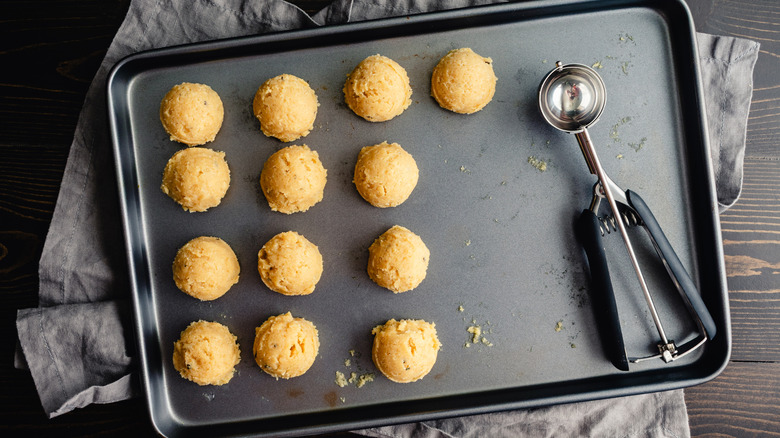
There's something so satisfying about chocolate chip cookies that end up the exact same size after baking, and a cookie scoop is an easy way to portion the dough evenly. Consistency isn't only about appearance, though. Consistent portions are more likely to finish baking at the same time.
When picking one out, squeeze the handle a few times and make sure the blade moves smoothly, and check the bowl and spring for rust, too. Depending on the size, cookie scoops can also be used to fill muffin tins or scoop pancake batter, as well.
2. Offset spatulas
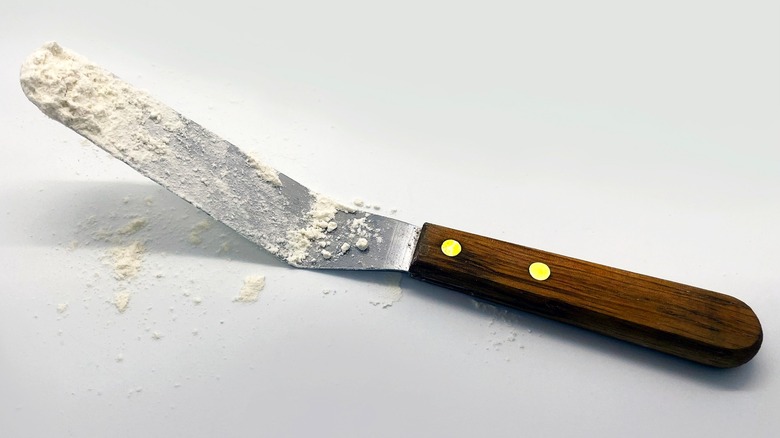
The angle of the blade keeps your hand from getting covered in frosting — and from ruining your baked goods. Smaller versions handle detail work, while longer blades spread buttercream or fillings across larger cakes. Beyond decorating, an offset spatula can smooth batter or lift cookies from a baking sheet.
For a smooth finish, check for a blade that is level and isn't bent. Make sure the blade isn't loose and wobbling inside the handle. Surface scratches aren't necessarily a problem, but rust or a damaged handle is a good reason to keep searching.
3. Cake turntables
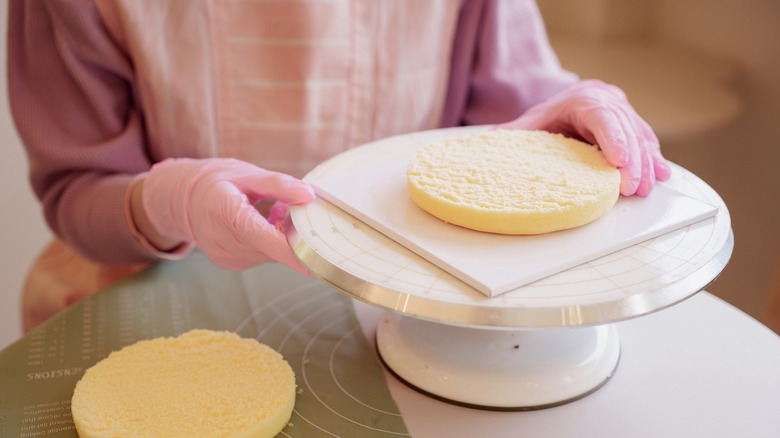
If you've tried to frost the sides of a cake while repeatedly stopping to rotate the cake plate, a cake turntable is a handy find. It rotates the cake, making it easier to spread frosting evenly and add decorations without reaching your arm over the cake.
Give a turntable a spin in the store. Make sure the top rotates smoothly while the base stays still, and press gently on different areas to test that it's stable. If the turntable has a locking mechanism or removable parts, make sure those work, too.
4. Decorating tips
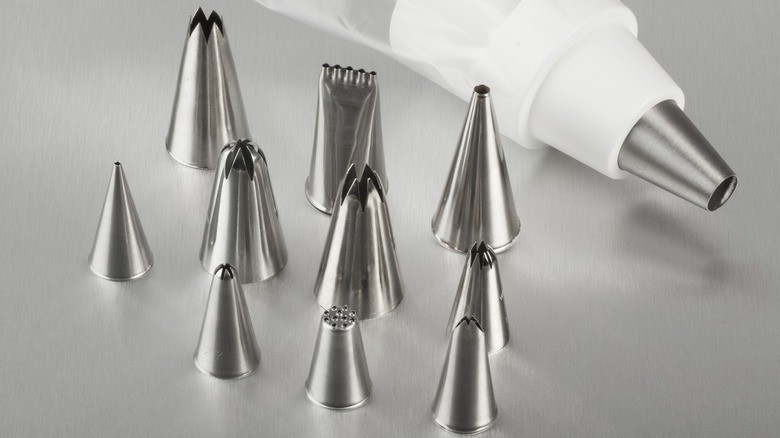
Piping tips let you add more detailed icing and frosting decorations, from rosettes to flowers to cake borders. Buying multiple types can add up, making secondhand tips useful for building a decorating kit.
Look inside each tip for dried-on residue and rust, and make sure the end hasn't been crushed or bent. Since the edges of a piping tip will change the design it produces, inspect detailed tips like stars carefully. Even if you don't recognize every tip, experimenting with the unfamiliar ones at home might help you discover a new favorite.
5. Pastry wheels
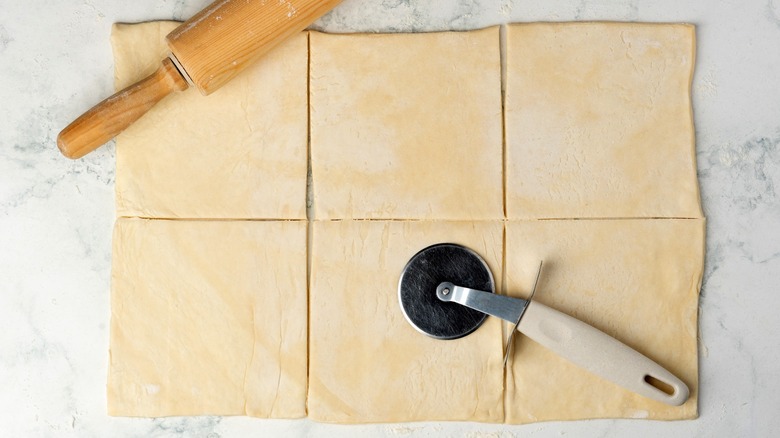
A pastry wheel may look like a mini pizza cutter, but its jobs are more delicate. Depending on the style, it can cut straight strips of dough, or create a scalloped or fluted edge for pastries and pie crusts.
Since the wheel has to spin in order to do its job properly, make sure it rotates and is free of rust or hard-to-remove buildup. Some signs of use are fine, but a wobbly wheel can make it harder to cut a clean, straight line.
6. Pie plates
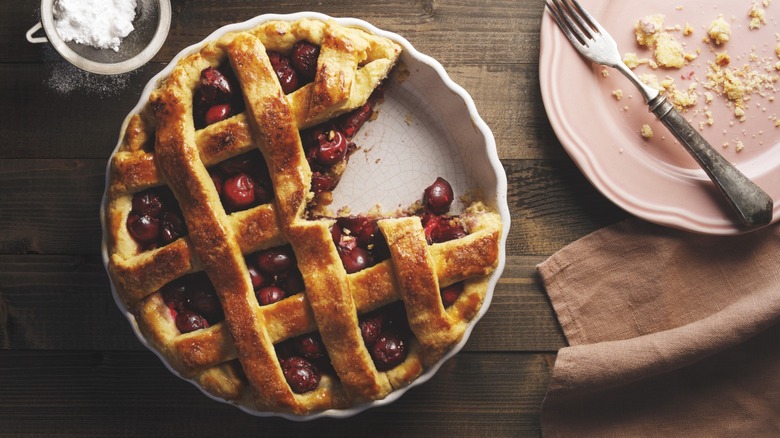
Pie fits every season, from classic apple in the fall to strawberry-rhubarb on a hot summer day. Having more than one pie plate can come in handy, since recipes and occasions might call for different sizes and materials. You might even find decorative glass and ceramic dishes that can go straight from the oven to the table.
Delicious pie looks even better in a pretty dish, but a dish should be in good condition. Metal pans should sit flat without any rust. Inspect glass and ceramic dishes for chips and cracks, since damage can weaken their strength.
7. Dutch ovens
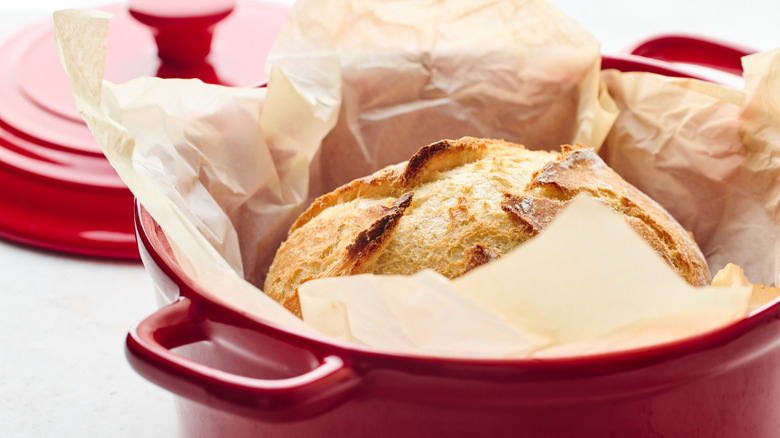
Crusty bread with butter is a simple pleasure, and it's even better homemade. A Dutch oven traps moisture released from the dough, creating the steamy environment that helps the loaf expand before the crust sets.
Dutch ovens are built for heavy use, but inspect a thrifted one carefully. Make sure the lid fits securely, the handles are solid, and there are no cracks. Enameled cast iron shouldn't be used if the interior is chipped, since pieces of the damaged coating can break loose.
8. Baking stones or steels
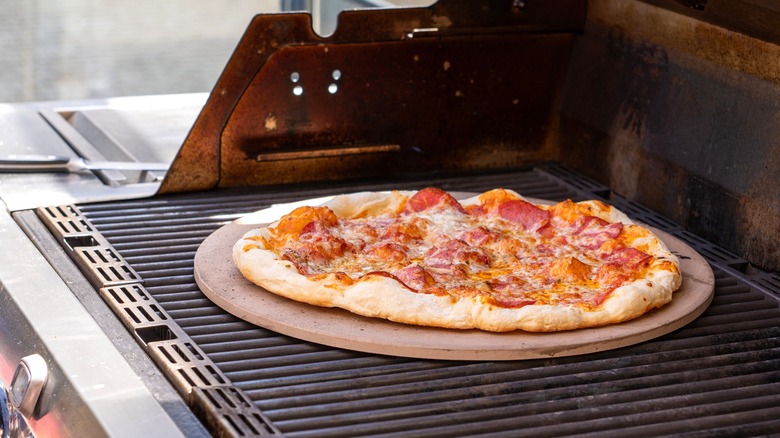
If your homemade pizza keeps coming out of the oven with a pale, soft bottom, a baking stone or baking steel might help. These thick surfaces absorb and hold onto high heat, which is then transferred to the dough to help the crust brown.
Both stones and steels are essentially solid slabs. Baking stones are prone to cracks, but steel should be flat and rust-free. Don't mistake every dark spot for damage, though. Unglazed baking stones usually darken with repeated use, so a stained stone may be well-used, rather than damaged.
9. Cookie presses
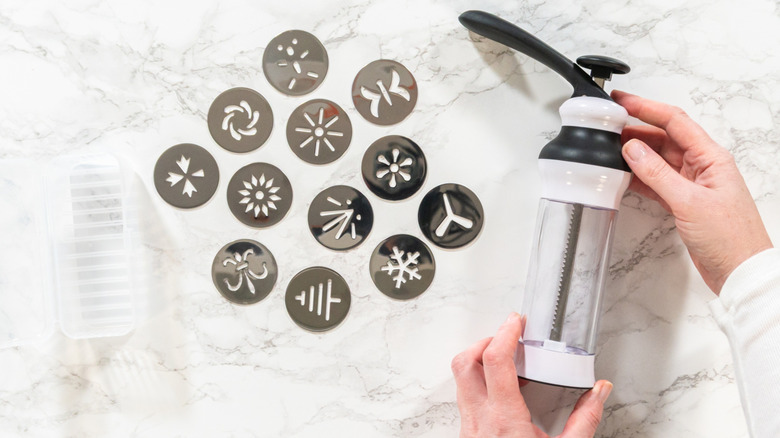
A cookie press tends to come out with holiday decorations and get put away at the same time as the Christmas tree. This makes a a thrifted one worth considering, as its uses are limited.
When shopping for one, sure the press moves smoothly and returns to the starting position. For spritz cookies, soft dough is pushed through interchangeable discs to create different shapes. So always make sure that discs are included. You should look for rust, bent discs, or cracked pieces.
10. Tart rings
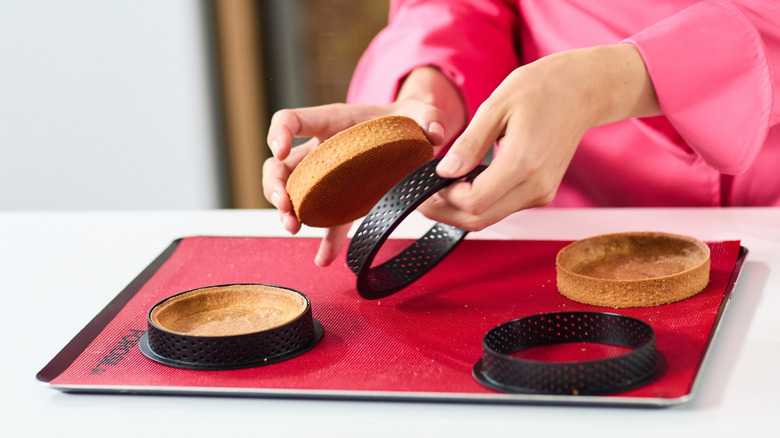
Tart rings are essentially circles of metal used to give tart pastries clean, straight sides. Unlike a traditional tart pan, a tart ring doesn't have a built-in bottom. They come in different sizes, from small (for individual fruit tarts) to large (for center-of-the-table desserts).
To test this thrift store find, set the ring on a flat shelf to make sure it's level. Then, check the seam and edges for rust. If you find several different sizes of tart rings together, that's great. They are sold like this so they can nest inside one another for compact storage.