

The Hands Down Worst Kitchen Tools To Buy From Thrift Stores
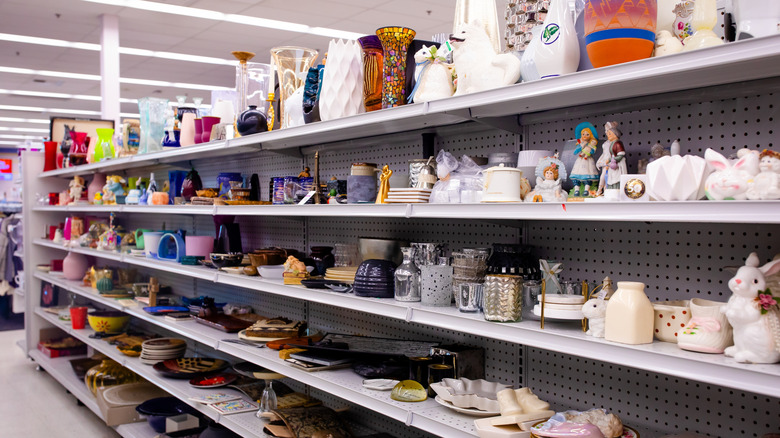
Thrift stores are incredible places to find vintage crockery, cute pie tins, and cast iron skillets that can be brought back to life with a little TLC. You can even score high-quality cutlery sets featuring pretty patterns from the past. However, there are some items that should be left on the shelf for safety reasons. The hands-down worst kitchen tools to buy from thrift stores are wooden items, such as spoons, spatulas, chopping boards, and salad bowls, because they can be damaged and moldy.
Wooden spoons are excellent kitchen utensils because they're non-reactive to acidic foods, like marinara, and stay cool to the touch because of their poor heat conductivity. Even the professionals love them. For instance, Chef Emeril Lagasse only uses them to make a roux because they don't absorb heat or impart flavor into a sauce. They are the old-school kitchen tool Giada De Laurentiis swears by because they're multifunctional and can moonlight as salad tossers, vent pan lids, or drying racks for making fresh pasta.
The only problem is that wood is a porous material, which means it absorbs liquids and oils as well as smells. Wooden items can become warped if soaked in water or become splintered and split when placed in the dishwasher. Spoons, cutting boards, and bowls that haven't been dried properly can also become victims of mold and bacterial growth. Moreover, there's no way of knowing which liquids these wooden kitchen tools have been exposed to.
Never buy used wooden items from thrift store shelves
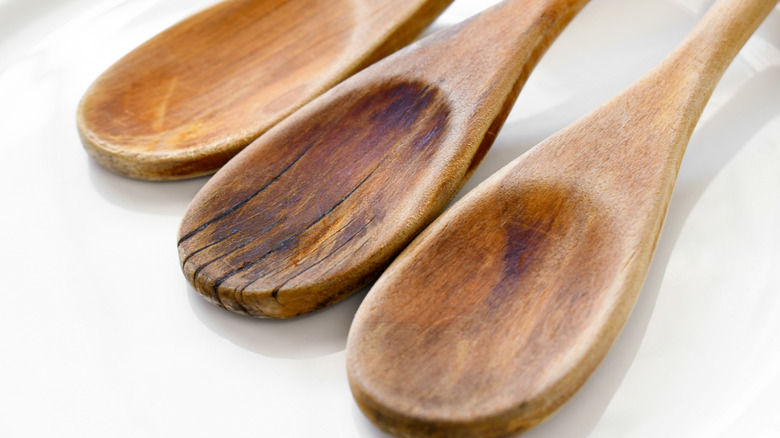
Aside from handwashing them with gentle dish soap, wooden products, like cutting boards, should be air-dried upright to allow any water to drain off them completely. They should also be coated in a food-safe oil to protect them from drying out and warping with age. Seeing as you can't possibly have any knowledge of whether pre-loved wooden utensils in thrift stores have been treated well by their donors, it's best to pass on them because there could be grease and food particles trapped inside that are invisible to the naked eye.
Any hidden decay or splinters could also contaminate the food you prepare. Plus, small cuts on wooden cutting boards can be very difficult to sanitize properly, so it isn't worth trying to rescue them. This safety rule goes for any wooden kitchen item purchased from a second-hand store, whether it be crockery, mixing bowls, or measuring cups.
It's also never a good idea to buy a used coffee machine from a thrift store, because you can't inspect the inside for damage or mold as you can with smaller gadgets and cookware. While it may look pristine on the outside, a second-hand coffee machine's internal system could have limescale buildup or may have even attracted pests.