

The Difference Between Walmart And Sam's Club's Rotisserie Chicken
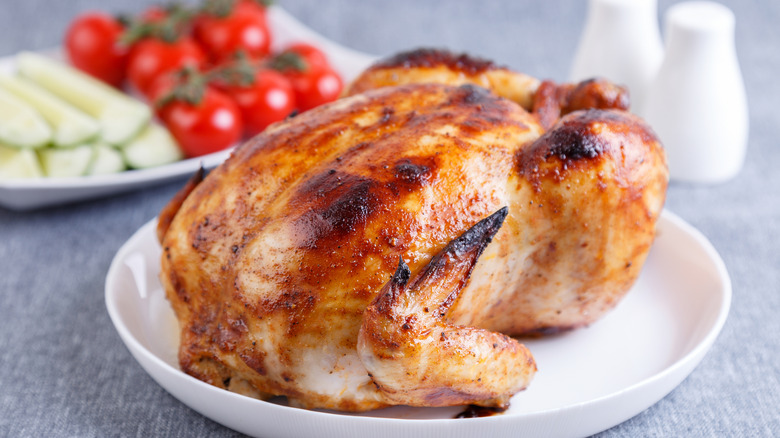
Rotisserie chickens are a common item for grocery stores to sell hot, and they're also frequently bought by shoppers enthusiastic for a good deal. The competition also means there's lots of differences between grocery stores' chickens. Even though Walmart owns Sam's Club, the two stores have differences that customers tend to notice. And customers tend to think Sam's rotisserie chickens are better across the board: in flavor, size, and value.
One Reddit user summed up a lot of the debate, saying that, "Sam's rotisserie chickens are one of the main reasons to shop there. Way better than the Walmart ones I have had. Plus, Walmart's cost more for a smaller chicken." Numerous other replies concurred that Walmart typically sells smaller chickens for more money. One customer commented that, after deboning both, the Walmart chicken also had about half as much meat as the Sam's Club bird.
Sam's Club tends to win in flavor and texture as well. One loyal customer said that they have never bought a bland or overcooked rotisserie chicken from Sam's Club, while another Reddit user complained that "Walmart chickens are awful[,] overcooked[,] and taste like a salt shaker." Experiences may vary though, as some have found the opposite results from their local stores, and claim Walmart makes a better rotisserie chicken than Sam's Club. So what's behind the rotisserie chicken experience at each of these stores?
Sam's Club is generally better, but rotisserie chickens vary by store

Consensus appears to be that Walmart's birds are just not quite as up to snuff. In fact, Sam's Club has the best grocery store rotisserie chicken of 2026 per Consumer Reports, citing broad customer satisfaction with its flavor and value. A Sam's Club chicken is priced at $4.98, regardless of size. Walmart's prices differ by location but it will likely be more than $5.00; some say their stores charge almost $7. But Sam's supremacy is about more than price.
At Sam's Club, rotisserie chickens get a seasoning made with salt, yeast extract, unspecified natural flavors, and chicken fat and broth. Walmart, however, uses dried chicken broth with rosemary extract and carrageenan, a thickener made from seaweed. From there, both spice rubs share garlic powder, but Walmart leans on dehydrated lemon peel and parsley, whereas Sam's Club adds onion powder and sugar for more complex flavor — plus paprika, for an appetizingly bronzed color.
The seasoning for Sam's Club rotisserie chickens may be more complex, but generalizations about which is better have their limits. One Reddit user who prefers Sam's Club chickens admitted that "it varies by location, same as all the in house prepared food. One location will be terrible while another will be glorious." Different stores may have different quality equipment and, unfortunately, differing levels of adherence to procedures that are meant to guarantee consistency.
Getting and using the best grocery store rotisserie chickens
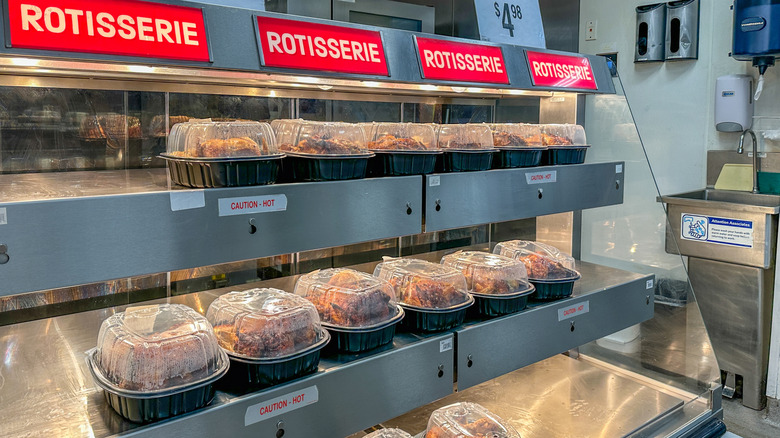
If you're shopping for a new grocery store rotisserie chicken, the preponderance of evidence suggests you'll have the best overall luck at Sam's Club. But no matter your preferred chain, there are many helpful tips for picking out the best rotisserie chicken at any location. The most obvious hint, especially for chickens not priced by weight, is to look for the heaviest one available. But a little more sleuthing can also keep you safe from dry and overcooked protein.
Look for a chicken with tight skin and minimal juices floating around in the container. Looser skin and more container juices both suggest that significant moisture has left the chicken, leaving dry and shriveled meat floating in a lake of chicken grease.
Once you've got a good one, there are also tons of ways to make store-bought rotisserie chicken better, even a blander one from Walmart (or a bad one from Sam's Club). Put deboned chicken into shawarma, soup, salad, chili, stuffed peppers, enchiladas, tikka masala; nearly anything with chicken in it can have rotisserie chicken in it instead. Or just whip up a nicely-seasoned gravy to drown whole pieces in before eating. Thankfully, the best ways to use these rotisserie chickens can also cover up some of their more common shortfalls.