

Pitmasters Share Their Tips For Using BBQ Seasoning Rubs
We may receive a commission on purchases made from links.
When you're first dipping your toe into the world of grilling, you have to learn the barbecue basics like building a great fire, controlling temperature, and sourcing the right meats. But as you delve deeper, you may find yourself obsessing over the specifics, like choosing the perfect blend of spices for a dry rub. There are an infinite number of recipes and products available for purchase when it comes to barbecue, but knowing which ones are worth buying and when to just make one at home can be overwhelming.
We've interviewed four pitmasters to share their favorite recipes, store-bought barbecue rubs, and tips and tricks for the perfect piece of grilled meat. Meghan Love hails from Mable's Smokehouse in Brooklyn, Shannon Snell is the head pitmaster at Sonny's BBQ, César González is the chef of Mordisco Steakhouse with two locations in Florida, and Michael Conlon is the East Coast pit boss for Virgil's Real BBQ in New York City. Together, these four chefs and pitmasters share their favorite recipes and ingredients for great dry-rubbed meat.
Barbecue can be intimidating, but chef González has a few words of encouragement for the home cook who's ready to tackle that grill. "Don't let the fire intimidate you," he says. "Buy the best cut you can afford, master your heat, use good salt, and have patience. Everything else falls into place from there."
The pros and cons of making vs. buying a barbecue rub
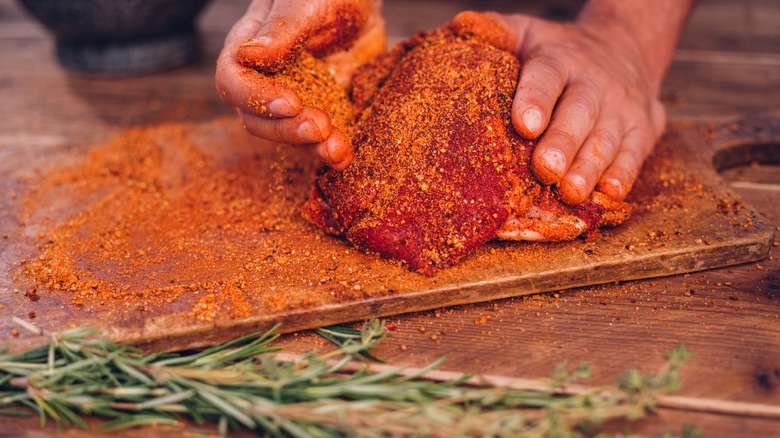
When looking at buying a pre-made barbecue rub versus crafting your own, there are a few pros and cons to discuss. Shannon Snell sees the benefits of making your own rub, such as saving some money, but knows there are drawbacks, too, explaining that "Unlike store bought rubs, [homemade rubs] don't come with a built-in shaker." Snell elaborates that they "go bad quicker due to the caking and breaking down of rub ingredients, especially ones high in sugar."
For César González, it's quite the opposite. "Buying a rub is convenient, but making your own gives you total control. You avoid the extra fillers and anti-caking chemicals, and you get to decide exactly how much salt goes in." If it's unlikely you'll be grilling very frequently, having the anti-caking agents in a rub will make it last in the pantry. But if maximum flavor is important to you, using freshly ground spices in a homemade blend may be the best course of action. González adds, "Toast your whole spice seeds, grind them fresh, and mix one part salt to two parts spices. You'll end up with a blend that's miles better than anything you can buy."
How to make a homemade beef rub
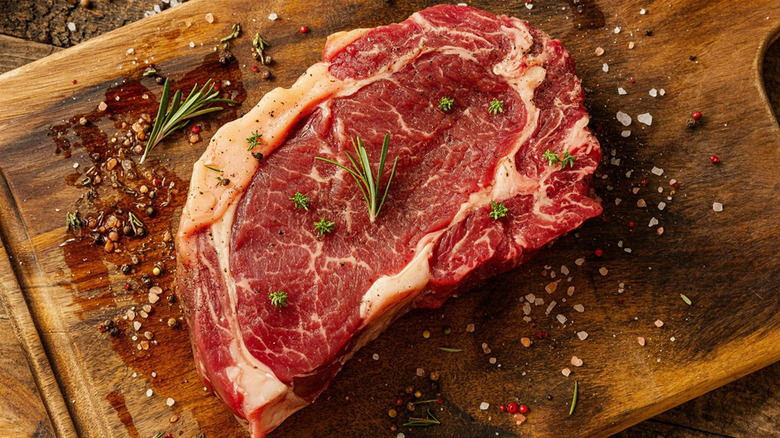
Not all meats are created equal, and the seasoning blends you use for each will vary quite a bit. Beef has such a strong flavor that pitmasters like to keep their homemade barbecue rubs for steaks and other beef cuts quite simple, in order to let the flavor of the meat shine. For César González, 100% coarse sea salt is all he needs to properly season a steak for the grill. When it comes to beef ribs, he'll add in 2 parts coarse black pepper to 1 part sea salt. Michael Conlon feels similarly, using 4 parts 16 mesh (a coarse grind) of black pepper to 1 part kosher salt on all his barbecue beef products.
Shannon Snell also likes to keep things straightforward for beef, using ½ cup each of kosher salt and 18 mesh black pepper, along with 2 tablespoons of garlic powder and 1 tablespoon seasoned salt. Meghan Love likes to add a bit more flavor, using a blend of ½ cup of black pepper to ¼ cup of salt, and ⅛ cup each of paprika and mustard seed powder. Overall, when it comes to beef, it seems best to start with the basics and add in a few spices where you see fit. Love mentions, "There is no right and wrong way to cook, barbecue or otherwise. It's up to your unique taste, we are just here to give you guidelines. How you personalize it ... Well, that's where the magic happens."
How to make a homemade pork rub
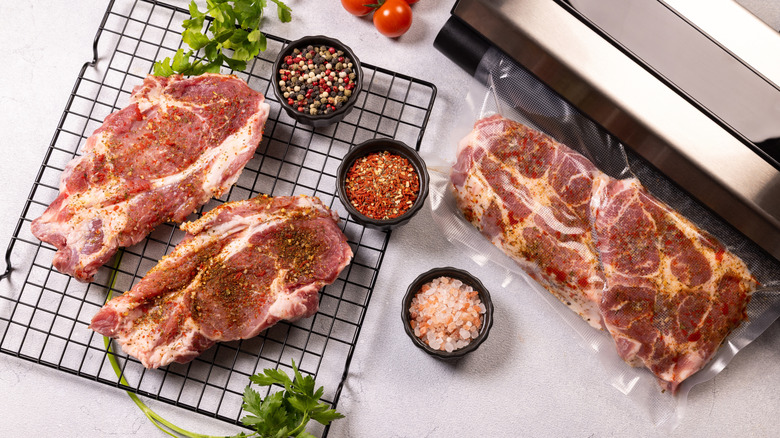
Where dry-rubbing beef is pretty straightforward, seasoning pork can be more complex. The mild, nutty notes of pork leave the door open for a lot of experimentation with different spice blends, and possibly even adding a little sugar to the seasoning. Each expert takes a different approach for their homemade rubs.
Shannon Snell's recipe for an all-around pork rub uses 1 cup of kosher salt, 1 cup of white sugar, a 1/4 cup of black pepper, 2 tablespoons of garlic powder, 2 tablespoons of onion powder, 1 tablespoon of smoked paprika, and 1 teaspoon of cayenne powder. Where his is savory and smoky, Meghan Love opts for a bit more aromatic complexity, using ½ part salt to ½ garlic salt, ¼ part celery salt, ¼ part dark brown sugar, and ¼ part cumin, plus ⅛ part dark chili powder. "Brown sugar," she says, "Will caramelize in the smoking process. This creates the dense, chewy bark that adds an unctuous layer of complexity to the meat."
Michael Conlon says, "As far as more complex rubs go, I find them more useful on pork as opposed to beef." For pork shoulder, his recipe uses 1 part chili powder, 1 part garlic powder, 1 part onion powder, 1½ parts kosher salt, 2 parts raw sugar, and 3 parts paprika. The name of the game with dry-rubbing pork is to use more sugar than you would with beef, whether it's raw, dark, or white. A little sweetness will complement the mild flavor of pork, and create a balance when using more complex spice blends. Remember to let your meat rest in the dry rub before cooking, to let the flavor develop.
How to make a homemade chicken rub
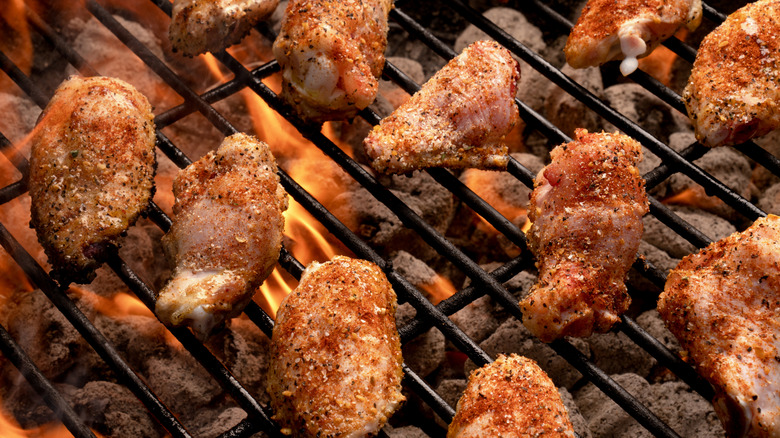
There are a few things to keep in mind when cooking chicken, such as the quality of the bird, and how to tell when it's fully cooked. But when it comes to seasoning, the options are endless. The mild flavor of chicken is a blank canvas for whatever picture you want to paint with your spices, whether that's a simple salt rub or something more complex. So long as the meat is fresh and comes from a good farm, you don't need much to make it shine.
César González uses the same recipe for poultry that he does for pork, and he keeps it simple, with 2 parts salt, 1 part paprika, 1 part garlic, and ½ part black pepper. Meghan Love opts for lighter, aromatic ingredients for her chicken rub, which she also uses for shrimp and fish. Just ½ part salt, ¼ part garlic salt, ¼ part black pepper, ¼ part white pepper, ⅛ part celery salt, and ⅛ part paprika.
Shannon Snell doesn't use a specific rub for chicken, given the endless options, instead offering an all-purpose recipe for a rub, using ½ cup of brown sugar, ¼ cup of kosher salt, ¼ cup of paprika, 2 tablespoons of coarse black pepper, 2 tablespoons of granulated garlic, 2 tablespoons of onion powder, 1 tablespoon of chili powder, 1 tablespoon of mustard powder, 1 teaspoon of celery salt, and 1 optional teaspoon of cayenne pepper. Whether you're craving simple, spicy, aromatic, smoky, or sweet, there's lots of room to get creative with a chicken rub.
Michael Conlon's favorite store-bought rubs
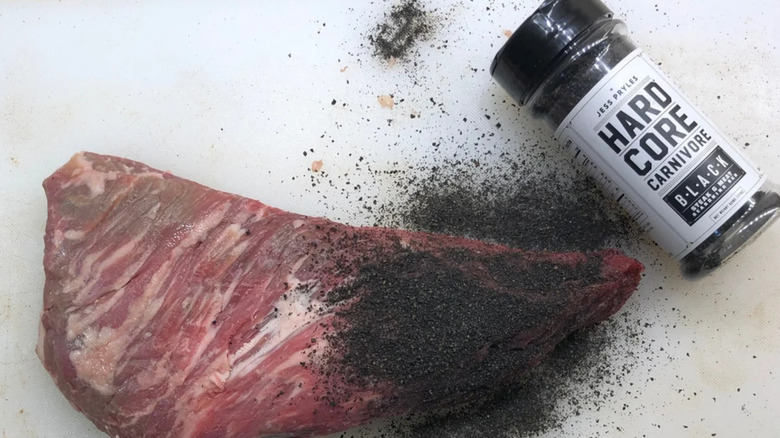
While he certainly has some great recipes in his arsenal, there are a few different brands of dry rubs that Michael Conlon keeps around his kitchen. Hardcore Carnivore is one of them, with Hardcore Carnivore Black seasoning being a favorite of his to use on steaks cooked over a live fire. He also enjoys the brand's Cowboy Butter Mix, explaining, "This isn't really a rub, but a great seasoning mix to make a cowboy butter for steaks." If you don't already know, Cowboy butter is a compound butter that's packed with tasty ingredients and used almost like a sauce to finish a steak on the plate.
From the brand Meat Church, Conlon also loves Deez Nuts Honey Pecan (especially on chicken), which uses honey powder and natural pecan flavor to create the perfect nutty blend. He says, "If you like pecans, you will love this." His other favorite blend from this brand is Meat Church Holy Gospel BBQ Rub, which was designed by the brand to be the perfect all-purpose rub, great on beef, pork, poultry, or vegetables (although he prefers to use it on ribs). When it comes to cooking pork shoulder, like for slow-cooked pulled pork sandwiches, he loves Sam Jones BBQ Rub Potion No. Swine, which is a North Carolina classic blend that can also be used on the whole hog.
Meghan Love's favorite store-bought rubs
When it comes to choosing a store-bought barbecue rub, Meghan Love prefers to support smaller businesses over big supermarket brands. She says, "I generally try to seek out people with passion enough to take their rub to market. You can taste that passion!" One of her favorite small-brand barbecue rubs is Deapster, in Louisville, Kentucky. "The Tiger seasoning has an Indian spice profile which adds a complexity and warmth to meats — great on beef, lamb, pork and veggies."
For pork tacos and enchiladas, she loves Dan O's Chipotle seasoning. "I like [this seasoning] when I'm making barbecue with a more Tex-Mex leaning," she says. "It has a distinctly Southwest flavor." While many pre-packaged pork rubs include salt and sugar, it's worth noting that this seasoning blend is zero calorie and low sodium, so you may want to add your own sugar to the rub if you need it.
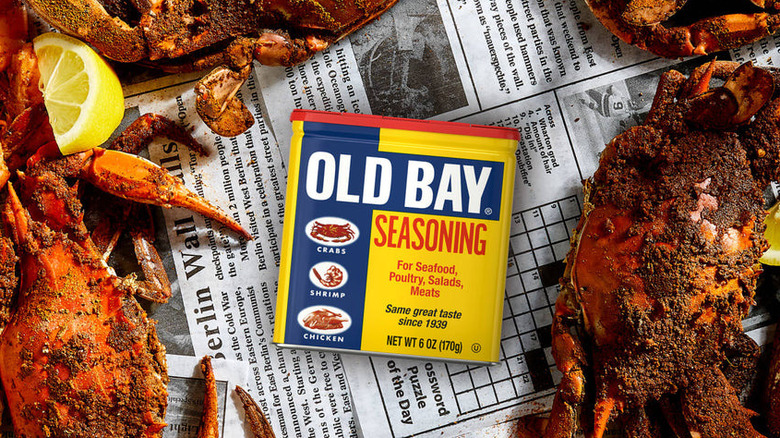
Although Love prefers to support small businesses, there's one exception to this rule, and that's Old Bay seasoning. There are many different ways to use this versatile seasoning blend, and Love even enjoys putting some on the rim of her Bloody Mary. She says, "I'm a sucker for Old Bay! I love the simplicity and zestiness of it — great for chicken, shrimp, even mixed into a burger patty. Yum."
Shannon Snell's favorite store-bought rubs
As a head pitmaster, Shannon Snell is no stranger to whipping up his own barbecue rub in the kitchen, but that doesn't mean there aren't store-bought brands he also appreciates. One he particularly enjoys is Kosmos Q Texas Beef BBQ Dry Rub. He says it's a "great blend of salt, sugar, garlic, and pepper. [It's] my favorite rub and goes very well with brisket."
For beef and turkey (meats that you wouldn't usually pair with a sugar-based rub), he loves Plowboys Bovine Bold. "[It's a] great savory rub for those that don't want a ton of sugar," he explains. This rub features all of the usual suspects like garlic powder, salt, and a minimal amount of sugar, with more complexity added from Worcestershire powder, turmeric, and oregano.
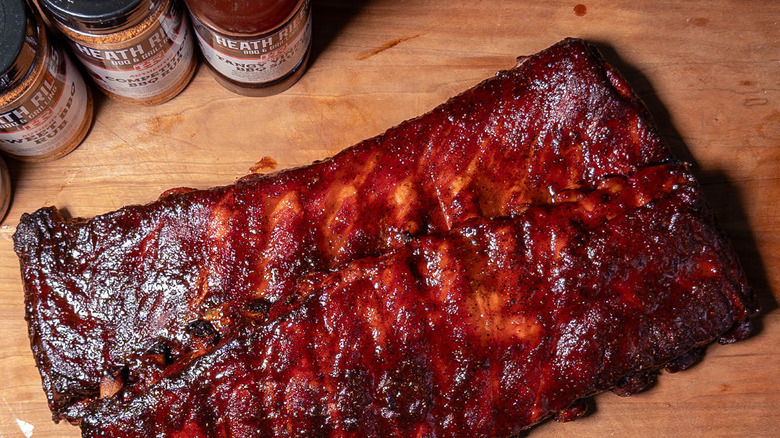
For pork, he steps away from savory and opts for a rub that's on the sweeter side with Heath Riles Sweet BBQ Seasoning. "This is a very solid competition base rub," Snell says. "It's got great flavor, color, and pairs well with pork products." This rub features a base of both white and brown sugar, paprika, and natural smoke flavor for added barbecue oomph.
Tips for applying your rub
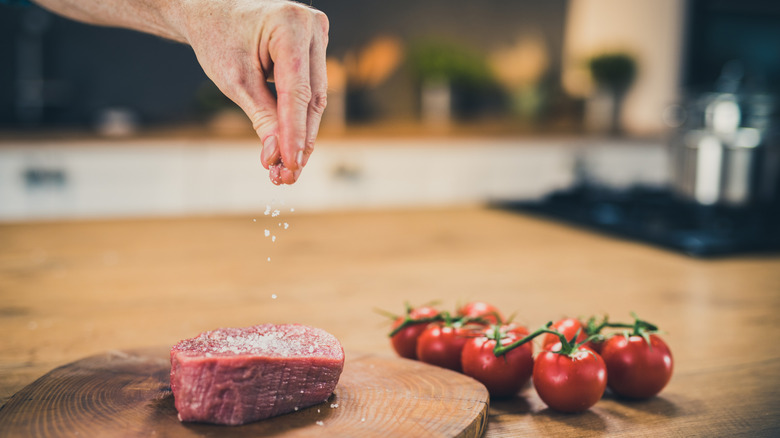
Once you've chosen the perfect rub, it's time to apply it to your protein and head out to the grill. Our experts have some additional tips and tricks for this process. First, dry off your cut of meat by patting it with paper towels. Meghan Love explains, "If the meat is too wet, the rub will slide right off and have a harder time penetrating."
Next, you should plan ahead for applying your rub. If you apply it to the meat too early, your protein may become overly salty. Apply too late, and the meat won't have enough time to absorb the flavor of the rub. Michael Conlon recommends, "For larger cuts of meat (brisket, pork shoulder, etc.), I apply my rub 24 hours in advance. Chicken and ribs can be done just a few hours in advance."
Finally, there are a few tips for effectively applying your rub. Love notes, "Despite the name, an aggressive rub is not the best technique. When you do this, the rub can get clumpy and create patches. Sprinkling and patting is a better technique." If you don't love getting your hands dirty, don't worry. Shannon Snell advises to "use a shaker cup to apply evenly and always make sure to season six inches above the product for even coating and application." Make sure to hit each side of the meat evenly, too, and season in all of the cracks and crevices. Happy grilling!