

How A Sprinkle Of Sugar Does Wonders For Your Dry Rub Seasoning
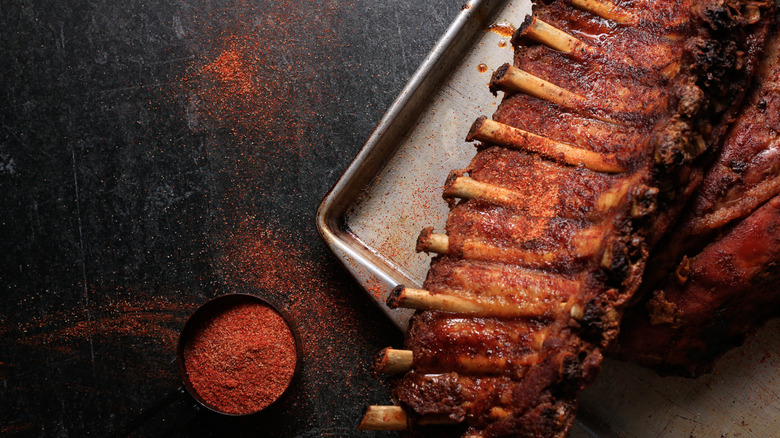
When it comes to mastering the art of barbecue, achieving a balanced flavor profile requires more than just a generous pinch of salt and pepper. And while savory spices do add flavor to dry rubs for various barbecue meats, incorporating a sprinkle of sugar into your blend acts as one of the most critical components for a great seasoning. It's true that avoiding common missteps — such as not using enough seasoning blend to properly coat your protein — ensures you actually reap the rewards of a well-balanced rub. But it's the sugar in the mix that serves as an essential component, taming the heat of cayenne, chili powder, and freshly ground black pepper to round out the overall taste of your dry rub seasoning.
Beyond balancing the heat, sugar introduces a layer of depth and complexity to your choice of protein through caramelization. As the sweet granules are exposed to steady heat during the barbecue's low-and-slow cooking process, they melt and transition into deeper, richer, toastier flavor notes. This sweet foundation prevents savory spices from tasting harsh or flat, creating the perfect balance between sweet, salty, and spicy elements — elevating everything from barbecued ribs and pork shoulder to steaks.
For tender meat and a deep lacquered sheen, sugar is key
The addition of sugar to dry rub extends far beyond flavor, however. This small component plays a heavy hand in the texture and structural crust formation of your cooked meat. Working alongside amino acids (the building blocks of protein), the presence of sugar accelerates surface browning and assists in activating the Maillard reaction as the protein cooks. And as the sweetener melts into a sticky layer early in the cooking process, it traps rendered fats and loose spices, locking them tightly to the surface of the meat. This process is what builds a thick, savory, and sweet bark or crust that defines premier barbecued meats.
Furthermore, sugar is naturally hygroscopic, meaning it attracts and holds onto moisture during the initial phases of cooking. This keeps your barbecue juicy and tender, preventing the outer layer of the meat from drying out prematurely. Sugar's moisture-binding property, paired with its accelerated browning, yields the glossy mahogany color that makes barbecued meats both tasty and visually appealing. To master this technique on cuts like a thick steak, just ensure you avoid other seasoning pitfalls, like leaving excess water on the meat's surface, so your sugar-infused rub can adhere properly and build that coveted crust.