

What's The Average Lifespan Of Tomato Plants In Your Garden?
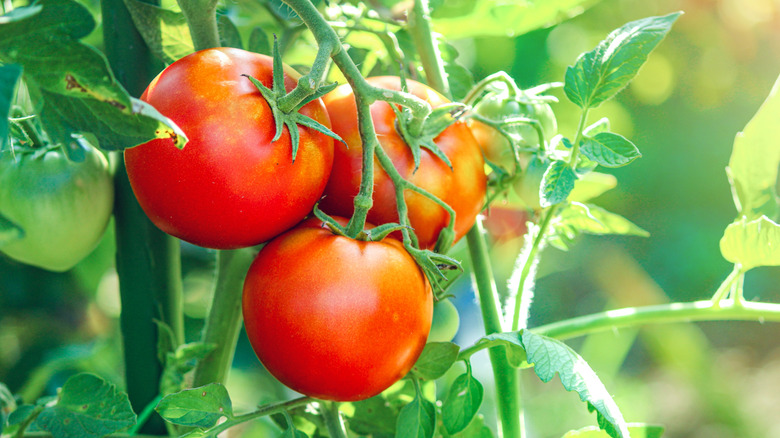
Most tomato plants only last one growing season, or 8-12 months on average, but some can grow for much longer if they are the right type. Many common examples are known as determinate tomato plants. Smaller and bushier, these plants have a limited — or "determinate" — number of stems, as well as fruits (in the botanical sense) that form all at once, after which the plant gradually dies. And then there are indeterminate tomato plants.
Indeterminate plants are larger and, with enough warm weather, will continuously fruit on vines for 6-12 months. Healthy plants in ideal greenhouse conditions, free from threats of frost and pestilence, may fruit for even longer. Indeterminate tomato plants in such conditions can live for 2-5 years before finally expiring.
Despite the massive apparent advantage to indeterminate plants, determinate tomato plants have their strengths too. They're easier to grow and manage, and also do better in shorter seasons than indeterminate ones, which need long periods of consistently warm weather. But don't be dissuaded: many gardeners choose to grow both, with determinate plants providing bulk harvest and indeterminate plants giving fresh tomatoes in the long-term.
Caring for your tomato plants
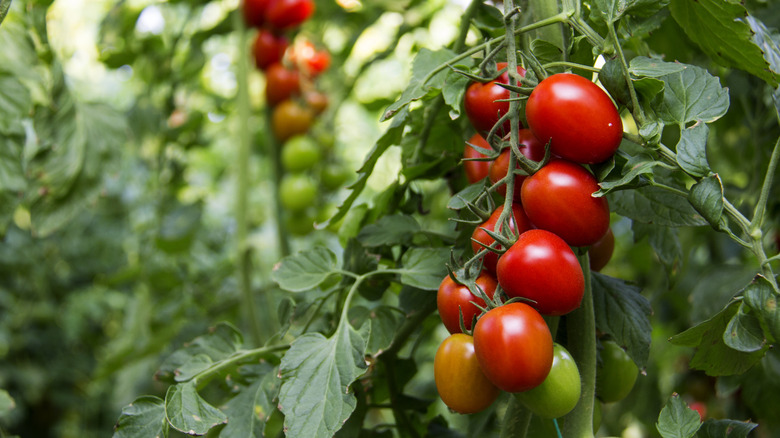
Regardless of their type, tomatoes need a little extra help to reach their full potential, especially if grown outdoors and exposed to the elements. Certain other plants should be grown alongside tomatoes to help the fruits thrive. Garlic and basil are both excellent choices to ward garden pests away, and basil will have the bonus of improving tomato yields as well.
Another thing worth doing (or not) is pruning. Tomato plants shouldn't necessarily be pruned because determinate plants don't need it, with the potential exceptions of trimming diseased stems or giving a nearby overshadowed crop more light. Their growth is limited by design. Indeterminate plants, however, require pruning to best manage their expansion.
Good tomatoes also need good nutrients, which is why a little wood ash is the best natural fertilizer for tomatoes — with properly managed acidity. These vegetables grow best in gently acidic soil with a pH of 6.2 to 6.8, and too much alkaline wood ash can upset that. Test the soil first to help figure out how much ash the soil can take before becoming too basic, which will lead to blossom end rot. But if the balance can be struck, ash contains essential nutrients for bigger, juicier, better tomatoes.