

Pies Vs Tarts: What's The Difference?
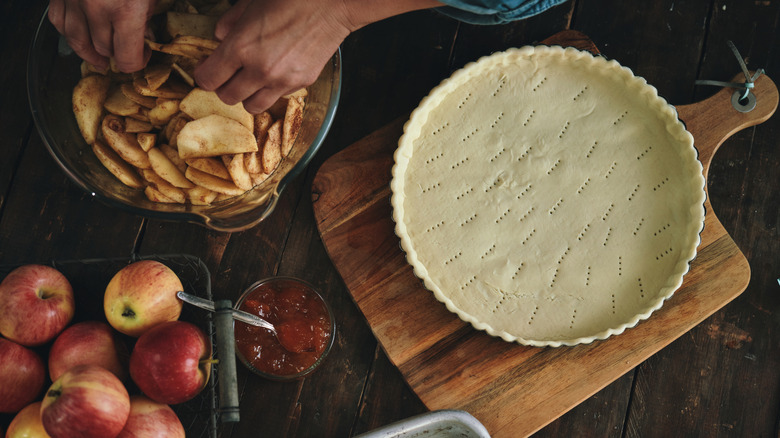
Let's be honest, the differences between a pie and a tart are largely academic. If you're choosing between one or the other for dessert, you'll most likely make your decision based on the filling. No one says "I love pies, but I won't eat a tart." Still, the question remains: What makes a tart different from a pie? In general, a tart won't have a crust on top; the edge crust is straight-sided; it has more of a crumbly, pastry-dough crust; is shallower with less filling; and doesn't need to be kept in the tin it was cooked in.
Sure, pie can also be baked without a top crust; however, pie dough is often flakier, the sides are sloped, there is more filling in the deeper crust, and it needs to stay in the tin it was baked in, or it will spill out (usually). Both can be sweet or savory. Tarts are more often filled after the crust is baked (but then, so are cream pies). The definitions of the two dishes are loose. Basically, if you use a tart pan, it's a tart. Usually. We do have a trick for baking a tart without a tart pan. Sorry if that complicates things even more.
This is what makes a pie
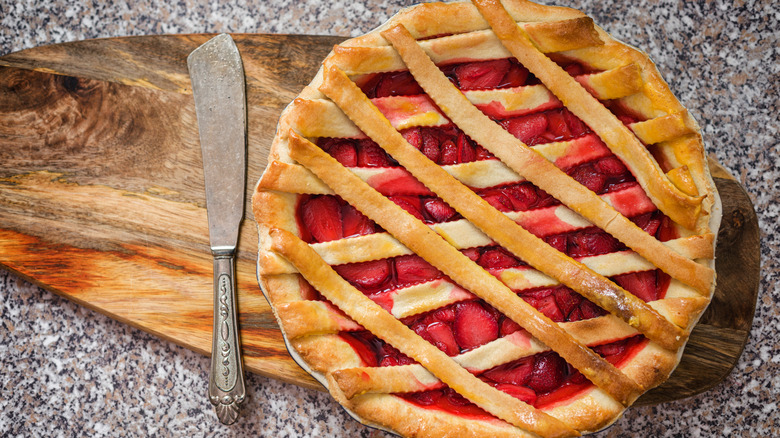
Pies can be either sweet or savory. Usually, a pie crust will have a fat like butter, shortening, or lard to make it flaky. Some pies, like key lime, have a graham cracker or a more pastry-like crust. You'll see pies with a full top, lattice top, and no top. Fillings can be fruit, cream, custard, meats, and vegetables.
Pies are generally served in the pie tin they are baked in. When we think of pies, we tend to think of the American version, like the sweet and savory award-winning pies at this Seattle-area dive bar. However, there are dishes we call "pie" that aren't actually pies. For instance, shepherd's pie is actually a casserole – otherwise we would have had to add mashed potatoes to the acceptable pie crust tops.
"As American as apple pie" rings true when you consider the dish came to the U.S. from all over the world: apples come from Central Asia, pies originated in Egypt, and apple pie itself came from the British. That's right, pies date back to the ancient Egyptians. They made a pie encased in an inedible crust called a "coffin." The Greeks refined the crust, and the Romans spread the dish across Europe. Pies spread from there and took on many different shapes and forms. Take a look at these 13 different pies from around the world and see if you can find a throughline.
This is what makes a tart
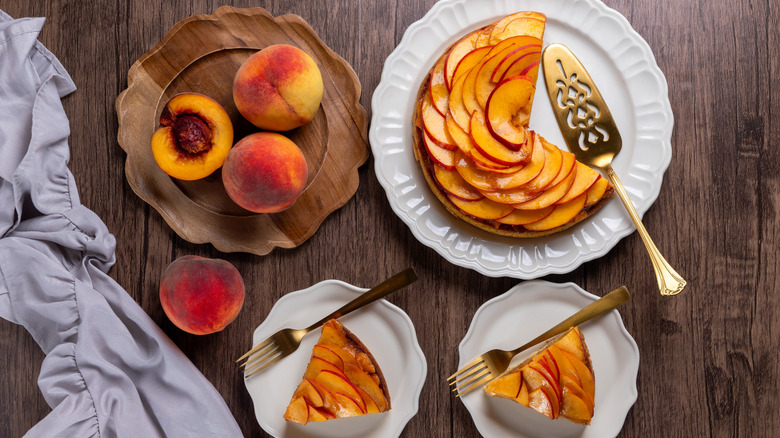
Tarts are thought to have branched out from the pie evolutionary tree sometime in the Middle Ages. The theory is that they were the upscale cousin to the pie. Where commoners were filling pies with offal, the nobles were making beautiful, refined tarts with colorful fruits and vegetables.
The modern fruit tart was popularized by the French, who would take a cooked pastry crust, fill it with pastry cream, and arrange fresh, seasonal fruit on top. You can find these tarts in pastry shops where, unlike pies, they are sold free from the tin they were baked in. Most tarts are baked in a circular pan with a removable bottom, but you can also cook them on a baking sheet in a pastry ring.
Not all tarts are filled after baking, as the Portuguese egg tart, pastel de nata, is baked with a sweet egg custard. The crust of this tart is flaky, unlike the crumbly pastry dough of a typical tart. But it is freestanding and not sold in a tin. To learn more about this little eggy tart, read our guide about what a pastel de nata is and what it tastes like.