

The Best Pear Variety For Homemade Pie (And How To Cut Them)
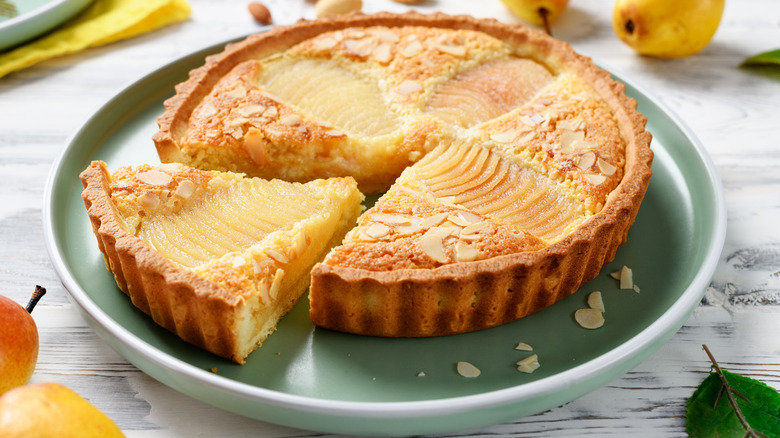
There are many, many types of pie out there. In fact, you can fill a pie with just about anything, including peanuts, ground beef, or sour cream and raisins (check out these unique pies you'd only find in the U.S., if you don't believe us). But there's something especially autumnal about fruit pies, and if you're looking for a sweet, juicy dessert to add to a fall meal, don't forget to consider the pear as a potential pie option.
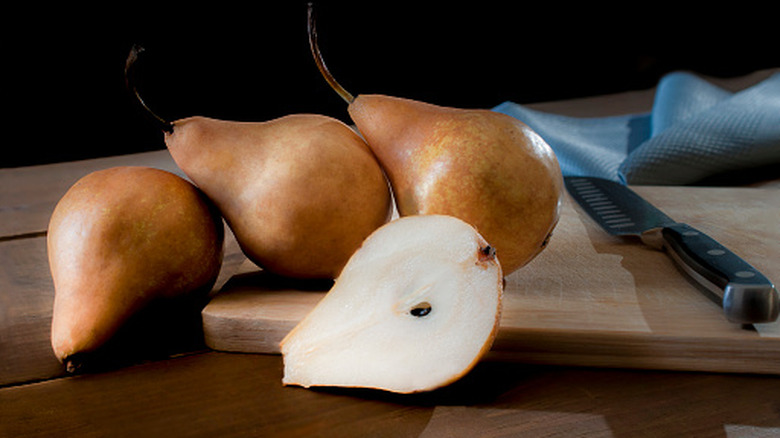
Pears can be a little underrated when it comes to pie fillers, but when utilized correctly, they can make for an absolutely delicious dessert. Of course, it helps to have the right kind of pear. And when it comes to pies, the Bosc is the clear favorite. The reason pie-makers prefer a Bosc pear over, say, a Comice, is because Bosc pears are a little firmer and hold their shape better while being baked.
In order to cut up your Boscs for a pie, you'll want to bisect the fruit, starting at the stem end and going lengthways, exposing the seeds and core. From here, cut the pear halves lengthways once again, into quarters. This will allow you to easily core the pear by flipping over the quarter pieces and cutting out the core. Now you can slice or cube the pear sections for your pie.
Other pears you can use for pies
While Boscs may be the favorite for pies, there are a lot of pears out there that have their own particular advantages. And if you're dying to do some baking but don't have any Boscs handy, don't despair. There are a couple of other pears that are great for baking as well.
One solid baking pear is the Bartlett. Known as the "Williams" pear outside of North America, this fruit has the classic "pear-shape, " and is prized for breaking down well when it is cooked. Just make sure to use slightly underripe Bartletts to prevent them from getting too mushy.
Another pear that is a friend to bakers is the Anjou. This pear comes in two varieties, Red Anjou and Green Anjou, and both are great options for baking. They have a mixture of sweetness and tartness, and they hold up well to high temperatures. And don't forget: you can always add more than one type of pear to your pie to get a combination of different flavors and textures.