

Why Chipped Pyrex Dishes Aren't Worth Buying At Thrift Stores
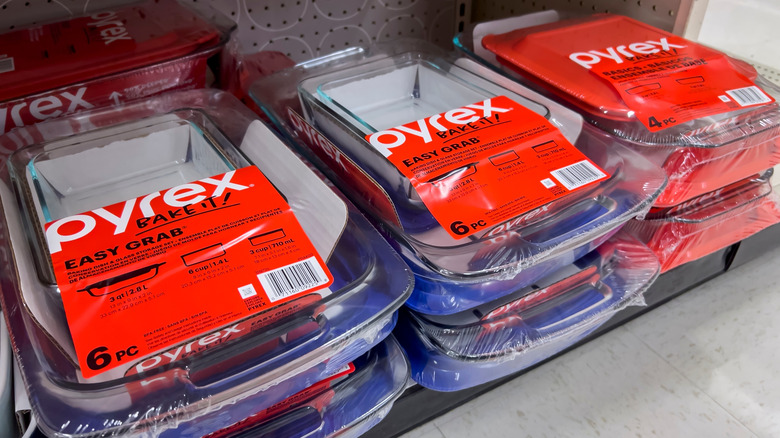
Pyrex dishes are incredible items to keep in your culinary wheelhouse. They're microwave-safe and can go from the freezer to the oven, with thermal shock resistance up to 460 degrees Fahrenheit. Modern Pyrex cookware dishes have a clean aesthetic, but rare vintage Pyrex designs feature colorful floral patterns, some of which have made a name for themselves as collector's items (when authenticating your vintage Pyrex dishes, always look for the logo). If you like the idea of thrifting Pyrex to save money, be mindful that any chipped items aren't worth buying. Aside from looking damaged, they can also be a hazard and shatter.
The Pyrex website warns that customers should not use or repair Pyrex items that are "broken, chipped, cracked, or severely scratched". This is because even the smallest chip can turn into a larger crack when exposed to a sudden temperature change. Ordinarily, you can take your Pyrex dish out of the freezer and pop it straight into the oven because it's designed to resist thermal shock. However, a chip acts as a weak point in glassware, and thermal stress can turn it into a crack when one part of the glass expands and the other contracts. While it might be tempting to grab a cheap Pyrex dish that has only a superficial chip, it's best to leave it on the shelf to avoid this risk, even if it looks harmless.
Chips, scratches, and cracks affect the stability of Pyrex dishes
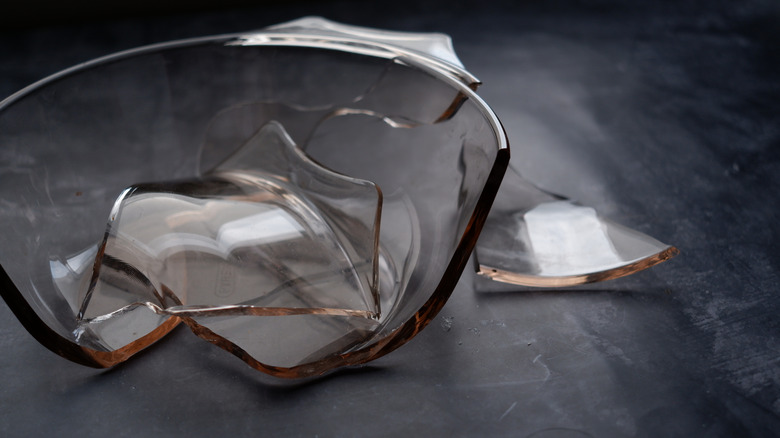
Pyrex dishes are made of heat-tempered glass, which makes them hardier than other types of glass that aren't treated in the same way (like soda-lime glass, which is used to make bottles and jars). Tempered glass has an area in the center of the glass, known as the tensile zone, which houses stored energy and keeps the material stable. If this balance of energy is disrupted through a chip or crack, the entire vessel can shatter into cube-like pieces.
These chips can occur through rough treatment, such as accidentally stacking glassware on other hard items in the kitchen cupboard, haphazardly placing it in the dishwasher, or dropping it. Sometimes flaws on the surface of Pyrex dishes can be a result of poor manufacturing, too. Whatever the reason may be for the damage, these impaired items should be avoided for safety reasons.
Heat-tempered glass vessels that are in good condition shouldn't shatter. However, adding liquid to a Pyrex dish loaded up with leftovers is recommended before placing it in the oven because it helps to distribute the heat evenly and prevent potential breakages. You should also avoid broiling food in Pyrex dishes, as the direct heat is often too high for them to withstand.