
The Old-School Way Cowboys Made Biscuits On The Trail
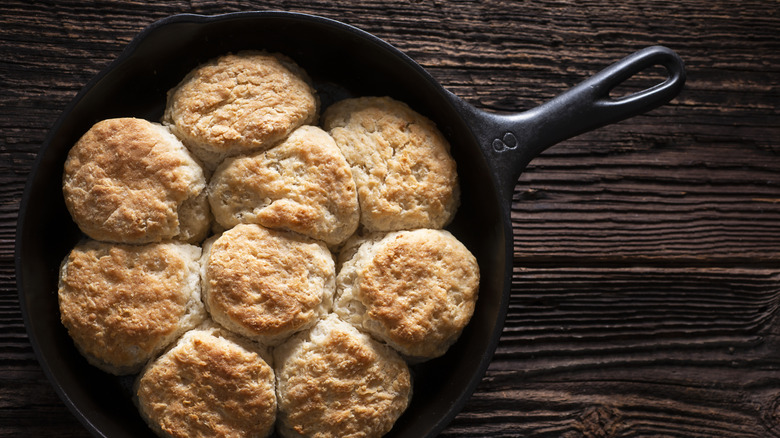
Today, we have the option to make delicious biscuits right out of a can, but in the old days, biscuit making was a never-ending task. And if you've ever read "Lonesome Dove," you understand the importance of a quality biscuit to a cowboy's emotional and physical wellbeing. Not only did a proper biscuit provide fuel for a grueling day spent in the saddle working cattle, but it also provided an opportunity for everyone to slow down for a few minutes and enjoy a communal breakfast with their fellow cowpokes before heading out on the range.
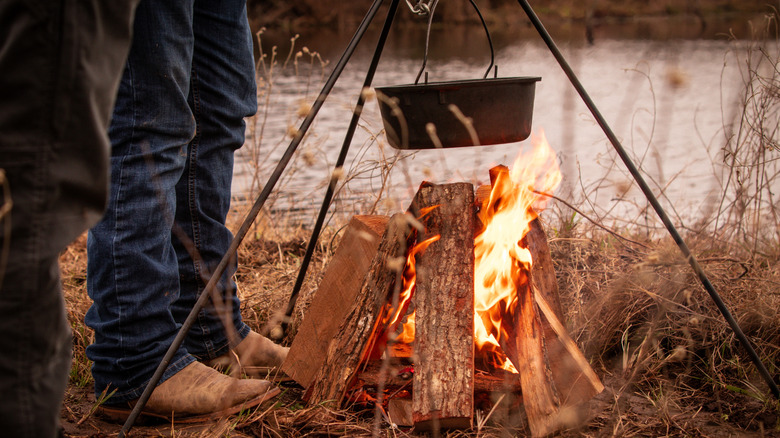
A cowboy's diet relied heavily on the skills of their cook, who was often aptly called "Cookie." The cook worked their magic and crafted the cowboys' beloved biscuits from the comfort of a horse-drawn kitchen known as a chuckwagon. The cook was responsible for the daily oversight and care of the sourdough starter, made from flour and water, that was used to make not only sourdough biscuits but also bread and another cowboy favorite, flapjacks. The biscuits were prepared in a heavy-duty cast iron Dutch oven that was placed over the campfire. Cowboys could enjoy the aroma of biscuits baking while readying themselves for the day. The savory biscuits had a tangy flavor and were very hearty, making them well-suited for scooping up the beans and gravy that often accompanied a cowboy's breakfast.
What did cowboys eat in the Old West?
While biscuits were a popular choice with both the cowboys and the cook, a cowboy's diet wasn't limited to sourdough biscuits at breakfast time, and many popular meals of the cowboy era are still popular today. Biscuits were often served with a heaping side of beans or potatoes. Easy to come by in the rugged old west, beans and potatoes were inexpensive and accessible options that provided sustenance and filled up a cowboy's belly.
One would think that when surrounded by cows, beef would be plentiful, but that wasn't always the case. Cows were valuable commodities that were often being moved so they could be sold. Unless one fell ill or died, the cowboys would usually refrain from eating them in favor of hunting wild game along the trail. Because game wasn't a reliable source of meat, many carried beef jerky with them to satisfy their meat cravings. Cowboys sometimes got lucky and found their meals topped off with local vegetables that the cook sourced from the local landscape. The cook would often ride ahead and forage for vegetables, herbs, and even eggs that could be used to spice up a stew or add variety to a cowboy's plate.