

5 Tips For Shopping At Publix On A Budget
These days it's really important to have savings strategies in mind before heading to the grocery store, because who can seriously afford to pay full price right now? If you're someone on a tight budget, you may not think you can even shop at Publix. Many people believe that if they are closely watching their spending, they have to sacrifice quality or only shop at discount stores, and that's not always the case. Grocery shopping on a budget is all about using good saving strategies and prioritizing what you value most when buying your groceries. You can save money while still being able to shop at Publix. You just need to set a grocery budget, download the Publix app, and know what to look for on the shelf.
It is true that there are many great budget grocery store chains out there that have amazing deals not just on bargain brands, but on premium brands as well. Even Walmart ranked high on our list of best grocery stores for ribeye. But Publix has built its reputation on the exceptional freshness of its daily-delivered produce, its family-owned meat suppliers, and its dedication to its customers. For many shoppers, that consistency is something they're not willing to sacrifice in order to save a few bucks. Many loyal Publix shoppers want to find a way to keep shopping at their favorite store even with rising grocery prices. The challenge now is that staying loyal requires a little more intention than it used to. With better savings strategies, you can get your Publix grocery bill a little closer to what you'd pay at stores like Kroger or Walmart.
Search for BOGO tags
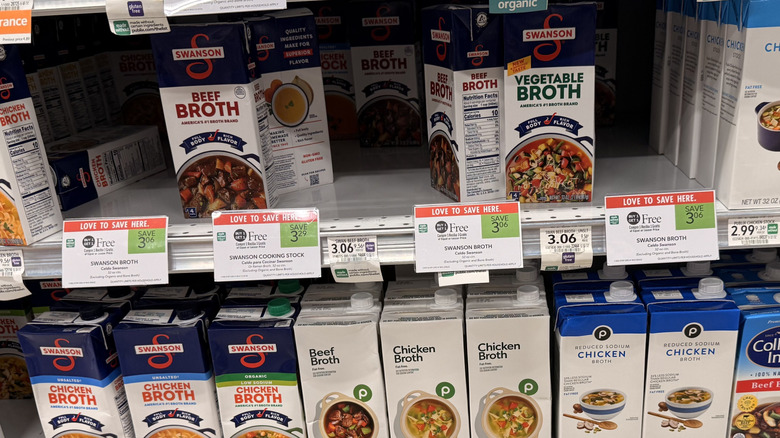
Perhaps one of Publix's most popular and well-known ways to save is its weekly BOGO (buy-one-get-one-free) deals. Every week, a new set of products goes on sale with this promotion. Just look for the BOGO savings tags on the shelf. You should know that stores in certain states can only sell items at half price for BOGO deals. This means you can purchase one of the items at half price instead of having to buy two to get one free. Be sure to check if your state does this. It is also worth mentioning that some grocery chains have been accused of raising prices on BOGO items right before the sale; we're not saying that Publix does this, but it's important to remember. The way you can ensure you're getting the best pricing for this type of promotion is to track the prices of items you purchase on a regular basis, paying special attention to unit pricing.
With BOGO sales, the most rewarding savings strategy is to stock up on freezer or shelf-stable food. You can even let Publix's BOGO deals pay for your pantry staples. The biggest mistake that customers make with these deals is buying the items and letting them go bad before they can be used. This is essentially self-defeating, because you end up spending more on wasted food. Keep track of Publix's weekly circulars and only buy the for-sale items you would normally be purchasing anyway. If you shop strategically, stocking up on your favorite things when they go on BOGO is a prime way to save money at Publix.
Look for markdown stickers
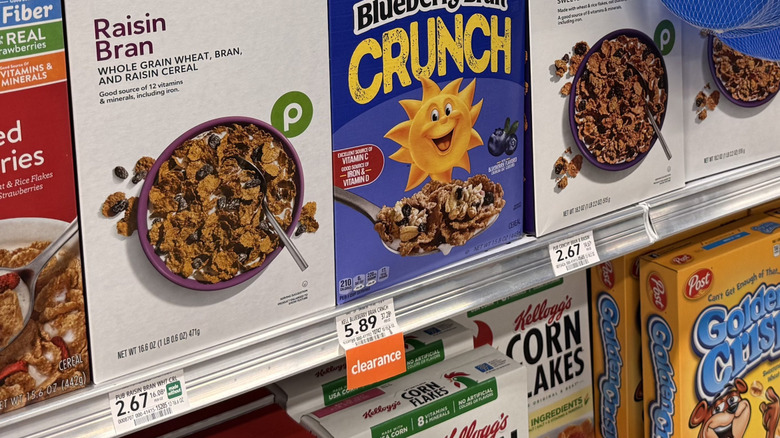
This might seem like a common-sense strategy, but sometimes markdown stickers can get confusing, considering some grocery chains have a variety of types of markdowns. There are a few markdown tags to look for at Publix as well. Red "save" stickers mean the item is on temporary sale, orange "clearance" tags mean the item will no longer be available after it's sold out, and of course the red "sale" tag with the black or green "BOGO" circle means the item is on a temporary buy-one-get-one-free sale. How often you purchase the specific item on sale and what its sale status is will determine your purchase strategy.
It's important to remember that often, when items go on sale, they get moved to a more prominent location, or, in the case of clearance items, they get placed on an end cap or special "clearance" location in the same department. Be aware that items you normally purchase that are discounted might not be in their usual locations.
The last thing to consider when using this strategy is how to plan your purchase in relation to each type of markdown. With red "save" sticker items, look for your regular staples and purchase the items you need to have on hand before the sale ends (not stockpiling). When you spot orange "clearance" stickers on items you use regularly, this is the moment to stock up if you can. For BOGO deals, once again, use these strategically only on items you know you'll use.
Have the Publix app and your coupons ready before you go to the store
These days, it's a lot easier to use coupons than ever before. The important thing to remember, which will make using coupons relatively simple, is to prepare everything before you head to the store. This is important advice, especially for those of us who tend to forget to bring our coupons when going grocery shopping.
Not only does Publix's coupon policy allow its own and manufacturer coupons, but you can also use competitor coupons to save on products (within the store's guidelines). Doubling up coupons with in-store deals is a great way to significantly save on items you regularly purchase, and these savings add up over time.
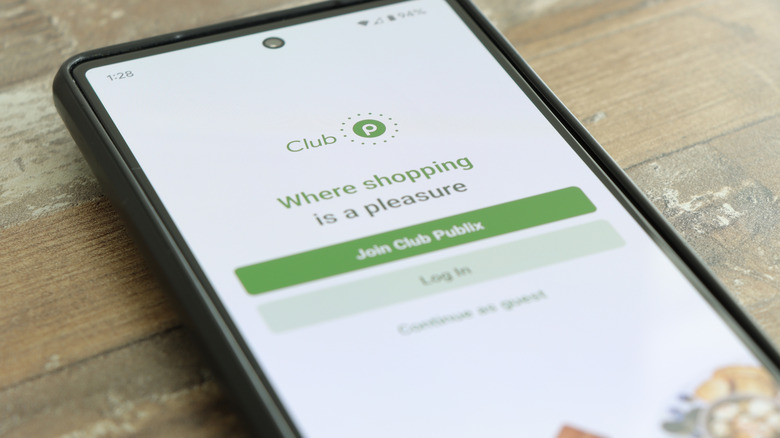
Downloading the Publix app will help you keep track of the items you purchase and tell you when they go on sale. With the app, you can also add digital coupons to use in-store, check for BOGO deals, and flip through the weekly sales flyer. Using the app to make your grocery list will also keep you accountable, helping you to only purchase the items on your list and to avoid impulse buying. Using the combination of the Publix app, coupons, and even savings apps like Ibotta or Flashfood will help you stay on budget.
Search for store brand alternatives
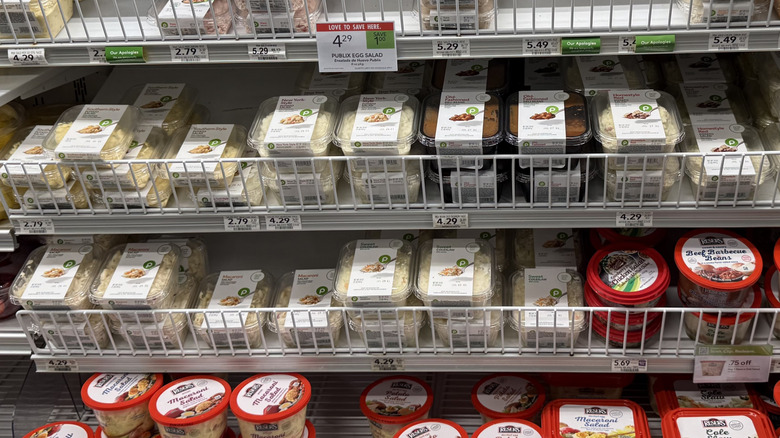
Many people often think store brands are of lesser quality than name-brand products. In most cases, this is actually not the truth, and some believe it's even more untrue for Publix-branded products. Publix has two private-label brands in-store: Publix name-brand products and its GreenWise line, which is for customers who are more ingredient-conscious. Generally speaking, you're not going to notice a big difference between store-brand selections and the comparable big-name items because they are often produced in the same facility and are of similar quality.
Swapping your preferred brand of pantry staples, dairy, canned goods, and spices is the best way to see the biggest savings differences. Often, the comparable name brand is significantly more expensive in these grocery categories. So, it can definitely be worth your while to try the store-brand alternatives. The good news is that if you find you don't like the store brand at Publix, you can always return the product for a refund.
Double check the unit pricing
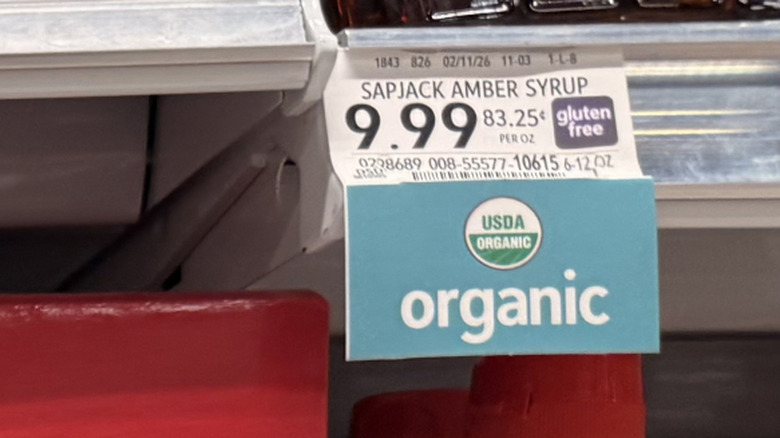
Checking unit pricing is often overlooked by those new to grocery saving strategies, but it is a vital way to ensure you're really getting a deal. Customers often focus only on the sticker price because that's what we're actually paying. The reality is that whenever you're buying multiple items, family-sized products, or stocking up, that price per ounce or pound can make a huge difference. Not only could knowing an item's unit price help you make a better purchase decision (especially when it comes to checking whether that BOGO deal is as good as it seems), but it could also make you rethink the types of products you've been buying in the first place.
Getting familiar with unit pricing can sometimes reveal shocking discoveries for your favorite grocery items; premium extra virgin olive oil unit costs can often rival expensive wine and if you want a real shocker, check out vanilla extract unit pricing. The cost per unit amount will often be in the corner of a shelf tag in really small print.
Understanding unit pricing and how to compare it with item prices is not just for making a decision between buying a bulk-size product or multiple smaller items; it is also useful for savings in other scenarios. You can use unit pricing to compare store-brand products with big brands, to track the price changes on items you buy on a weekly basis, and to protect yourself against "shrinkflation" (the item price stays the same but the unit price increases). Knowing how to use unit pricing to your advantage is one of the most powerful savings strategies you can have.