

5 Disadvantages Of A Blackstone Griddle
An outdoor griddle can change the way you cook for the better. It makes anything that needs flipping a breeze to cook, from burgers to pancakes, and an expansive flat top can be more useful than expected. Blackstone is one of the most popular brands for people looking to get started with outdoor griddles, but before you take the plunge on the monetary commitment, there are some disadvantages to consider.
Some of these drawbacks are not unique to Blackstones, and apply to all griddles. Convenient as they may be for some foods, they are also inconvenient or impossible to use for others, and any flavor profiles that benefit from open flame will feel their absence here. And then there's everyday maintenance: considerably more than a simple grill, with graver consequences for cutting corners. But for all the general disadvantages, there's one big one that unfortunately seems particular to Blackstones. Despite being a big name in consumer-grade griddles, many customers complain about low build quality being an annoyance, if not hindrance, for the griddle's entire lifespan.
No smokiness
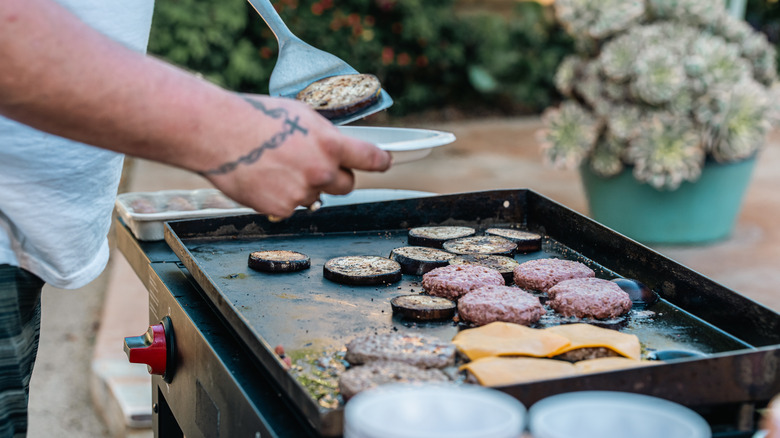
Cooking outdoors calls to mind open flames and a rich, smoky char on the food, none of which is possible on a Blackstone or any griddle. It can certainly get hot enough to sear food, but that's not quite the same as a char from the heat of actual open flames, regardless of fuel source. You can, however, approximate some of that flavor with one additive you can also use inside.
Liquid smoke gets its flavor by actually trapping smoke in liquid. To make it, hot smoke is cooled and condensed into a black liquid which, after a certain amount of filtration, is bottled and sold as liquid smoke. A few drops added to food go a long way, and contrary to snobbish opinions, Liquid Smoke does have a place in kitchens. But it will never exactly replicate the flavor and mouthfeel of actual fire-cooked food, for which you need a real grill.
Grease trap maintenance
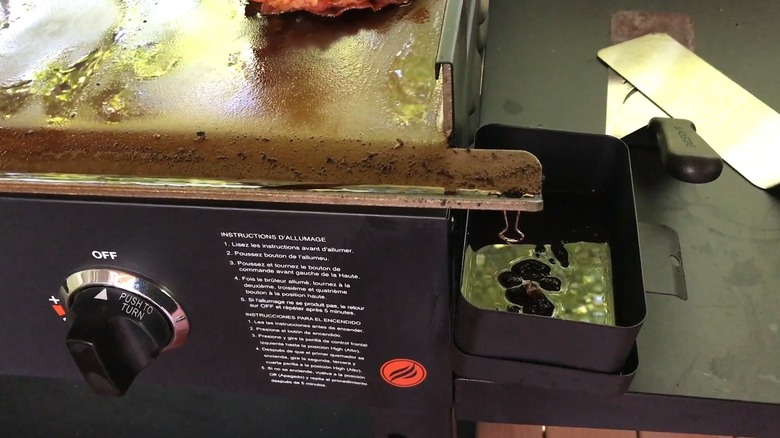
Nobody likes doing it, but cleaning the grease trap on a Blackstone griddle is essential to proper functionality. And, as many owners have learned the hard way, the griddle itself really does need to be on an even surface. If it's off-kilter at all, the grease trap has a high chance of leaking and creating a large, highly flammable mess.
Aside from leveling sensitivities that may be unique to a Blackstone, cleaning a grease trap is rarely an enjoyable experience, but always vital for proper use and safety. Failure to do so poses an unacceptable fire risk, and is highly likely to draw bugs — or, depending on where you live, larger scavengers like raccoons, coyotes, or even bears. Some grills, notably including all charcoal grills, have the easiest grease trap of all: it simply drips down into the flames and burns off. But with a Blackstone, grease must be scraped off the cooktop and collected in a small hole, which then drips into the actual trap. Some users recommend disposable liners for easier cleanup, but every part involved still needs periodic cleaning. It's a lot more involved than brushing off a charcoal Weber.
Cooking surface maintenance
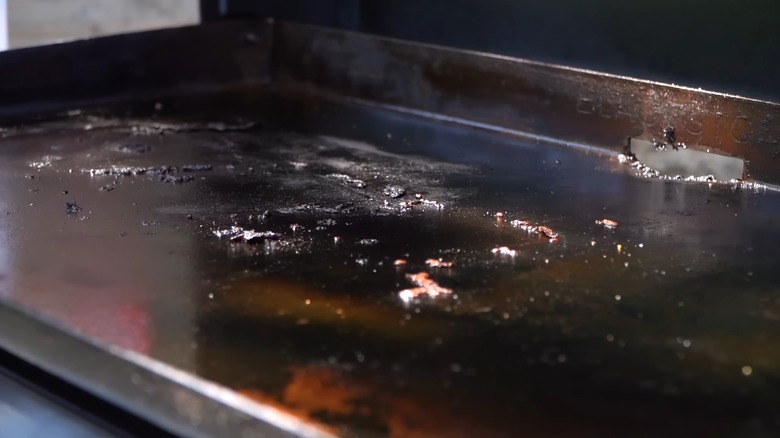
Cooking surfaces like these require a certain amount of care in order to work correctly. It's obviously not as easy as putting it in a dishwasher, but compared to a grill it takes more effort before its first use, and a tiny bit more after each use. Blackstones use cold-rolled steel for their cooking surfaces, which, much like cast iron, requires seasoning — using heat to bond cooking oil to the metal — before actually cooking on it. After washing the griddle plate, heat it until discoloration and spread a thin layer of cooking oil with tongs and a cotton cloth. Allow the oil to smoke until it stops smoking, and repeat the process at least 3 times.
Over time as you cook, the seasoning layer will develop further, also much like cast iron. This is enabled by a quick re-oiling after every cook once the griddle plate has been cleaned. For more tips on griddle maintenance, including correct use and storage, check out the care and cleaning guide for Blackstone griddles.
Can't cook thick cuts
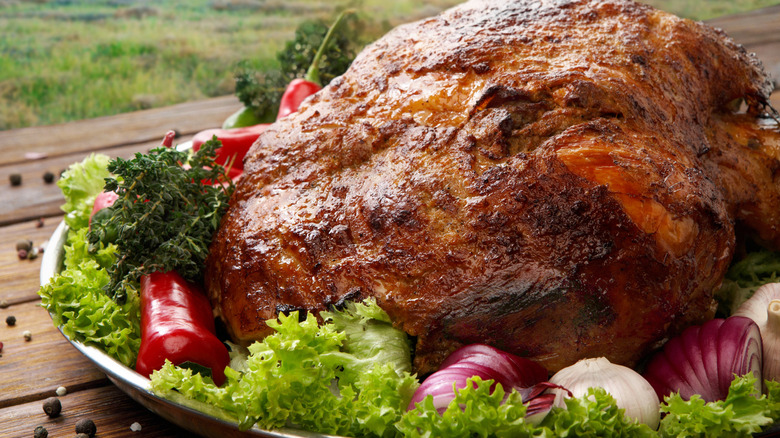
A large outdoor griddle opens up new cooking possibilities, including restaurant-style burgers and mass breakfasts of scrambled eggs, pancakes, and more all cooked on different areas of the plate. But a griddle can't do it all, including some showstopper proteins people often associate with outdoor cooking. Larger pieces of meat, particularly those that are rounded or need to be covered for a long period of time, don't usually cook well on griddles. This includes but isn't limited to brisket, non-spatchcocked whole chickens, and pork butt. Covering these proteins while cooking, for example closing the lid on a grill, helps evenly distribute heat for a proper cook.
Blackstones have no such lid, and neither do griddles in general. The one-sided heat of a hot griddle will take too long to penetrate thick cuts, burning the outside but leaving the middle raw, if not cold. There are methods that purport to cook some of these larger cuts on a griddle, but the safest and easiest bet will be heated enclosures like a grill or smoker.
Low build quality
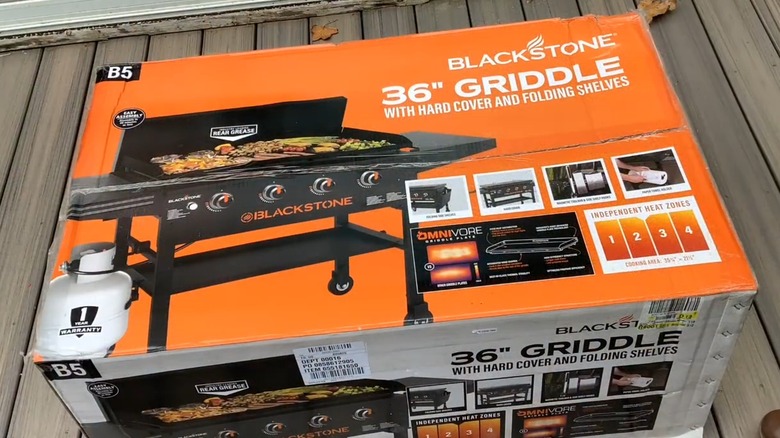
Blackstone may be a recognizable name in the griddle game, but unfortunately there are a number of dissatisfied customers who might say that the brand is resting on its laurels. On Reddit, several complaints can be found about parts not fitting together well or arriving broken, paint flaking or rubbing off with normal use, and premature rusting. Many of these issues are cosmetic and don't affect the performance of the griddle plate, which tends to still be widely loved.
As one Reddit user put it, Blackstones "... don't ever fit together well, screws fall out, paint rusts and flakes off, etc. If the griddle wasn't so awesome, I'd regret my purchase." For all the complaints about build quality, the griddle plate remains a reliable part of why a Blackstone griddle's lifespan can be as long as 20 years. But that's only if the rest of the device can keep up as well.