

6 Late-Season Pests To Look Out For On Tomato Plants
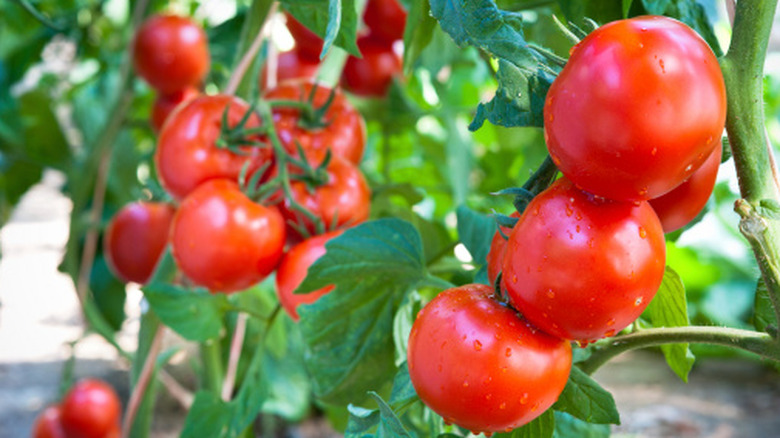
There is probably nothing more delicious than a fresh, ripe tomato straight from the garden on a hot summer's day. If you're a gardener, harvest time is the reward after all the hard work you've put in over the growing season. So, it can be extremely frustrating when you find your almost ripe fruit damaged or destroyed by pests right before you get to enjoy that delicious harvest. One of the biggest mistakes when growing tomatoes is not staying vigilant against plant intruders, especially at the end of the season. Pests like aphids, spider mites, or stinkbugs often get a second wind this time of year and use your tomato plants as a source of nutrition.
By the time late summer has come around, pests have had all season to reproduce and reach maturity; this is why it might feel like a renewed invasion of your garden is happening. There are many tactics you can use throughout the season to ensure your tomato plants are safe from buggy intrusions. One of the best practices to utilize is proper gardening sanitation. Always sanitize any gardening tools, clear garden debris immediately, remove weeds as soon as they appear, and don't plant tomatoes in the same spot every year. Some crafty gardeners have also used natural means, like certain seasonings, to keep pests at bay. Some things you should be watching for are wilting or curling leaves, bite holes or marks, browning or rusting of leaves or fruit, sticky film, or possibly webbing covering the plant. For each pest on our list, there are signs and treatments you can use to save your lovely tomatoes.
Aphids
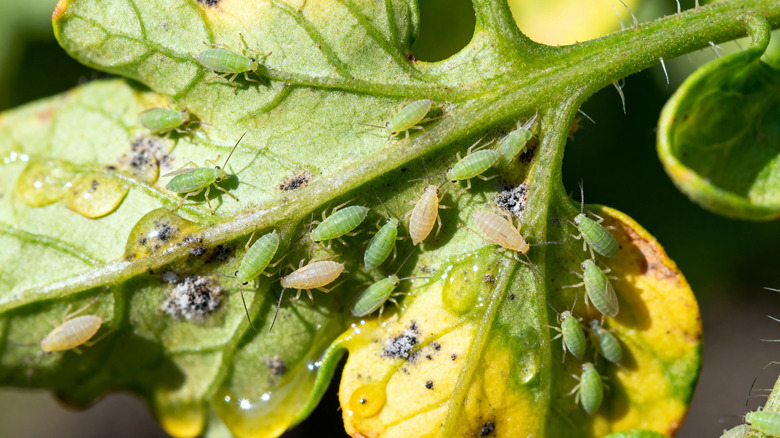
If you have an aphid infestation, signs will show up as misshapen or yellowing leaves, a sticky substance called "honeydew" on your plant, or deformed and stunted fruit. They usually hide on the undersides of leaves. Aphids are generally easier to get rid of than other pests. A strong spray of water to knock them off, spraying with insecticidal soaps, or applying neem oil are great methods to deal with this pest. To help keep aphids away, promote beneficial insects like ladybugs in your garden.
Spider mites
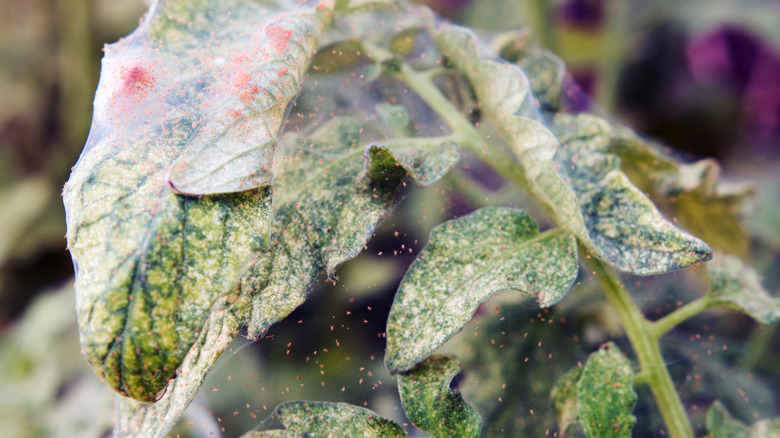
Spider mites are hard to see with the naked eye, but you can spot the signs of their presence. If you have a spider mite infestation, you might see speckles of discoloration on your tomato plant's leaves or a fine webbing across the plant. Spider mites are more likely to infest plants that are stressed by hot, dry periods that are common in late summer. A good prevention tactic is to ensure your plants are getting the water they need throughout the season. You can also use a strong spray of water or essential oils, like garlic or clove.
Caterpillars
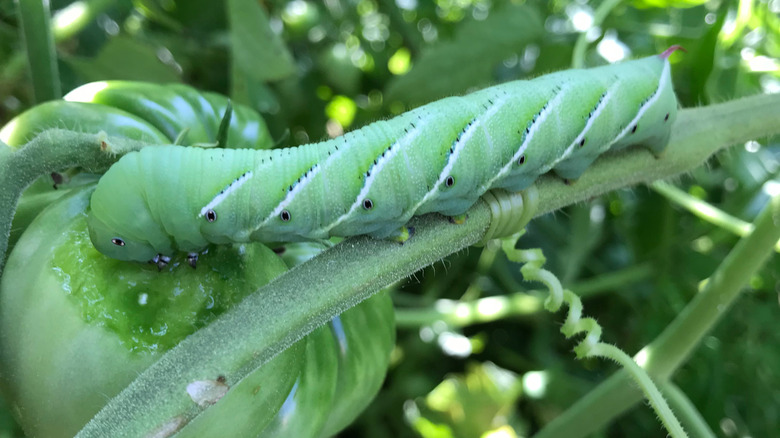
There are thousands of caterpillar varieties out there, but one in particular might be the most infamous among tomato growers — the tomato hornworm. It's easy to spot a caterpillar problem: there will be holes in leaves and fruit, and whole leaves chewed to the stem. The best solution is to remove the caterpillars by hand, place them in a bucket with soapy water, and toss them. If you spot a tomato hornworm with a bunch of white rice-looking things on its back, leave it. Those are parasitic wasp eggs that will emerge and take care of your caterpillar invasion.
Stinkbugs
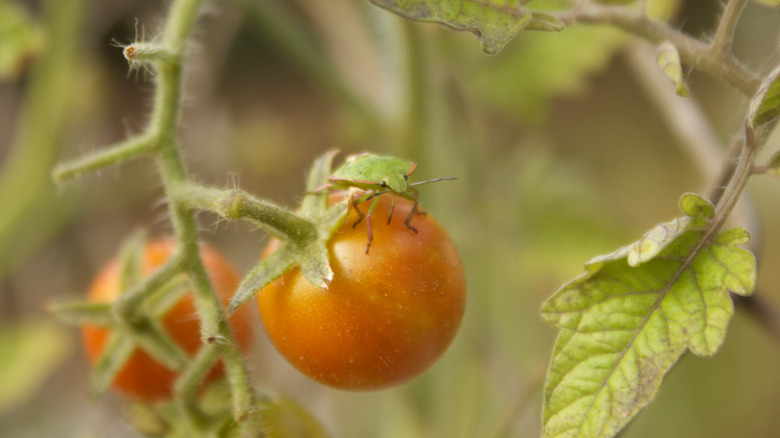
Stinkbugs love to come out in late summer. And just like you, they love a ripe tomato. Stinkbug damage can be hard to spot in unripe fruit; there will be tiny pinholes in the fruit where the stinkbug has fed. In ripe tomatoes, this bite causes damage that leaves a tell-tale white halo around the hole. Stinkbugs can cause cosmetic damage, but they can also create uneven ripening in the tomato. Just like some other pests on our list, your best bet is to monitor your tomato plants, remove weeds, spray with water, and manually pick them off.
Tomato Russet Mites
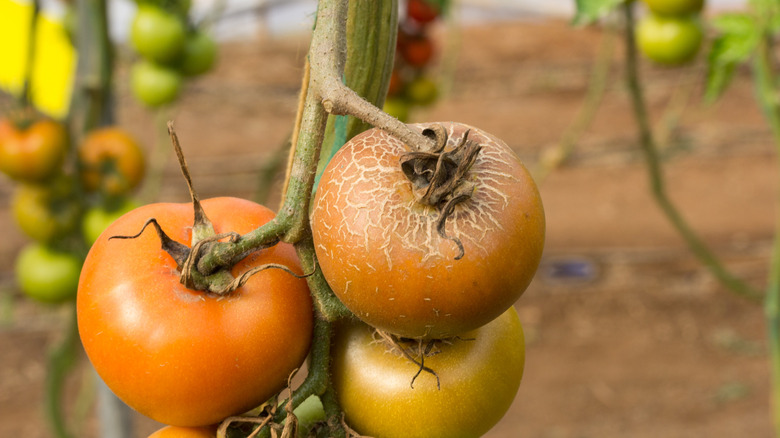
Tomato russet mites create a different kind of destruction than spider mites. They are also a lot smaller and harder to see. You'll know you have a tomato russet mite issue if you start to see curled, rust-colored leaves at the base of your plant. If you don't catch them quickly enough, they cause your fruit to show cracks and turn brown. Your best remedy is to spray the undersides of the leaves with water to keep them off. If a plant is too far gone, you'll need to remove it to prevent these bugs from spreading.
Thrips
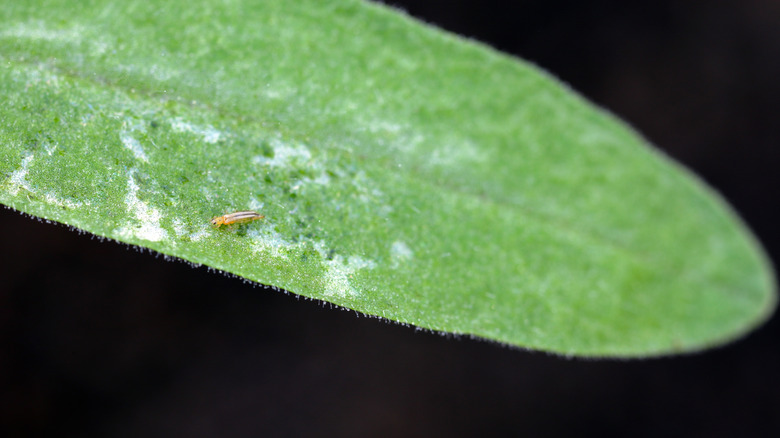
If your tomato plants are infested with thrips, you will find silvery streaks on your plant's leaves. They can damage all parts of your tomato plant, including the flowers and fruit starts, which can severely limit your tomato harvest. They also have the ability to spread tomato spotted wilt virus, which is also extremely damaging to your tomato plants. The solution is similar to that of the other plants on our list: spray your plants with a strong blast of water or use neem oil or insecticidal soap.