

How Breville Coffee Makers Have Evolved Over The Years
One of the most respected names in at-home espresso machines actually started off making radios. Breville was founded in 1932 in Sydney, Australia, by Bill O'Brien and Harry Norville. The two combined their last names to create the name Breville. Within the first few decades, the company made everything from minesweepers to televisions, but it was a 1974 sandwich maker, the Snack 'n Sandwich, that made the brand a household name. Nowadays, the company is largely known for its many models of at-home espresso machines. Breville is widely considered to offer some of the best espresso machines to use for your morning coffee, but its first machine surely didn't have all of the bells and whistles as some of the newer releases.
In 2004, the Breville Cafe Roma came out and was a fine enough coffee machine for home use. Since the same boiler provided water for both the espresso and the steam wand, it required the user to wait between steps as the boiler replenished itself and adjusted temperatures. It wasn't until 2011 that the company made waves in the home espresso making game with the Breville Dual Boiler. The machine was the first home espresso maker to run on 110 volts and have two boilers while costing less than $1,500. The double boiler is key — one is used to make coffee while the other is set at a temperature closer to boiling for steaming milk, allowing you to make proper latte art with the right type of milk. Before that, other companies offered home espresso machines, but they fell short due to poor steaming, awkward design, and underwhelming pumps.
How Breville evolved into the coffee force it is today
The Breville Dual Boiler was considered a "prosumer" model, as it was highly customizable and required more familiarity with brewing espresso than many consumers had. The LCD screen was where you set the temperature, with 194 to 205 degrees Fahrenheit recommended as the ideal range. The machine had the option for manual shot pulling or preset (yet still adjustable) buttons for pulling one or two shots. You could set the time and pressure of the pre-infusion — wetting the coffee grounds with low-pressure water before the full nine bars of pressure kicked in — and watch the process on the pressure dial. A few of the original models of this machine can still be found for sale, but they aren't frequently made anymore.
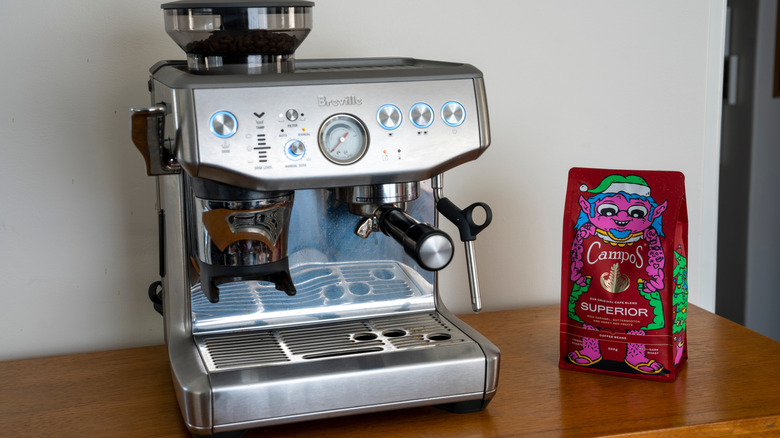
The Barista Express debuted in 2013 and began Breville's journey toward all-in-one technology by including a built-in grinder. Breville acquired the popular grinder company Baratza in 2020, so the Barista Express machines use some of the better burrs available to at-home coffee geeks in the U.S. Although it has only a single boiler, it's known to transition from pulling to steaming faster. Breville now has a whole line of "express" models, which might just be its most popular machines.
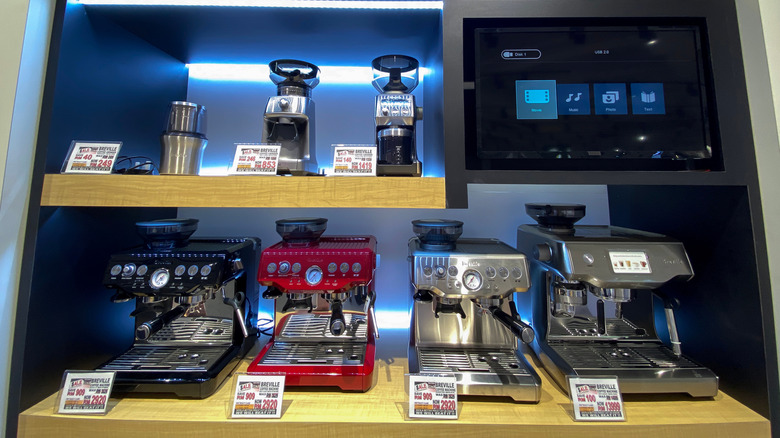
The automatic Oracle Dual Boiler was also introduced in 2013. The Oracle is the new and improved version of the original Dual Boiler machine. These machines grind, dose, and tamp your portafilter, while also making microfoam. The digital screen has automatic settings that allow you to simply choose the drink you want and leave the rest up to the machine. Breville now offers a wide variety of models, but all of them have features that can be compared to its first machines. With the amount of Breville machines made today, this high-end coffee maker brand is one to keep an eye out for at HomeGoods – you might be able to score one for a discounted price.