

Orange Flames On Your Gas Stove? Here's The First Step You Should Take
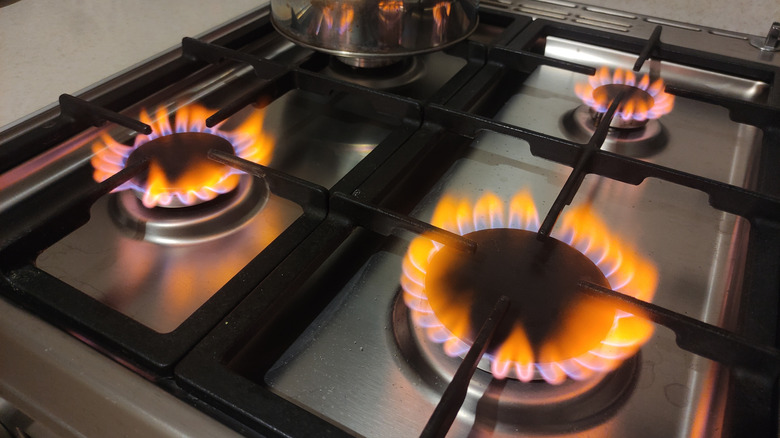
Many chefs prefer a gas stove because of the instant temperature adjustments and more sophisticated cooking techniques made possible by an open flame. But the color of a gas stove's flames matters too: it should be consistently blue when burning. Brief flickers of orange are normal, especially on ignition, but if odd colors persist, those indicate a problem. In most cases, though, the solution should be easy. Just make sure to turn it off before anything else.
Non-blue flames are a sign of incomplete combustion because not enough air is mixing with the gas to burn. Believe it or not, this could be caused by a nearby humidifier, which releases sodium-rich water vapor that interferes with a proper burn. Turn them off and use a window or fan to get fresh air into the kitchen, and try again. If that doesn't work, another potential cause lies with the burners themselves.
If any ports or vents in the burner are blocked by dust or debris, this will interfere with airflow and produce orange flames. When everything is cool, remove the burner cap and base to thoroughly wash and dry them. Make sure the area under and around the base is also clear of obstructions. If the reassembled burner is still consistently producing non-blue flames, that suggests excessive gas pressure, which should only be altered by licensed technicians.
Checking stove flame colors matters
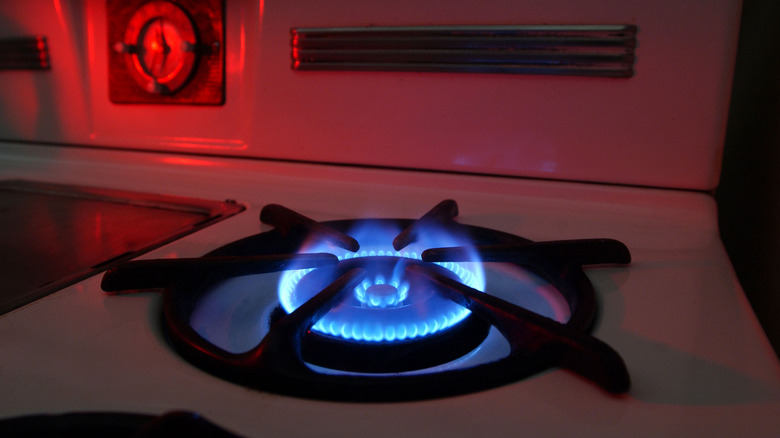
Not checking the color of the flames is one of the biggest mistakes people make with gas stove tops. It's easy to think that flames are flames, and it's unimportant what color they are so long as the food gets cooked. But incomplete combustion of cooking gas means that poisonous carbon monoxide is being released into the kitchen. In a small and poorly ventilated area, it could risk accumulating to dangerous levels. Depending on the cause, it could be even worse than that.
If orange, yellow, or red flames are being caused by excessive gas pressure, that can cause significant damage to the oven itself and pose huge safety risks. The intense heat can melt burner parts, and high gas pressure prematurely wears valves down, increasing the odds of gas leaks and explosive accidents.
Physical safety is paramount, but there's also a cosmetic reason to check your burner's flame colors. Orange flames are known to ruin pots and pans because incomplete combustion also produces excess soot. And since you're using a hot pan on a hot stove, that soot is instantly and constantly scorched into the underside of the pan. It won't render the cookware unusable, but it is an unsightly filth that's difficult to clean off. It's better to keep your pots and pans pretty, and your kitchen carbon monoxide-free.