

Don't Ignore This Red Flag That Ruins Pans On A Gas Stovetop
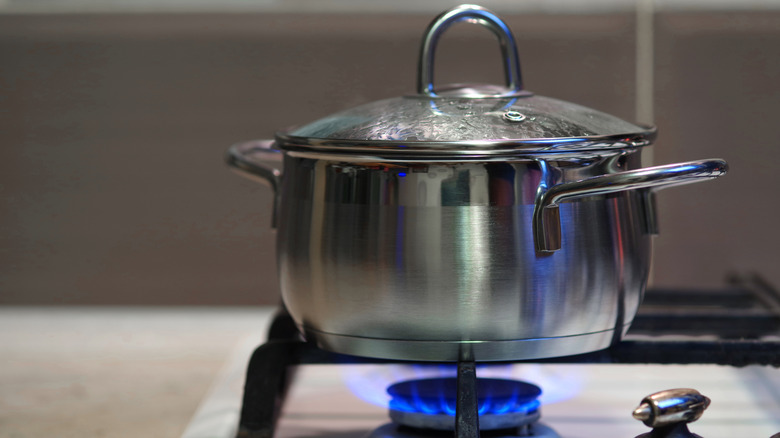
Investing in high-quality pans makes perfect sense if you love to potter about the kitchen and whip up new and exciting meals off the cuff. However, if your expensive cookware has started to look worse for wear, you might have been ignoring a red flag that ruins pans on a gas stovetop: An orange flame.
One of the mistakes everyone makes when cooking on a gas stovetop is failing to check the flame color. "You want the flame to be blue," explained Chef Randy Feltis, co-owner of cooking brand Katherine Wants, to Tasting Table. "If you are getting an orange flame, it's getting a carbon buildup on your pot, which will spread throughout your kitchen. Which is not good because it's dirty."
A blue flame is a sign of complete combustion; the gas is burning fully and only releasing water vapor and carbon dioxide into the air. Conversely, an orange flame indicates incomplete combustion, usually caused by too little oxygen, which can produce harmful carbon monoxide and soot. If you continue to cook on a burner that's producing an orange flame, this carbon buildup will collect on the base of your cookware. Cleaning your burners of any debris, food residues, or dust is the best step to solving this problem, but you should also readjust the burners to make sure the caps and rings are suitably positioned, and turn down the stove immediately so the orange flame stops touching the base of your pots and pans and doesn't scorch the surface.
Clean your gas burner if it's producing orange flames
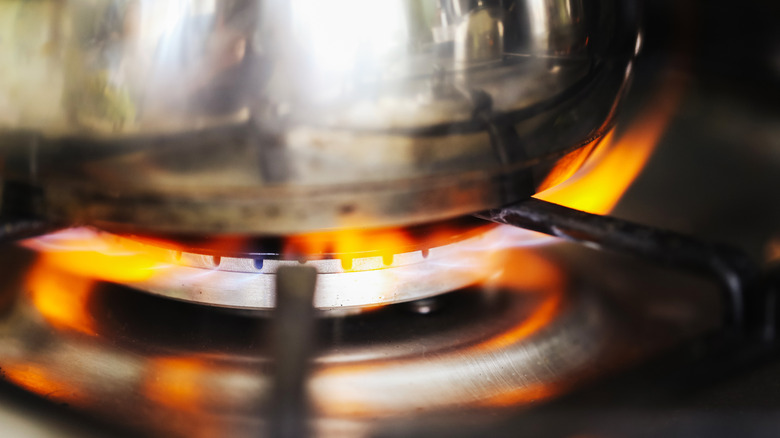
Bits of burnt food, cooking grease, and spills can block the portholes on a gas burner, affecting the oxygen-to-gas ratio and causing improper combustion. While you may be tempted to wipe away any spills immediately after cooking, cleaning a hot stove is never a good idea because you could burn your hands. It's best to wait until the stove has cooled down, as you'll need to remove the burner caps and grates to properly clean a gas stove-top. Using an old toothbrush to scrub the openings can help to dislodge anything that's preventing the gas and air from reaching that perfect sweet spot and producing a safe blue flame. Once you're done, be sure to place the burner caps and rings back on fully. If they are incorrectly positioned, this will affect the air flow and produce an orange flame again, which could possibly give off carbon monoxide, as well as make your cookware dirty and unsightly.
An elevated level of carbon monoxide in the air can cause carbon monoxide poisoning, so it's vital that you cook on a blue flame and regularly check your burners. Some of the symptoms of carbon monoxide poisoning include headaches, nausea, and dizziness.
Disclaimer: Tasting Table is a sister site to Daily Meal and is owned by Static Media.