

15 Most Unusual Foods Anthony Bourdain Ate On 'No Reservations'
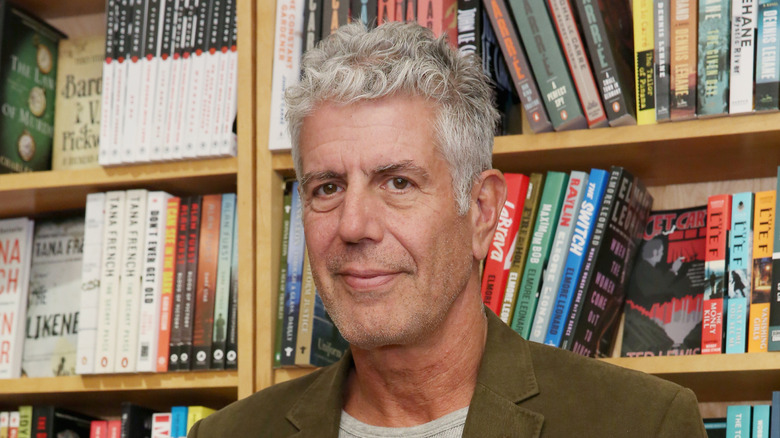
Late television host and chef Anthony Bourdain brought entire cultures, cuisines, and worlds into our homes with his unique travels. The professional culinary adventurer dined around the globe, giving viewers an inside look at how locals and communities lived and ate. His appetite for the unusual, unfamiliar, and strange was what made his show "No Reservations" so irresistible and intriguing. From bustling street markets to humble family kitchens and off-the-grid feasts, Bourdain happily dove fork first into dishes that would send most diners running for the nearest cheeseburger. Although he embraced ingredients, traditions, and cultures that challenged Western palates, he was surprised during filming by how much he liked some dishes, and even found restaurants he absolutely loved. Then there were times when what was served was a struggle for even this brave chef to down. We selected 15 of the most unusual and unique foods Bourdain ate on "No Reservations" that have left viewers equally fascinated, horrified, and hungry for more.
Entire camel (Saudi Arabia)
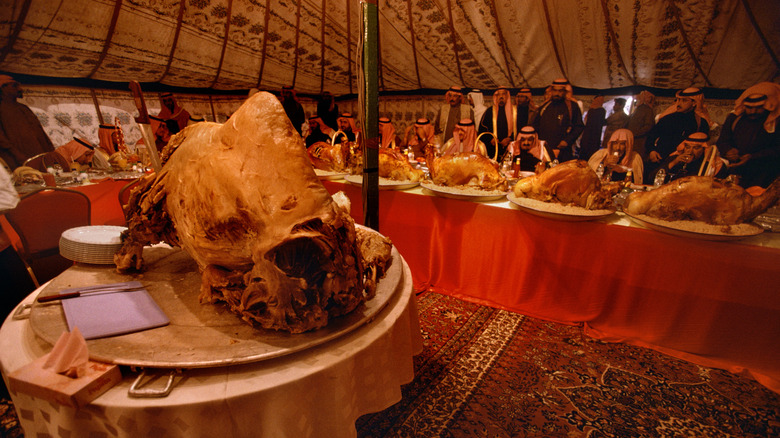
With his guide, Danya Alhamrani, a fan chosen from a nationwide contest to showcase her hometown, Bourdain dove into the culinary delicacies of Saudi Arabia. Here, Alhamrani explains that the locals not only use camels to carry things but also to drink their milk and, yes, to eat their meat. Bourdain drove around the desert as his young camel was being prepped in a massive pressure cooker for a desert dining experience. Donning the traditional thobe and ghutra, Bourdain entered a makeshift dining tent in the evening to feast upon the entire camel. The body was placed atop a bed of rice and sliced into for everyone to enjoy with their hands. Trying the hump first, Bourdain was pleasantly surprised. "The camel is tender, relatively lean for the most part, and delicious," he said. "This definitely beats the lizard breakfast by a mile."
Eel experience (Tokyo)
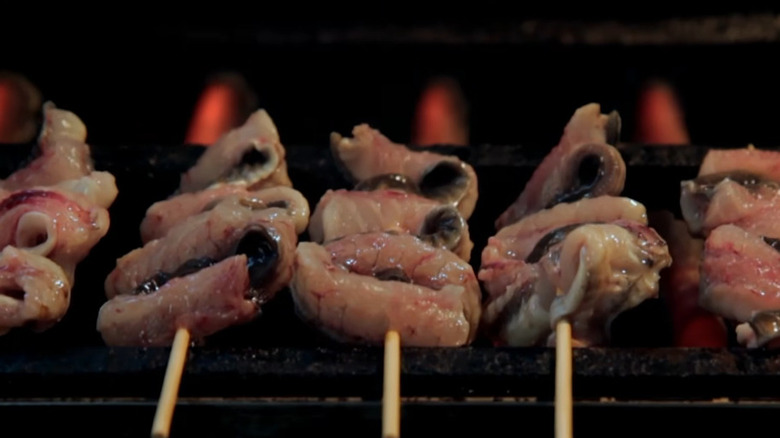
In Tokyo, Bourdain gets to enjoy a traditional "nose-to-tail" eel dining experience. Ivan, his guide, takes him to Kabuto, an obscure yet legendary unagi (freshwater eel) place where the chef has been butchering and serving every part of the eel for over 60 years. The two dine on grilled, skewered eel liver, guts, and filleted eel back, which Bourdain finds very tasty. They were also treated to a dried eel liver dish, served with ponzu sauce and a spicy radish garnish.
Fermented shark (Iceland)
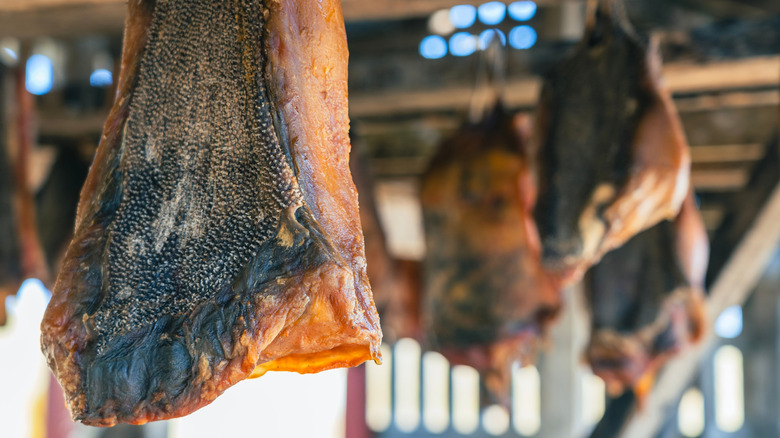
Bourdain described this food as the single worst thing he's ever eaten. On his journey to Iceland, he ate Hákarl, the country's national dish. It's also the star of the show in the traditional Icelandic midwinter festival called Þorrablót, which honors the country's Norse heritage and foods Vikings ate to survive. Essentially fermented and putrified shark, the dish is buried underground and cured in lye for six months. The locals advised him not to touch the initially poisonous shark with his hands, and wash it down with aquavit to get the taste out of his mouth. "That is unspeakably nasty," Bourdain said of the Hákarl. "This is the single worst thing I have ever put in my mouth." The festival also included dishes of sheep testicles, boiled sheep's head, and all the parts of a lamb.
Porcupine (Mai Chau, Vietnam)
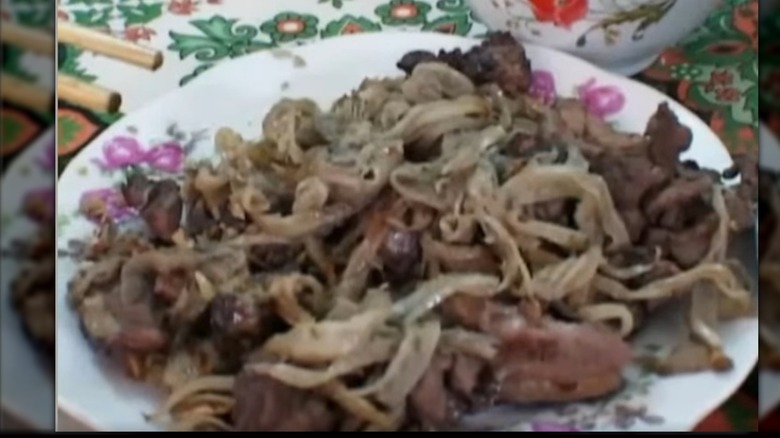
In rural Vietnam, Bourdain travels deep into the Ba Vi mountains with a family to dine with the White Tai tribe, an indigenous community that is normally opposed to outsiders. At a closed roadside eatery, the owner chopped up and prepared a giant mystery animal, and Bourdain didn't know what it was until after he ate it. All he could get out of his guide Linh was that it was a woodland creature; and it didn't help that the animal was unrecognizable when it was being butchered. Upon diving into the fried and boiled meat dish, he pulled a sharp quill from his mouth, which he realized was from a porcupine. Despite the surprise, Bourdain said he liked the dish and preferred the boiled porcupine to the sautéed.
Rice whiskey infused with stomach of deermouse (Vietnam)
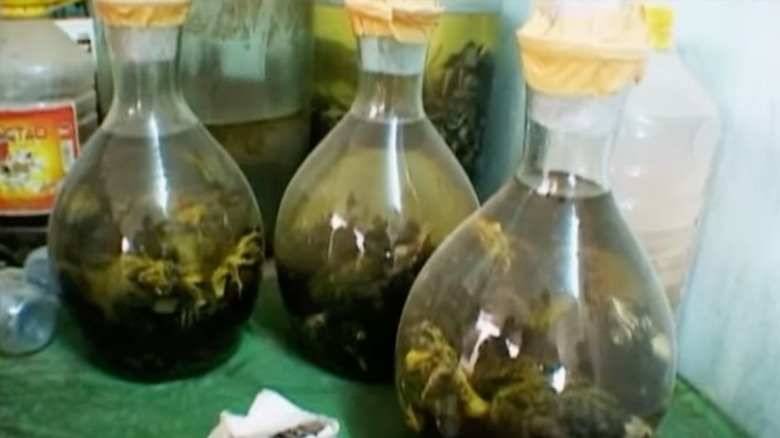
While at the roadside eatery in Vietnam, Bourdain was also encouraged to try a unique beverage. One that may look to us more like something out of a Tim Burton film, but is actually considered good for your health. Kept in glass vats, the restaurant's homemade rice whiskey was infused with quite a few unusual ingredients, including a snake, bugs, and the dried stomach of a deermouse. The owner explained to the late chef that it was very special and good for the digestive system. Poured from a tube into a glass, it was served up in small cups. He was skeptical, but Bourdain downed it graciously. "It's strong and bitter," he said. "It better be really good for me, because that makes my face want to turn inside out."
Iguana (Nicaragua)
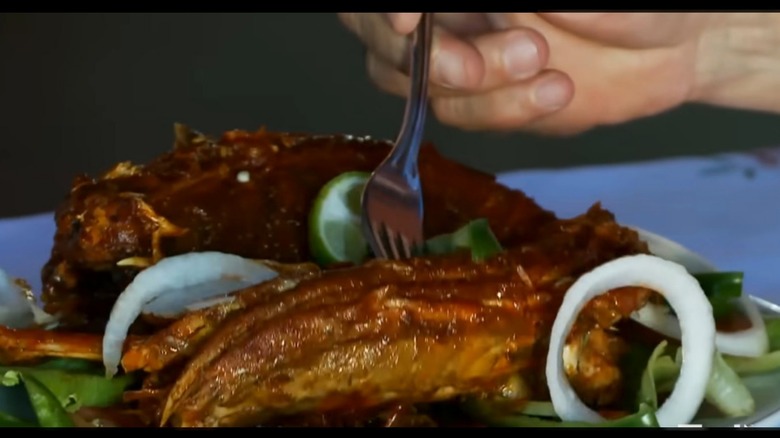
On Season 7 of "No Reservations," Bourdain gave us a look at Nicaraguan cuisine. The chef went inside Flor de Pino, a restaurant that once catered to nearly every significant political figure in the country but now opens only to friends and family. Here, the owner's specialty was Carne de monte, made with iguana. It's skinned, boiled in a savory broth, then added to a simmering pot with pork, anchote paste, orange juice, and vinegar, and then braised. Unlike Bourdain's experience with undercooked iguana tamales, he enjoyed this meal, saying it was tender and delicious.
Tucupi (Brazil)
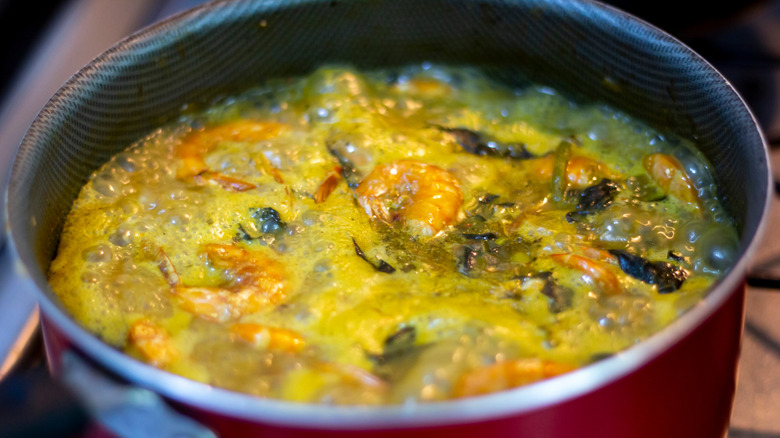
Deep in the Amazon, Bourdain is treated to an ancient indigenous Brazilian recipe by Chef Ofir Oliveira at his restaurant Sabor Selvagem. Manihot esculenta, commonly called cassava, is a woody shrub whose leaves contain cyanide. However, if you grate the flesh and squeeze out the toxic juices, it can be boiled for hours to make a savory broth called Tucupi. "It's delicious," Bourdain said of the bright yellow broth. "It's an extraordinary flavor." Tucupi is also used to make Arube, a concentrate for preserving game. Bourdain enjoyed the fish caught at the market they visited that day in the broth, along with a stew of fresh shrimp, mussels, vegetables, and herbs.
Sea squirt (Columbus, Ohio)
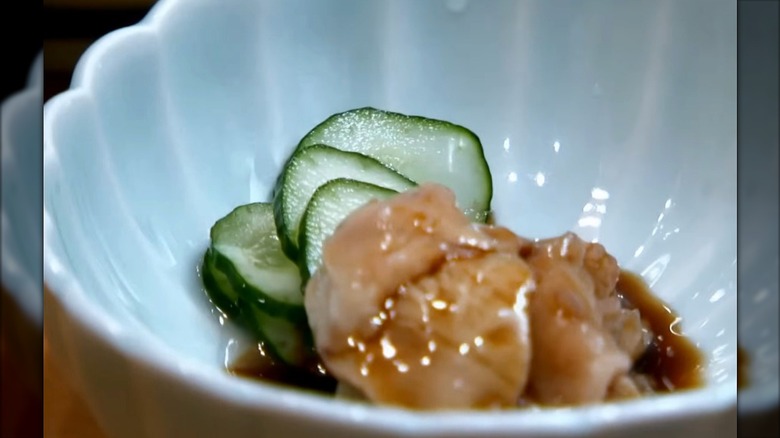
While Columbus, Ohio, may be known for Johnny Marzetti casserole, Bourdain was surprised to learn that the city had one of the most authentic Japanese restaurants hidden in a strip mall. Now closed, Kihachi was a favorite among locals, but on this trip, Bourdain and his friend were treated to some of Chef Michael Kimura's most unique dishes, including one he grew up eating. The chef prepared raw sea squirt, a sea animal you can find attached to solid surfaces. The dish came with sliced cucumber, vinegar, and soy sauce. "For most Americans, this would be a difficult dish," said Bourdain in the episode, but first noting, "It's extraordinary." He also described the dish as briny but stone-cold authentic.
Fried mackerel skeleton (Columbus, Ohio)
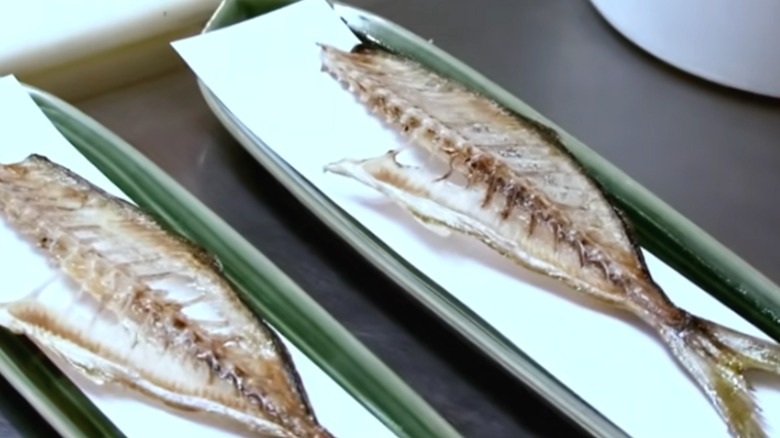
The fried horse mackerel skeleton was another dish Bourdain enjoyed while dining at Kihachi. He used all parts of the fish to make sashimi, garnished with the mackerel's head and tail, before serving up the deep-fried carcass with a sprinkle of salt. A common dish served in Japan, it's a crispy snack to eat with your hands. The late chef loved it and expressed that he could eat it all day long. Fried mackerel skeleton, or aji, is more than just a tasty Japanese snack that uses the skeleton; it's also a good source of calcium.
Squirrel pot pie ( West Plains, Missouri)
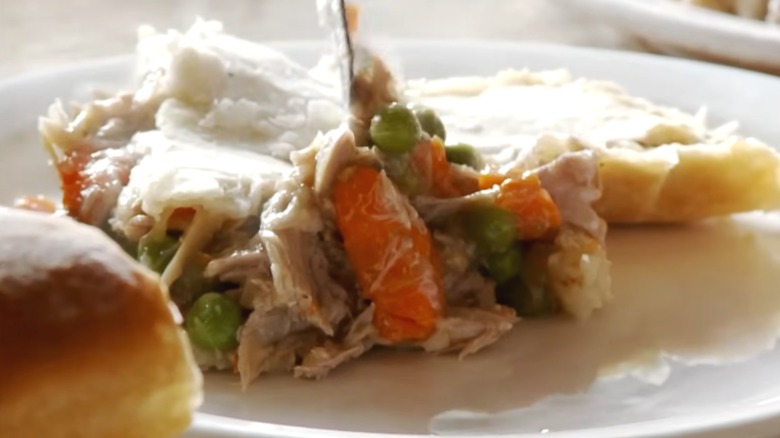
Deep in the Ozarks, Bourdain found himself in the rolling hills of West Plains, Missouri. Here, he dined with author Daniel Woodrell and his wife, Judy. It was here he would learn that they would be dining on squirrel. Skinned, grilled, shredded, and put in a pot pie. The recipe, made with celery, carrots, onions, potatoes, peas, and gravy, is a little over 100 years old, according to Judy. "The idea that you would need to eat a squirrel, much less like to eat squirrel, [would] probably freak a lot of people out, but face it, this is really good," Bourdain told his hosts. "Squirrel's the next big thing; it should be."
Stomach bile and goat head soup (Philippines)
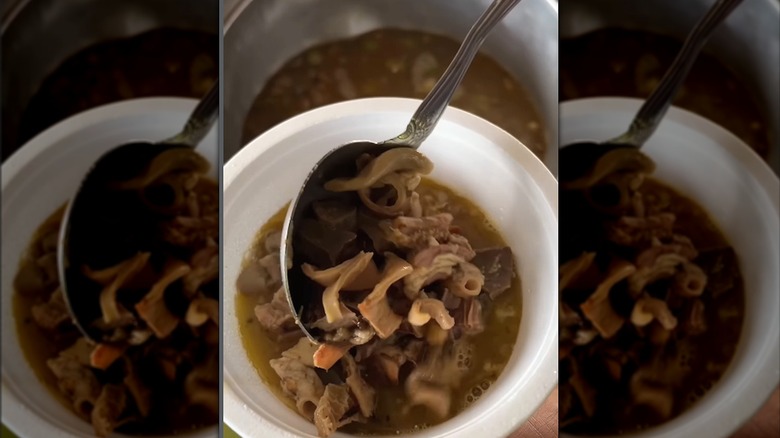
During his food travels in the Philippines, Bourdain ate a goat four ways in Pampanga, a province in the country's northwest. Here, he and his guide visited Mila's Tokwa't Baboy, known for its Filipino comfort food. The late chef chowed down on traditional papaitan, a soup made of a goat's heart, lungs, liver, and stomach bile. Despite his past bile experiences in Vietnam, Bourdain raved about the soup. "I gotta tell you, there was nothing about this dish that sounded good ... but that's good." The restaurant also served a goat head soup, made from the animal's eyes, brain, and tongue. "Dr. Lecter kind of thing going on," Bourdain said as he pulled off parts to eat. "Creamy brains. There are all these great little bits in there," adding that he thought the goat was delightful during the scene's voiceover.
Reindeer meat (Finland)
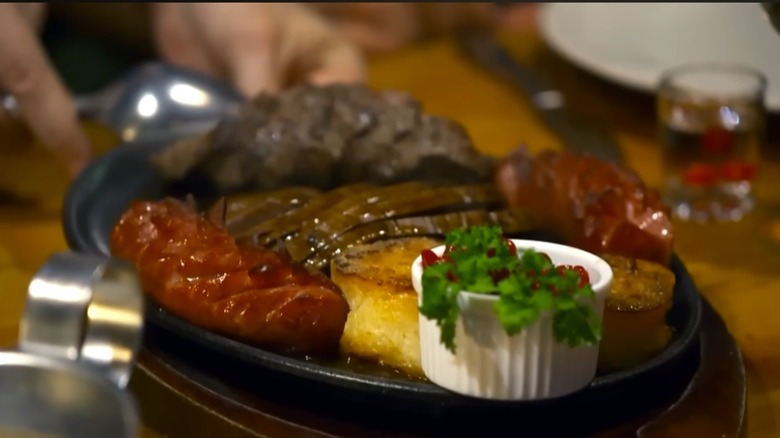
Frigid and hungry, Bourdain travels to Ravintola Loppi Hovi, a cozy restaurant in Finland known for serving one thing: reindeer. Served a sort-of charcuterie board of smoked, air-dried reindeer, salmon tartare, reindeer carpaccio, and whitefish roe first, Bourdain was pleased. It was paired with Kosenkorva, a Finnish vodka with frozen cranberries. Next, he and his guide were served a huge helping of roasted reindeer and reindeer sausage. Despite his feelings on reindeer and being more of a Krampus guy, Bourdain enjoyed them on his plate, calling it "Pretty [freaking] good."
Manicou (opossum) - Caribbean
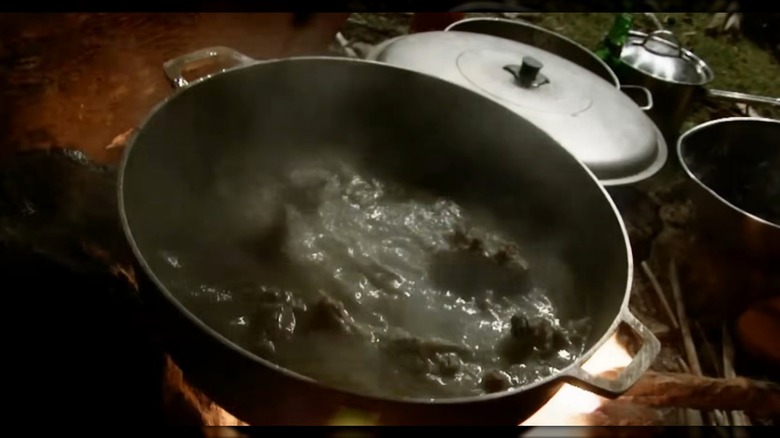
In the mountainous area of Bequia, an island in St. Vincent and the Grenadines, Bourdain takes part in a traditional night hunt. Here, the locals track down a manicou, or opossum, in the dead of night with flashlights and a harpoon. Skinned and cooked over a bonfire, it's served up, tail and all, in a savory stew with onion, garlic, pepper, and ginger. The opossum is also served with traditional Caribbean dumplings that are thrown into the stew. Bourdain remarked that he liked it, looking surprised. He downed it with the locals' overproof rum.
Warthog anus (Namibia)
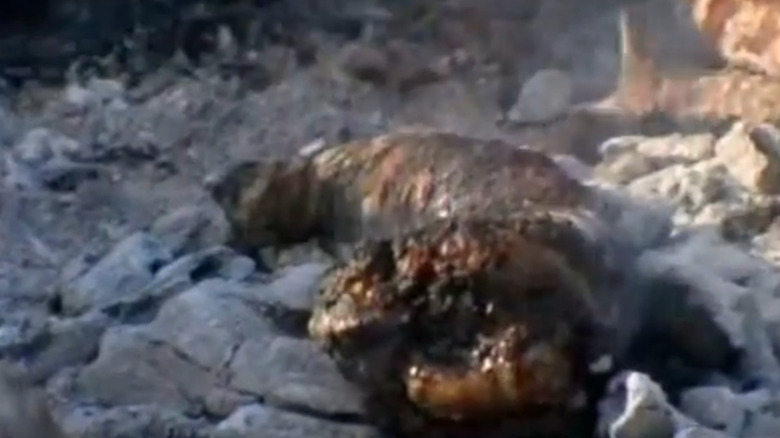
Perhaps one of the most infamous episodes from "No Reservations" is Bourdain's trip to Namibia, a country in Southern Africa. While there, the late chef's tour guide took him to the Kalahari Desert to dine with the San Bushmen, an indigenous group and the oldest inhabitants of the region. As a symbol of honor to their guest, the group hunted and roasted a warthog and gave Bourdain the anus to eat. Eaten for its fat content and said to be the very best part of the animal, Bourdain was hesitant, but ate it out of respect for the tribal chief, since tracking it down and killing it with poisonous handmade arrows was a multi-day job. During filming, he said it was okay, just a bit chewy. However, in a 2007 interview with Lesley Stahl on "CBS Sunday Morning," Bourdain also described it, like the shark, as the worst meal of his life. "There was sand, crap, and fur in every bite," he said. He also contracted a parasite afterward and had to take antibiotics.
Ostrich egg cooked in sand and hot ash (Namibia)
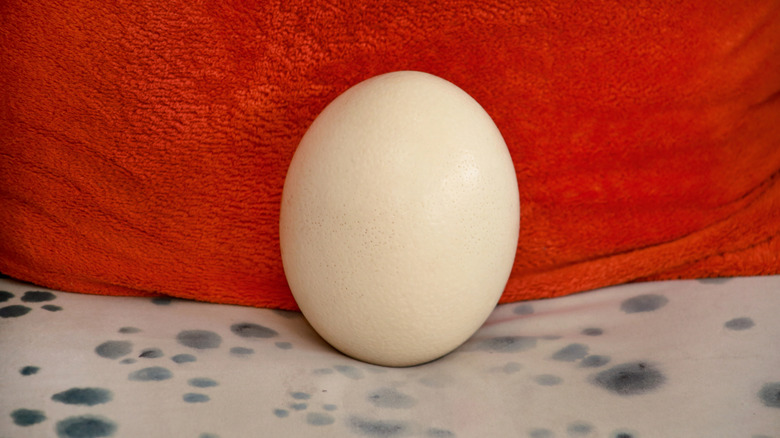
Another eyebrow-raising dish Bourdain ate during his trip in Namibia was an ostrich egg. This was another delicacy offered up by the Bushmen people, who harvest the eggs from nests. They scramble it in the shell, pour it directly into the sand, and cook it over hot ash and coals. The scrappy, adventurous TV host waited hungrily and patiently for the over-half-hour process to finish cooking it. "A few flecks of ash and dirt, what the hay," he said as he bit into his ash-baked omelet. "It's a little crunchy," he remarked, declining a second helping.