

Grill Lovers Share 6 Of Their Favorite Cooking Oils And Fats For The Perfect Sear
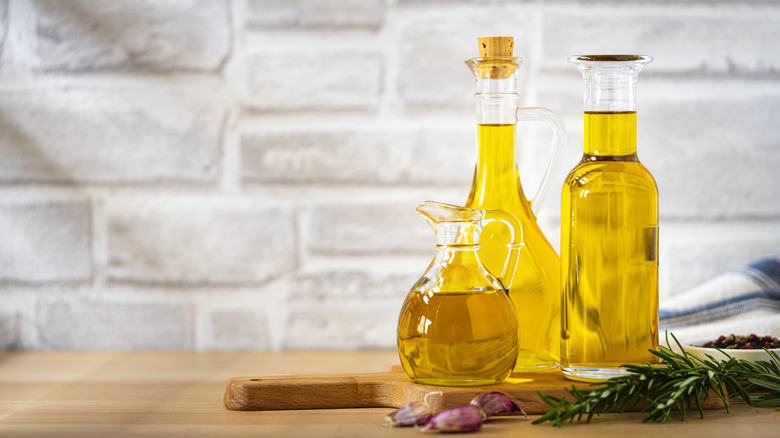
Grilling requires higher heat to give you that nice sear, whether you're cooking up a steak or vegetables — and the right cooking oil is important to prevent the meat from burning or sticking to the grates. As summer is the season for grilling, we asked chefs and experts like "Born to Grill" author Rob Rainford for their favorite cooking oils to grill with.
High heat cooking generally calls for oils with a high smoke point, but even olive oil which has a lower smoking point has its own fans. They include Klementine Song, chef de cuisine at Tsubaki in Los Angeles and Steve Benjamin, culinary director of Bourbon Steak in Dana Point, CA. Paramjeet Bombra, head chef at Baar Baar in Los Angeles, talks about coconut oil that is common in South India.
While most people go for cooking oils with neutral flavors to let the ingredients shine on their own, some chefs, including Esteban Klenzi, executive chef at Alto in Studio City, CA and Richard Archuleta, executive chef at Level 8 in L.A., prefer using beef tallow or butter instead of oils to add a richer flavor.
Grapeseed oil
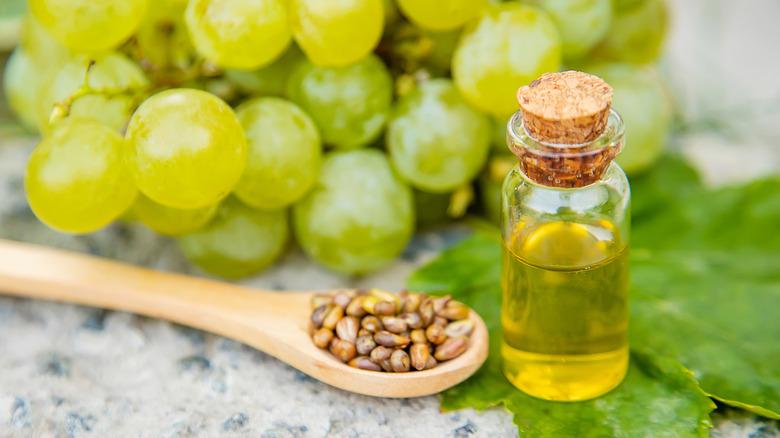
Grapeseed oil is oil made with leftovers from the winemaking process, which is a great way to upcycle waste. Given how much grapes are grown for wine each year, there's certainly potential to produce a ton of grapeseed oil. Thankfully, this oil is useful for frying as well as grilling, and the market for grapeseed oil is rapidly increasing. Grapeseed oil has a smoke point of 420 degrees F and contains omega-6 fatty acids and polyunsaturated fatty acids.
Author Rob Rainford, "Born to Grill," says his favorite cooking oil for grilling is grapeseed oil because of its high smoke point. Similarly, Klementine Song, chef de cuisine at Tsubaki in Los Angeles, also uses grapeseed oil to coat the grilled Koji-marinated pork loin that she serves at Tsubaki, because grapeseed oil "has a high smoke point and a neutral flavor." Song also says that grapeseed oil helps prevent the meat from sticking to the grill grate and aids in browning.
Olive oil
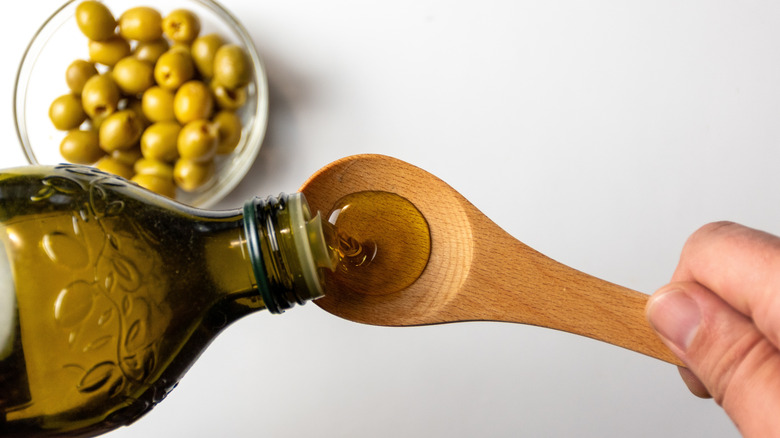
Olive oil has many uses both inside and outside the kitchen, but cooks often say that olive oil isn't great for frying or grilling because of its low smoke point. That's not the full truth, however. It's true that extra virgin olive oil typically has a low smoke point between 350-410 F, but refined or light olive oil can have smoke point as high as 470 F.
Klementine Song, Tsubaki in Los Angeles, uses olive oil to grill certain things, like vegetables and mushrooms. "Olive oil gets a bad rap for having a low smoke point, which means it can make food taste bitter when exposed to high heat," she explains, while noting that "high quality olive oil like the Greek Koronis we use seems to perform well" on dishes such as grilled cabbage and king trumpet mushrooms. "It stands up well to the red hot binchotan while lightly imparting its fruity and peppery tasting notes," Song says.
Steve Benjamin, culinary director of Bourbon Steak in Dana Point, says that he always starts cooking with olive oil and finishes with butter. "Starting with olive oil helps bring the pan up to temperature," he explains, "and finishing with butter adds richness and brings all the flavors together."
Avocado oil
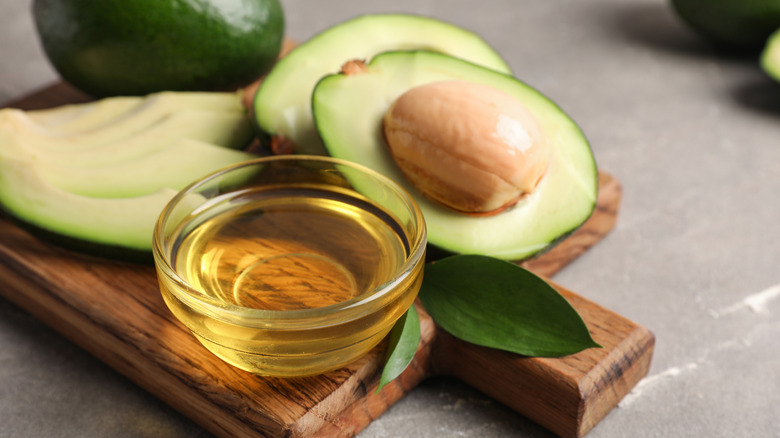
The cooking oil that Richard Archuleta, executive chef at Level 8 in Los Angeles, uses for grilling depends on what he's cooking. "For chicken, vegetables, and seafood, I reach for avocado oil," he says, noting that avocado oil has a high smoke point, plus a clean and neutral flavor. "I prefer it as an alternative to many seed oils because it lets the natural flavors of the food shine," Archuleta explains.
Avocado oil is made by pressing the pulp of the avocado and has an exceptionally high smoke point of more than 500 F. Refined avocado oil actually has the highest smoke point of all cooking oils, which is why it's considered to be the best oil for seasoning a cast iron skillet. Avocado is known as a very nutritious fruit, so avocado oil is also great because of its health benefits, containing plenty of carotenoids, oleic acids, and antioxidants.
Coconut oil
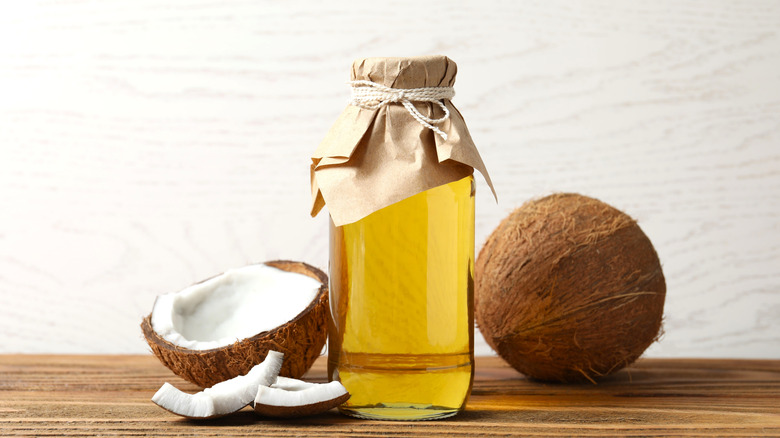
While coconut oil is not used as much in the United States, it's a common ingredient in other cultures, from West Africa to Thailand. As Paramjeet Bombra, head chef at Baar Baar in Los Angeles, explains, "Coconut oil is commonly used in Kerala and several other parts of coastal South Indian cooking, where it pairs perfectly with seafood, curry leaves, and spices."
Coconut oil is made by pressing the white flesh of the coconut, and refined coconut oil has a higher smoke point (around 400 F) and a more neutral flavor compared to the unrefined version. Unrefined coconut oil has a smoke point of around 350 F and a strong coconut taste, and many chefs prefer to embrace the coconut flavor that this oil can provide. "Rather than only acting as a cooking fat, coconut oil is a versatile ingredient that can make grilled dishes more aromatic, flavorful, and distinctive," says Bombra.
Beef tallow
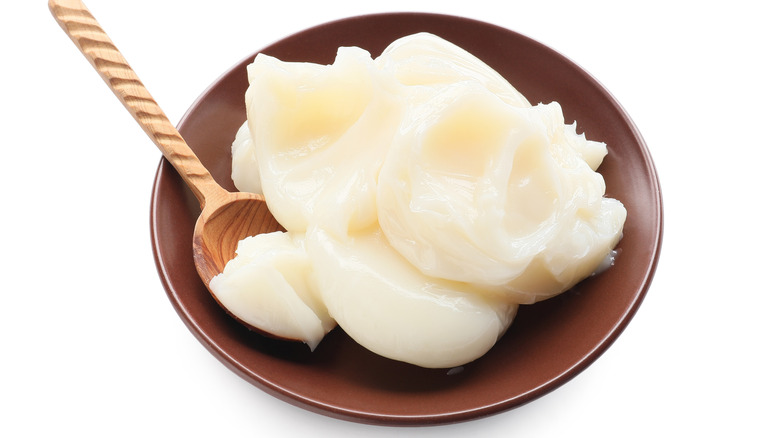
When it comes to grilling beef, some chefs prefer not to use cooking oils. Take executive chef Richard Archuleta, Level 8, for example, who likes using beef tallow instead. "When I'm grilling beef, especially high-quality cuts, I prefer Wagyu beef tallow because it creates an incredible crust while the rendered fat helps carry the meat's flavor across your palate for a richer eating experience," Archutela explains.
Beef tallow is rendered beef fat, made using the fat around a cow's organs. The fat is melted and then strained to remove any leftover tissues before being cooled until it solidifies again. The smoke point for beef tallow falls in the range of 374-420 F, depending on how it's rendered and the impurities it contains, but high quality beef tallow certainly holds up in high-heat cooking like grilling. Unlike the neutral flavor of some cooking oils, beef tallow helps create a richer flavor that works for many things beyond meat. Esteban Klenzi, executive chef at Alto, grills his piquillo peppers in beef tallow. "Our famous peppers [are] roasted in the charcoal oven cooked with beef tallow infused in piquillo peppers," Klenzi says.
Butter
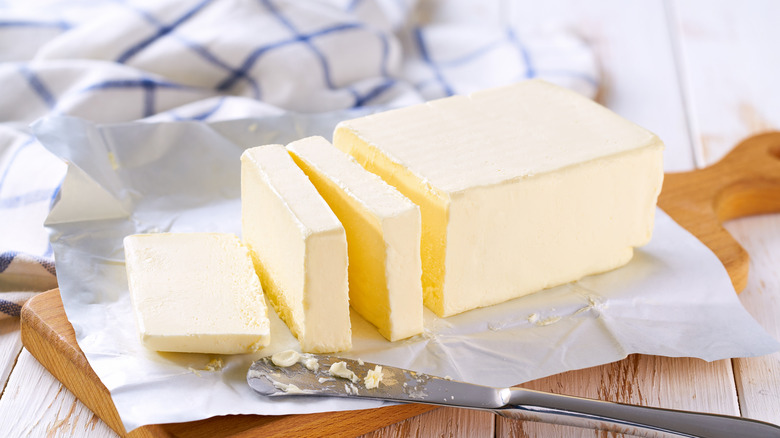
Butter is another non-oil ingredient that chefs love to cook with. Butter has a low smoke point of between 300 and 350 F, but it can be used for grilling when applied properly. For example, one of the ways to use butter is to start with a different oil and then apply butter onto the food in the last few minutes of grilling. Culinary director Steve Benjamin, Bourbon Steak, says, "... finishing with butter adds richness and brings all the flavors together."
You should also put the butter directly onto the meats or vegetables, either by brushing it on or placing it on top of the meat. And avoid putting butter directly on the grill. You can also combine butter with other ingredients to add flavors to whatever you're grilling. For example, Esteban Klenzi, executive chef at Alto, says, "For the NY steak and Rib Eye, we use butter infused with roasted black pepper, fresh rosemary, and roasted garlic paste."