

5 Downsides Of Buying A Pressure Cooker
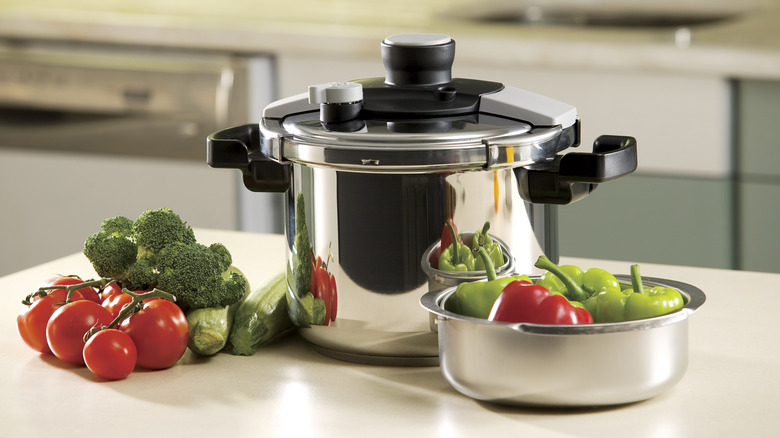
Pressure cookers were first invented in 17th century France, and they wouldn't have stuck around for almost 350 years if they weren't still useful. They're great for beans and grains, but their greatest asset is arguably speed. By accumulating massive amounts of steam in a small space, pressure cookers are able to cook food up to 10 times faster than other methods.
These devices might have the ability to save home cooks a ton of time, but they're not without their downsides, especially for novice cooks. Timing a pressure cooked meal can be unforgiving, as can the cook process itself, with far fewer opportunities to tweak the recipe or check on the food. That may be a problem if you forgot to adjust for increased water retention.
Pressure cookers also raise some important questions around safety and usage. There are very few cooking methods that carry no risk, but few that carry as much as a pot that can turn into a bomb. It's easy to significantly mitigate this risk, but that won't answer the question of how often this specialty cookware with limited uses will actually be used.
You cannot open the pot
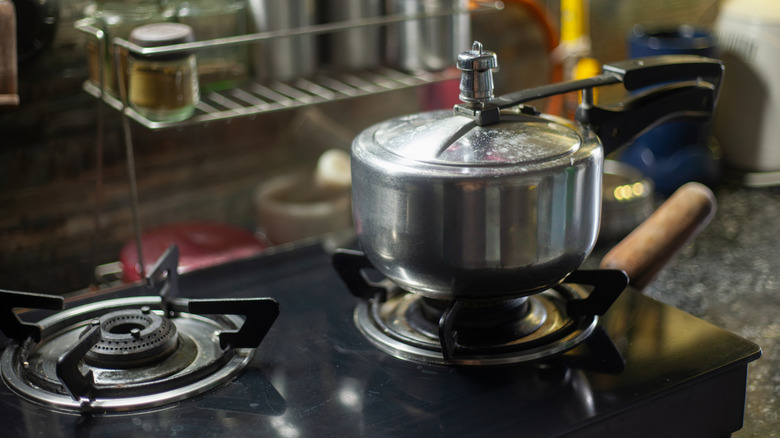
Anyone who cooks knows that sometimes, a dish needs to be checked on. This can be due to an inexperienced cook who's unsure of their seasoning profile or fearful of scorching the food. However, it also can be an essential part of recipes that call for intervals of stirring or adding ingredients. Unfortunately, all of this is impossible with a pressure cooker.
In order to properly cook food, pressure cookers have to remain sealed for the entire duration of cooking. Removing the lid is not only an explosion risk (more on that later), but any pressure loss — including safely venting steam before actually removing the lid — effectively aborts the entire meal.
Attempts to rebuild pressure and continue cooking will likely result in overcooked food. Because of the rapid cooking, increased fluid retention, and other particulars of pressure cookers, you may have difficulty finishing the cook well with other methods. At that point, it's best to just start over — one of the worst things any cook can hear.
Sauces will be runnier
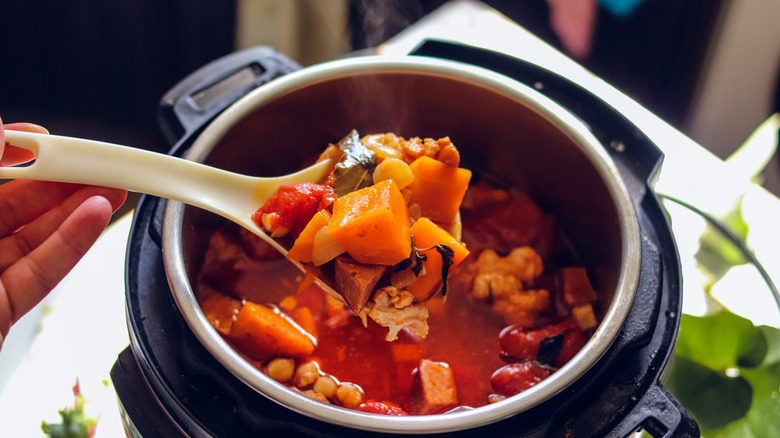
If you hate runny sauces, then you love reductions. A reduction is a flavorful liquid that's been cooked down to remove moisture, concentrating the flavors within. It's essential to making good sauces and soup bases from scratch. But pressure cookers are not known for removing moisture; in fact, they're known for the opposite.
The obvious consequence of a pressure cooker's steam-tight environment is that steam cannot escape. This forecloses the possibility of a reduction because steam is the only way to remove excess liquid. Sauces, soups, stews, and anything liquid in nature will come out of a pressure cooker more watery than if cooked by other means.
In some cases, it may be possible to adjust a recipe for a pressure cooker's increased water retention. When the pressure cooking is done, you can also remove the lid and continue cooking the liquid on its own until it reduces. But as simple as these workarounds can be, it's annoying to be inconvenienced by cookware that is supposed to be convenient.
Timing is everything
It's been mentioned that pressure cookers cook food rapidly. But one downside to cooking food 10 times faster than a frying pan or Dutch oven is the much smaller margin of error. Cooking a few minutes too long in a skillet will likely still yield good food. The same time in a pressure cooker can get you a pile of mush.
As pressure cookers trap steam, the pressure lowers the boiling point of the liquid inside, which enables the higher temperatures that cook food faster. But cooking that hot means a razor-thin line between undercooked and overcooked. While a well-trained chef familiar with stovetop pressure cooking can reliably nail the timing, novices may be easily intimidated. Electric cookers have automatic shut-offs, but a "keep warm" function will continue slowly cooking the food.
Poor timing in fact causes two of the common pressure cooker mistakes that ruin dinner. Not only is it easy to overcook food, but some dishes also require a gradual release of steam to finish cooking properly. Failing to take that time and instead hitting the quick release valve can deflate vegetables, shred delicate proteins, or even have scalding-hot soup shooting out of the valve.
Infrequent usage
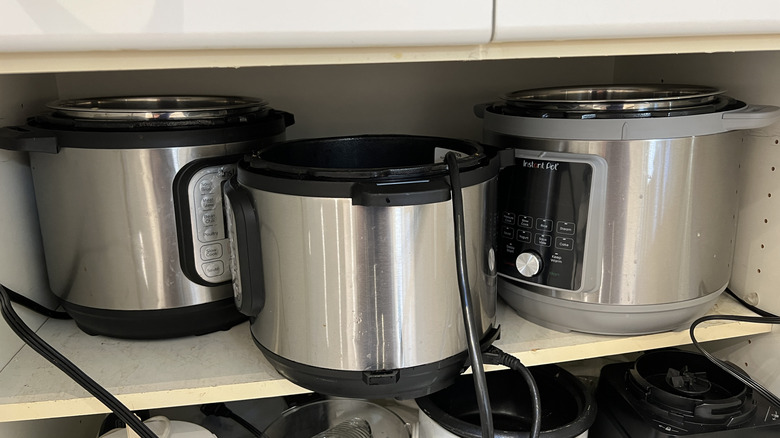
Cookware is meant to be used, but many home cooks know how it feels to pick up a new piece that mostly collects dust. Specialty cookware is especially prone to disuse, and this can be a storage problem in tight kitchen spaces. So if you're going to buy a pressure cooker, ask yourself: How often will you actually use it?
While many owners use their pressure cookers frequently, they do have a learning curve to them that might frustrate some users into abandoning their efforts. Some home cooks might grow anxious at the different settings that electric pressure cookers have and leave their new purchase unused for years because it's easier to cook the way they've been cooking.
Pressure cookers don't have to be expensive, which makes it tempting to pick up a cheap used one at a thrift store. But when it comes to cleaning a pressure cooker, you can't be lazy. The pot itself is straightforward, but each part needs to be cleaned individually after every use. Any rubber seals should also be cleaned and checked for integrity. The gasket and release valve may also need cleaning. On electric cookers it's essentially a simple wipe down, but on stovetop cookers they must be removed and washed separately by hand. This bit of extra work is easy to overlook but absolutely critical.
Accidents happen
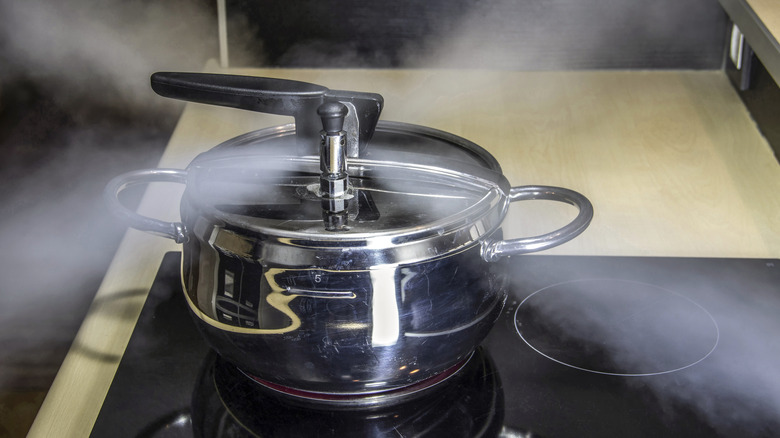
However typically small, cooking has its own inherent risks built-in at every step of the way. Many of these are easy to accommodate, including with regard to pressure cookers. But if something does go wrong, the risk of literally explosive disaster is far greater than with most cookware.
Pressure cookers with faulty seals or clogged valves may explode when used. There is also an explosion risk when overfilling one. This is not to say that pressure cooking is especially dangerous. Modern cookers are safely designed and constructed, and many electric pressure cookers won't even function if they detect such problems. But with incorrect use and care of a pressure cooker, the worst-case scenario is truly one of the worst cases.
When using a pressure cooker, especially its quick release valve if it has one, you must also be mindful of the depressurizing steam that comes shooting out. Jets of steam may not be unusual in a home kitchen, especially in a tea-brewing household, but it's not a potential danger of pressure cooker alternatives like Dutch ovens, either.