

5 Common Japanese-Style Knives And When To Use Them
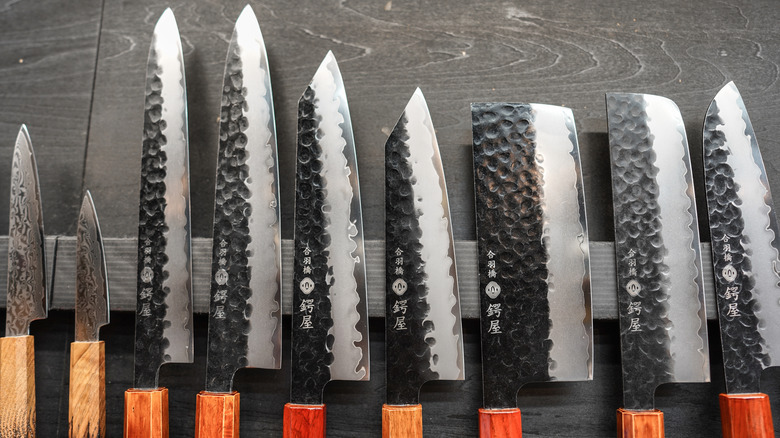
The more you cook, the more you realize how beneficial it is to have a sharp, sturdy, and reliable knife to prepare your food with. Not only does it make your prep easier when you can glide through ingredients (as opposed to sawing them into pieces with a dull blade), but a sharp knife is a safe knife. Some of the best kitchen knives on the market come from Japan, which has been mastering the art of knife-making for over 1,000 years. Many are exquisitely designed and made from durable high-carbon steel, making them usable for a lifetime if they are properly cared for. There are several knife shapes that are popular in Japan, and we selected five that we particularly love for the culinary jobs they are created for.
From an everyday Chef's knife, a pairing knife, and a sushi blade, to a vegetable chopper and a carving knife, our choices are ones that many use on a regular basis. Could you use any of these to cut any given food? Probably. But each knife's blade size, shape, the thickness of the steel, and the weight are created with specific tasks in mind to give you pristine results and to help the knife last as long as it's supposed to. Japanese knives can be expensive because of their high quality, but these are worthwhile investments for anyone who is serious about their cooking skills.
Gyuto
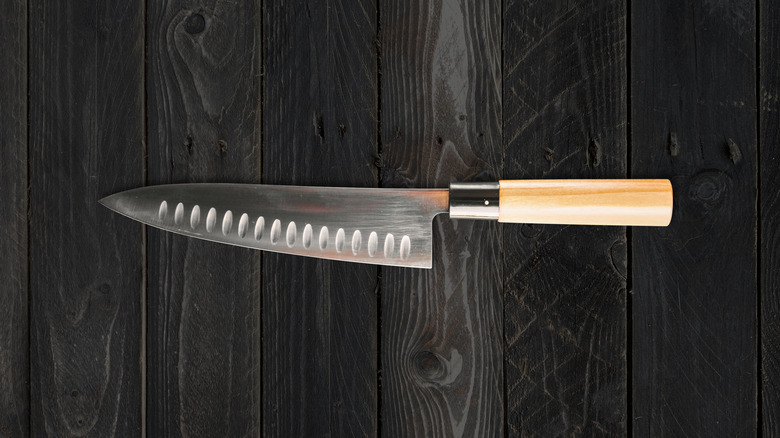
A Gyuto knife will probably feel very familiar, as it is basically the Japanese version of a chef's knife. It's a versatile, multifunctional tool that can chop, slice, mince, or dice ingredients, as well as crush things like garlic cloves with the side of its wide blade. Because it was originally meant to cut large chunks of beef, it gained the name "Gyuto," which means "cow sword." If you're looking for a Japanese knife to start out with that will handle multiple jobs, a Gyuto is perfect.
This style became popular in the late 19th and early 20th centuries in Japan when increased trade meant better access to meat. Because the blades on Gyuto knives are usually thinner than their European counterparts, it's not the ideal knife to use for heavy-duty jobs, like cutting through bones. But, despite its size, it actually cuts with extreme precision, whether you're mincing soft herbs, dicing a mango, or slicing a perfectly medium rare steak.
Petty knife
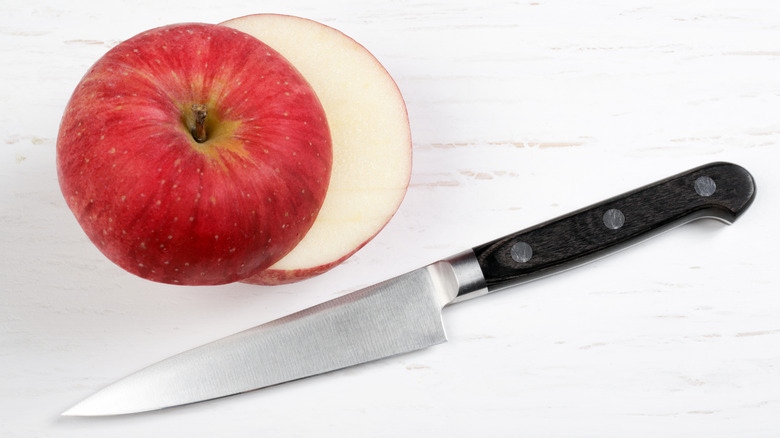
A Japanese Petty knife is a small but mighty tool that you might reach for just as often as you do a Gyuto. It's a knife designed to slice and chop smaller ingredients without the bulkiness of a large blade, like shallots, chilies, cherries, and other small fruits. It's designed so you can grip the knife fully in your hand and do precise work, as well, like coring tomatoes and strawberries, or fluting mushrooms.
It's the perfect size for peeling apples and potatoes, and even knobs of ginger. You can trim silver skin from meat and devein shrimp, cut off the tops of green beans, remove the seeds from bell peppers, and shave the leaves off of soft herbs like cilantro, parsley, and dill. It's a great knife for making intricate designs as well, like carving flowers from radishes for decorating veggie trays. Another task that's difficult to do with a large knife is segmenting citrus fruits, which is perfect for using a Petty knife for.
Deba
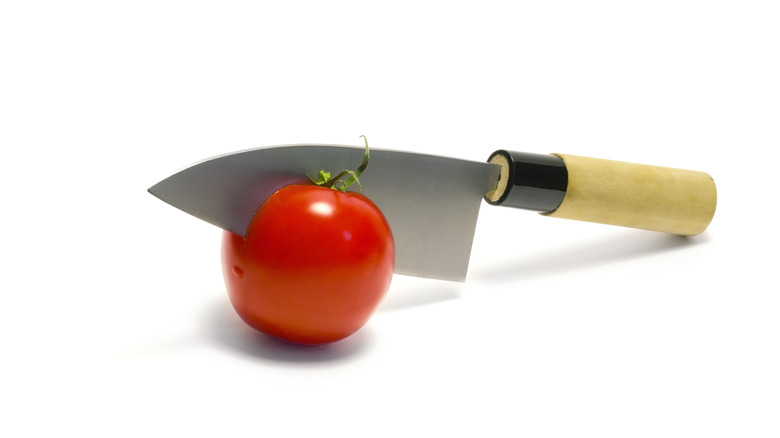
Some describe a Deba knife as a hybrid of a boning knife and a meat cleaver. It was developed in Osaka during the Edo period, sometime between 1615 and 1868, specifically for filleting fish and birds. Because the blade gradually gets thicker as it goes back, it's perfect for cutting the heads off fish without damaging the filets. It's still a great knife to use for breaking down fish or poultry because it's thinner and extremely sharp at the point and heavier toward the handle.
There are actually several types of Deba knives, all of which excel at specific tasks. For instance, a Ko-deba is smaller and ideal for cutting sardines, mackerel, or quail. If you make a lot of crab or lobster, you'd love a Kanisaki-deba, which is made for processing these types of shellfish. Hon-deba knives have long, thick blades and are great for various tasks, while Miroshi-debas are the go-to knife if you filet a lot of fish.
Nakiri
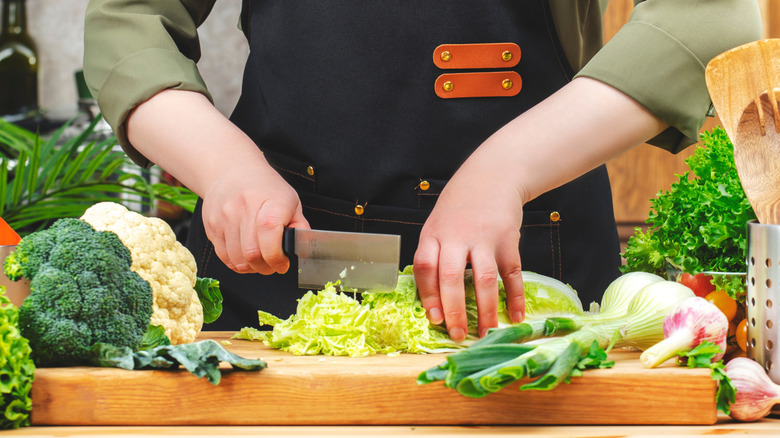
Nakiri knives look a little like meat cleavers, but the blade isn't as wide. Long, thin, with a flat blade, they are commonly used to chop vegetables, and they're particularly useful for cutting greens. You can chop cabbage, kale, mustard, and collard greens, but it's also perfect for cutting hard root vegetables like potatoes into thin julienne cuts. Go one step further and cut your julienned veggies into brunoise.
Nakiri knives are different from chef's knives, whose blades are curved and chop with a rocking sort of motion. Instead, the blades of Nakiris are completely flat, so they're great for quick, up-and-down chopping. If you want to slice onions, zucchini rounds, or carrots, a Nakiri is perfect. If you're the kind of cook who likes perfectly diced vegetable cuts for things like soup or pasta sauce, a Nakiri knife can help you with such precision.
Yanagiba
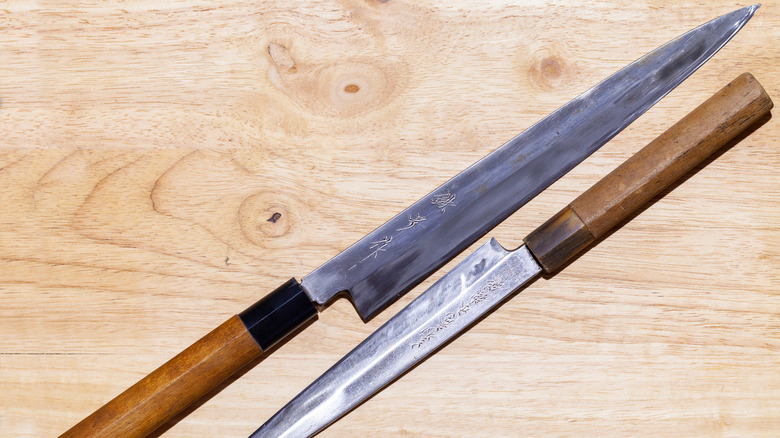
Yanagiba knives (which translate to "willow" or "leaf blade") slightly resemble swords due to their long, thin blades. It's these blades that make the knives the go-to tool for sushi chefs. A sharp Yanagiba knife can effortlessly slice through fish without any damage to the flesh with a single stroke, rather than a sawing motion. When delicate fish flesh is damaged by the wrong type of knife or a dull one, it can lose moisture, which negatively affects the flavor, especially if you're cutting the fish for sashimi, where the fish flavor and texture are on full display. It also works great for cutting through meats, whether you're slicing up a grilled ribeye for presentation on a salad, or slicing a filet mignon paper-thin for beef carpaccio.
The blades on Yanagiba knives are meant to stay extremely sharp and are knives that are really meant for slicing softer proteins, so you don't want to use this tool for chopping root vegetables, and certainly not for cutting through bone or joints; doing so could chip the precious blade. Outside of slicing fish and meat, you can use this knife for skinning fish and cutting into sushi rolls wrapped in seaweed.