

The 1950s Fridge Feature That Deserves A Revival
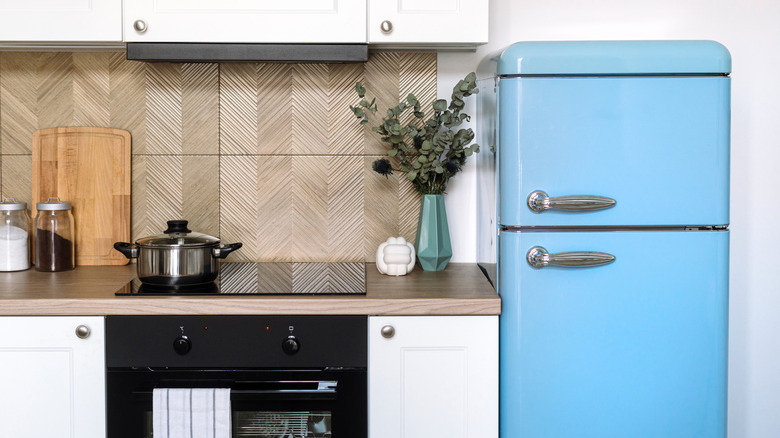
Vintage fridges definitely have a cool vibe. With rounded corners and characterful latches, these retro appliances were designed to look good as well as perform. However, they also gulped through electricity, and some of them were even made of irritant materials, like fiberglass. That said, there was one feature of 1950s fridges that deserves a revival: rotating shelves.
Showcased in this Instagram video from @antiqueappliance_restorations, one model of a 1958 fridge made by General Electric had four shelves, which could be fully rotated and turned by hand like a carousel. This allowed consumers to access every single item in the fridge without having to bend down and look into the back for smaller articles or long-forgotten produce. Better yet, the fridge had a button on each shelf, which allowed the rotating shelves to be lowered or lifted to accommodate taller cartons and containers (you'd simply press the button and turn the shelf down the central column until it reached the desired height and lock it into place).
Even the crisper drawer at the very bottom was rotating and opened all the way out to reveal all the vegetables inside, guaranteeing that produce wasn't left to fester or rot away in the back. To make this fridge even more dreamy, it has a foot pad at the bottom to pop it open too. These useful features are definitely worthy of a comeback.
The durable features of General Electric's rotating fridges
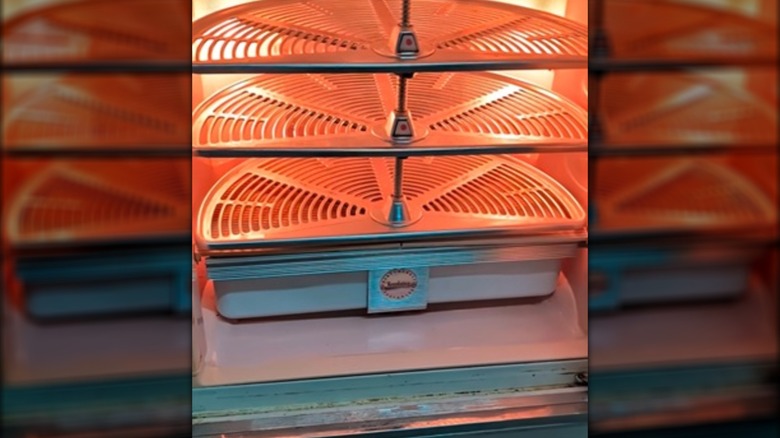
In the same YouTube video, several heavy steel plates were placed on top of one of the shelves to showcase its strength. The shelf remained steady and didn't break, bend, or tilt to the side despite the 45-pound load, signaling the quality and longevity of old-school fridges that were built to last. However, the shelves did have curved elongated slits along them, which likely meant any accidental spillages would annoyingly drip down onto the level below.
In addition to the rotating shelves and crisper drawer, the fridge had a special compartment for butter on the door and a freezer compartment at the bottom (or top, depending on the model) with a shelf for ice trays. There was a built-in wine rack and an egg holder too (however, we now know that placing huevos in the fridge door versus the back is one of the biggest mistakes you can make when storing eggs). The outer body of these fridges changed over the years, with the interior core remaining the same until 1959, when General Electric fridges switched from making rotating shelves to shelves that swung all the way out.
If you want to recreate the rotating shelf feature in a modern appliance, consider placing a Lazy Susan turntable in your fridge. Then you can simply give it a whirl to access those condiments, sauces, and pickles that would often be lost somewhere in the recesses.