

For Better Homegrown Peppers, Plant This Veggie Alongside Them
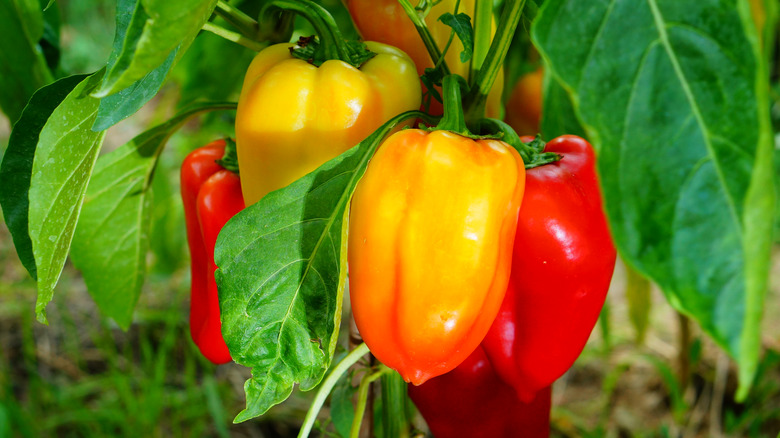
Homegrown peppers have a superior flavor, crunchier flesh, and brighter aroma than most store-bought veggies because they ripen on the vine and can be picked at the perfect moment. Better yet, there are heaps of varieties for green-fingered gardeners to experiment with, from redskins (that are perfect for growing on a windowsill) to Bell Boys (that are chunky, blocky, and a vibrant red). Whatever type of pepper you select, one way to make them grow better is to plant them with beans.
Known as companion planting, this technique involves growing specific vegetables and herbs together that benefit one another. For instance, for better homegrown tomatoes, experts advise planting basil, borage, or carrots alongside them to deter pests, improve drainage, and boost their flavor. Dwarf french beans make great companion plants for peppers because they fix nitrogen into the soil, which encourages a greater number of fruits to grow. Fava beans (also known as broad beans) do the same job but also attract aphids, which can damage a pepper crop, so you'll need to monitor them. As peppers need six to eight hours of sunlight a day, taller plants, like varieties of pole beans, might be best avoided because they can choke them and hamper how much sun reaches the leaves and fruit. That said, if you erect a trellis nearby to allow the beans to wind through them, they won't overshadow the peppers. Meanwhile bush beans are ideal for planting with peppers because they flourish at the base and don't grow tall.
Peppers and beans benefit from being planted in greenhouses
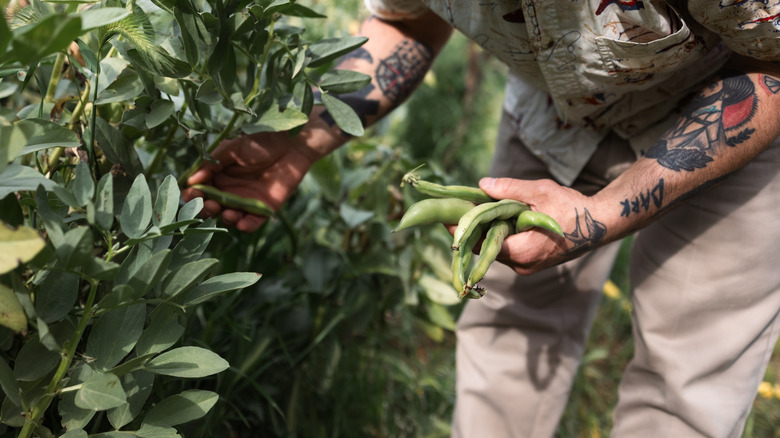
Peppers grow best in greenhouses or conservatories where they can benefit from the warm and sheltered environment. You can plant them outdoors, too, but you might have a smaller harvest due to the length of the growing season, which prevents them from ripening to full capacity. Luckily beans equally benefit from being planted in greenhouses. For example, French beans can do well indoors, producing an earlier tender harvest.
While peppers don't need to be sown regularly in small batches as they produce fruit over a lengthy period, beans do need to be succession planted if you want to benefit from a continuous harvest. This means you should allow for returning to your vegetable patch regularly, whether it be indoors or outside, to maintain your harvest. If you do find that aphids, whiteflies, and spider mites are still attacking your peppers, consider growing herbs like basil or oregano nearby to repel them. Beans also happen to be one of the best companion plants to grow with potatoes (as well as cilantro, basil, and marigolds), but if you're keen to improve next year's berry harvest, the five hands-down best companion plants for strawberries include asparagus, spinach, and borage.