

The 5 Hands Down Best Companion Plants For Strawberries
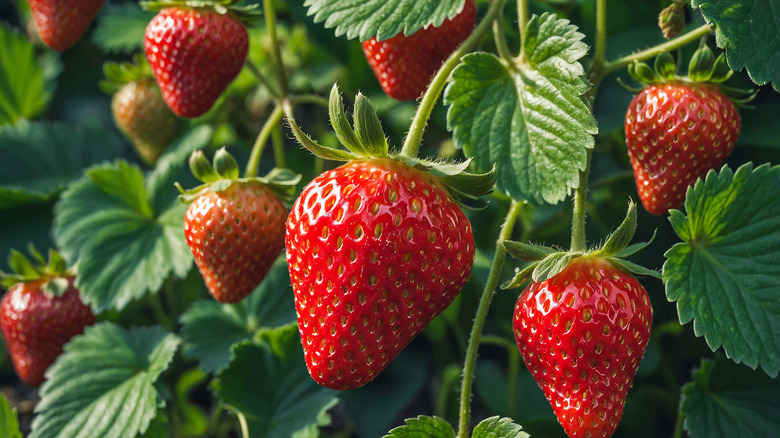
Strawberry plants are a colorful, sweet addition to any garden, whether it's big, small, grown in the ground, or in a container. And after putting in so much effort to plant and nurture them, there is nothing worse than discovering your beautiful berries have been sabotaged by pests or unforgiving soil. This is where friends can come in; not your own, but plants that actually benefit the growing conditions of your strawberries. But you shouldn't choose any old plant that looks pretty at the nursery; some are much better than others, like these five very beneficial strawberry companions.
Thyme, borage, marigolds, spinach, and asparagus offer the kinds of traits that make for good companion plants. They bring in pollinators, offer natural pest control, and benefit the soil conditions, which urge strawberries to thrive. There are many more excellent plants that you can grow with these berries, so it's always best to find out which growing zone you live in to determine which ones will develop best alongside your strawberry plants. And while they may not necessarily need companion plants, why not give your berries a better chance of thriving while growing some extra herbs, veggies, and flowers along the way?
Thyme
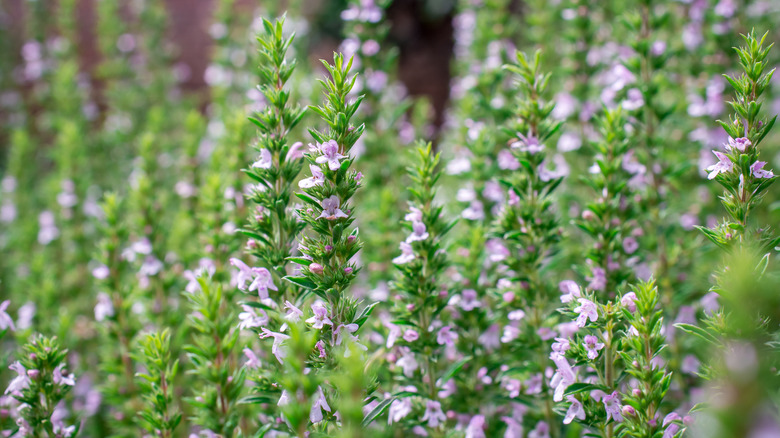
There's always room for thyme in the garden. It looks and smells beautiful, and is a classic culinary herb. When planted close to strawberries, the two can become best friends. The flowers that develop on thyme are incredibly attractive to pollinators like bees, and to predatory bugs like syrphid flies. The latter like to feast on the bugs that would otherwise dine on your strawberry plants, like aphids and caterpillars. In addition, thyme's strong scent masks the scent of strawberries, which will keep away some strawberry-eating pests on the prowl for something sweet.
You can position thyme as a border around your strawberry plants, which acts as a wall of sorts to crawling worms and other harmful pests. A bonus in planting these two plant buddies together is that you can harvest them together and bring out their magic in the kitchen. The fragrant herb happens to taste wonderful with strawberries. Try honey and thyme strawberry sauce on ice cream, yogurt, and even meat dishes like duck and chicken.
Borage
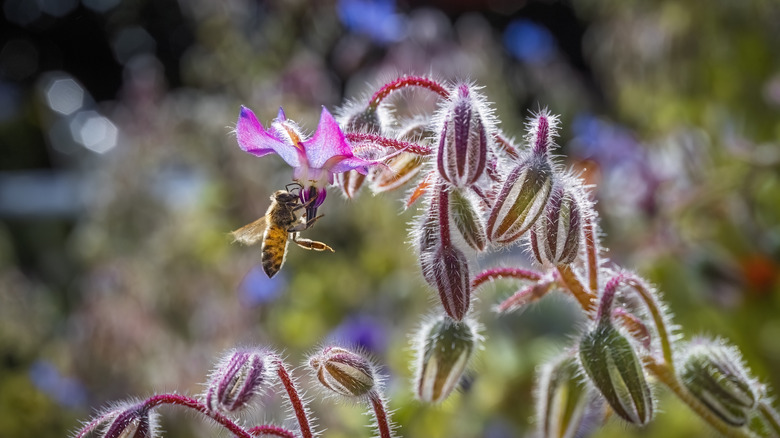
Borage is a native Mediterranean plant that boasts pretty blue flowers, which pollinators adore. This is precisely why this plant is a welcome addition to your strawberry patch: it brings in the bees, hummingbirds, and butterflies, which in turn will pollinate your berries. It's pretty low-maintenance and adds nutrients to your soil, but it can get as tall as three feet. For this reason, you'll want to plant it in the corners of your containers or garden beds so that it won't shade your strawberries too much. You can also keep it trimmed to about a foot tall.
Borage flowers and leaves are edible, with many agreeing that they taste a little like cucumbers. You can put them in your salads or scatter them on your homemade strawberry tarts made with your homegrown berries. They also look and taste great as a garnish to your cucumber cocktails, like cucumber and mint gin cocktails. By all means, muddle in some fresh strawberries as all these flavors are excellent together.
Marigolds
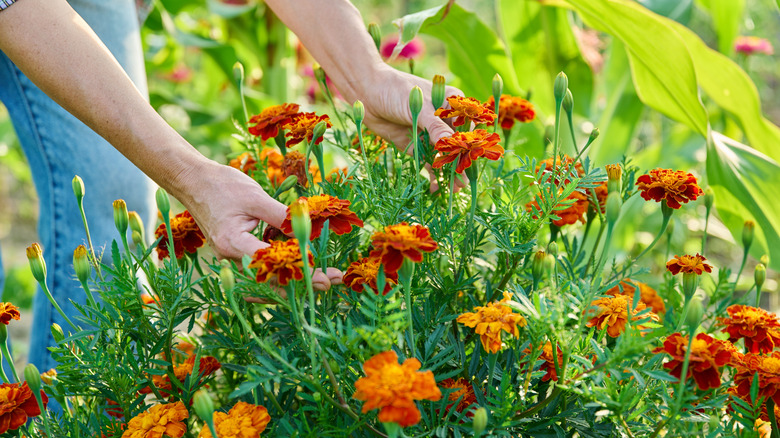
Marigolds are some of the brightest, most cheerful flowers you can include in your garden, whether you're growing strawberries or not. But if you are, marigolds double-duty as a wonderful companion plant. They may not smell offensive to us, but pests like rabbits, deer, and insects can't stand it. Fortunately, it won't keep pollinators away, who love the bright, attractive colors of marigolds. Between the two, your strawberries have a much better chance of thriving.
There are several types of marigolds, but French marigolds are a great choice as a companion. These plants are short and bushy, and can discourage a type of roundworm called root-knot nematodes, which can damage the roots of strawberry plants. Planting marigolds as a border around your berry plants not only looks great, but gives both plants plenty of room to grow and not disturb each others' root systems. As a bonus, marigold petals are edible and make smashing-looking garnishes for dishes.
Spinach
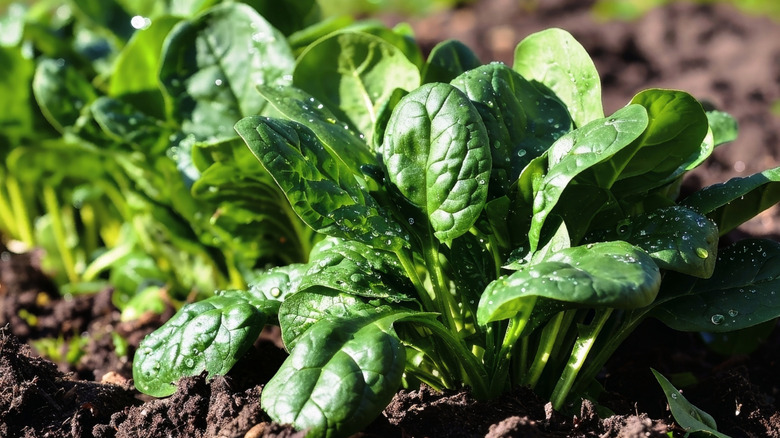
Spinach and strawberries are already a classic pairing when you think about the ever-popular dish, strawberry spinach salad, but these two springtime ingredients happen to be garden buddies as well. When grown in close proximity to the berries, the leafy greens of spinach plants give shade to the soil, which in turn helps keep moisture in, and discourages weed growth by blocking the sun from the areas it's covering. Be mindful that you don't want the spinach to shade the strawberry plants themselves, so space out your plantings accordingly.
Research has indicated that naturally occurring phytochemicals called saponins in spinach naturally protect the greens from certain pests; they can also extend their protection to nearby strawberry plants. Strawberries, in turn, offer their own benefits to spinach – hoverflies that are attracted to the berry flowers prey on spinach insects and pests. These flying insects are also excellent pollinators.
Asparagus
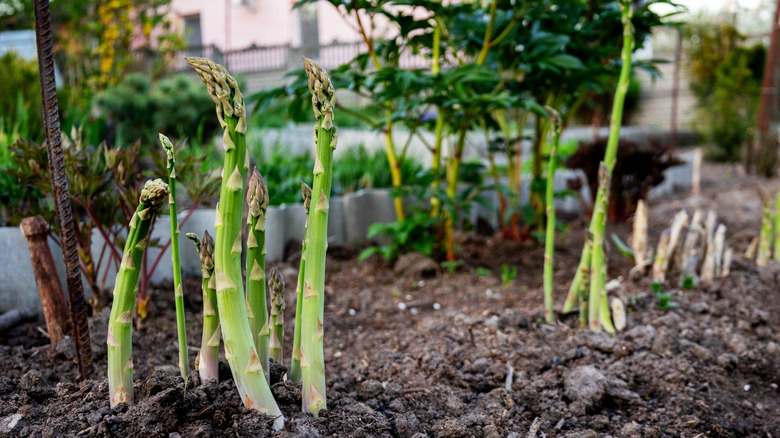
The theory that opposites attract apparently applies to garden life as well, because tall, slender asparagus stalks and short, squat strawberry plants happen to grow beautifully together. Deep asparagus roots pull up nutrients and water that are deeper in the soil to the shorter roots of strawberries. Asparagus also puts beneficial nitrogen into the soil, an element that is essential for the strong growth and development for all kinds of plants, fruits, and vegetables. But strawberries don't just sit back and let the veggie do all of the work; they actually help fertilize the asparagus plants, and the low-lying plants maintain moisture for the deeper roots, so both of them work with each other to thrive.
Together, these two spring darlings work together to aerate the soil around them, or keep it nice and loose so that both the asparagus and strawberries can grow easily. If you harvest them together, they taste lovely together. Try roasting the asparagus and creating a salad with quartered strawberries, arugula, an aged balsamic vinegar, some thinly sliced red onions, toasted walnuts, and feta cheese.