

How Long Does A Yeti Cooler Last?
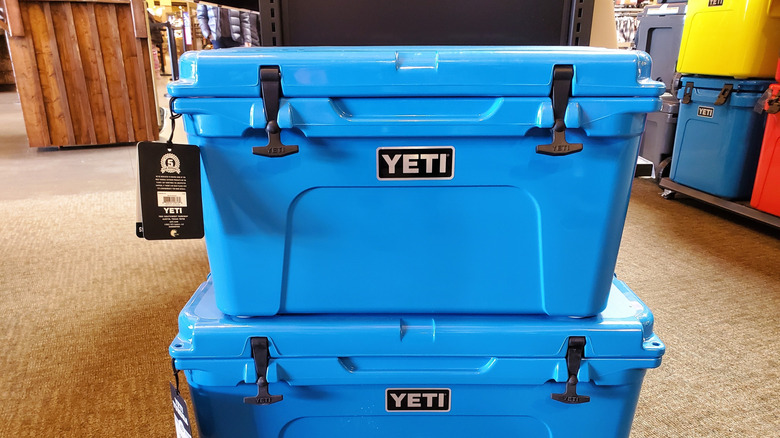
Perfect for camping or off-the-grid adventures, Yeti coolers are some of the most expensive coolers you can get. Although there are high-rated wheeled coolers under $100 out there, Yeti has a cult following. So, naturally, you'd expect them to be long-lasting. But, exactly how long do they last? The answer depends on the type of cooler. Soft Yeti coolers, such as the Hopper, typically have a warranty period of three years. Hard coolers, such as the Tundra, have a longer warranty period of five years. We would expect them to last, at minimum, up until the warranty expires, as manufacturers are usually aware of a product's life expectancy.
Yeti prides itself on having coolers that are durable and meant to withstand tough conditions. According to Yeti's website, the Tundra 45 Hard Cooler, for example, is "virtually indestructible," thanks to its rotomolded construction. On r/YetiCoolers, one Reddit user, u/travelwithnolan, writes that they have had their Roadie 20 hard Yeti cooler for 13 years. Another user, LegitimateOil1989, claims to have had their Tundra hard cooler for six years before needing to replace a part. On r/YetiCoolers, users say that their Hopper soft cooler has lasted three to five years and is still going strong.
Things that can go wrong with a Yeti Cooler
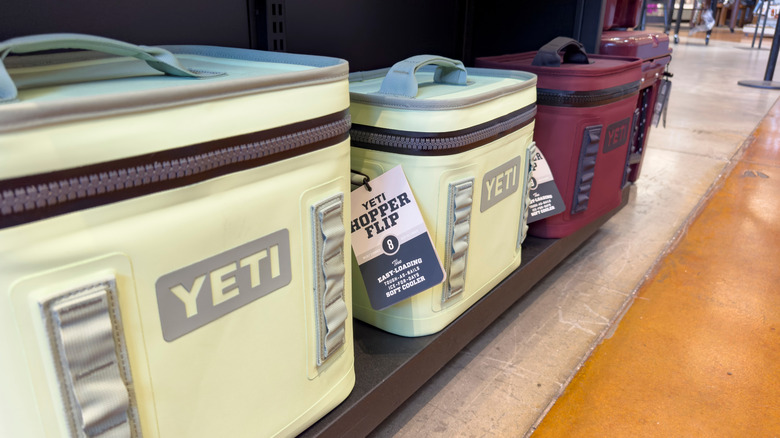
Although it's often said that you'll never need to buy another cooler once you have a Yeti, there are certain things that can malfunction and leave you needing a replacement part or a new cooler altogether. As many Reddit users commented on r/YetiCoolers, the most common issue with soft coolers, especially the Hopper, is that the zipper can break. Yeti also issued a recall in 2023 because its Hopper soft coolers had an issue with their magnets, which caused them to be easily detached.
Hard Yeti coolers are definitely more durable than the soft coolers, but they still come with potential problems. An issue brought up by a user on r/YetiCoolers is that their Tundra 35 hard cooler was not keeping ice cold, possibly due to a malfunctioning gasket. Yeti also sells replacement parts on its website, such as T-latches and drain plugs. So, it's likely that these may be the first pieces to go. Still, it's better to replace the parts than buy a whole new cooler, which can cost hundreds to a couple thousand dollars. If you do end up going with a Yeti cooler, just make sure you know the cooler hack that prevents your sandwiches from getting soggy.