

8 Classic Foods Cowboys Ate Back In The Day (That Still Hold Up)
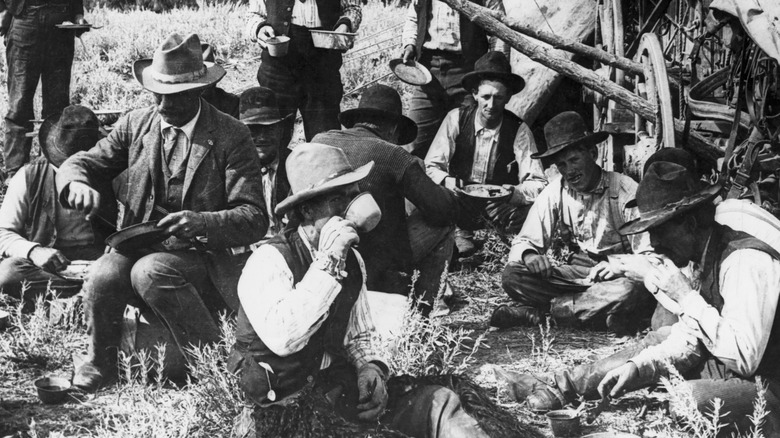
After long days on the ranch and longer days out on the range, cowboy cuisine had to be hearty and satisfying. Most of the most emblematic cowboy fare was what could be prepared on the cattle trail, needing shelf-stable foods that could be transported in the trusty chuckwagons that accompanied cattle drives. Meals were limited to what could be prepared in a Dutch oven, but trail cooks could be pretty inventive with limited resources.
Many of the classic foods cowboys once ate borrowed from Native Americans. With much of the era's ranch work centered in Texas and the Southwest, cowboy food was also heavily influenced by vaquero cuisine and the flavors of Mexico. And the cowboy classics still enjoyed today include the two things most prevalent in cattle drive fare: Beans and beef. The former was conveniently nutritious and easy to transport, while the latter was easy to come by when working with cattle. Many of the dishes cowboys once relied on have evolved into classic Tex-Mex culinary traditions, while others remain timeless breakfast favorites. All are wholesome and hearty. So without further ado, here's a list of eight classic foods cowboys ate back in the day that still hold up with diners today.
1. Chili con carne
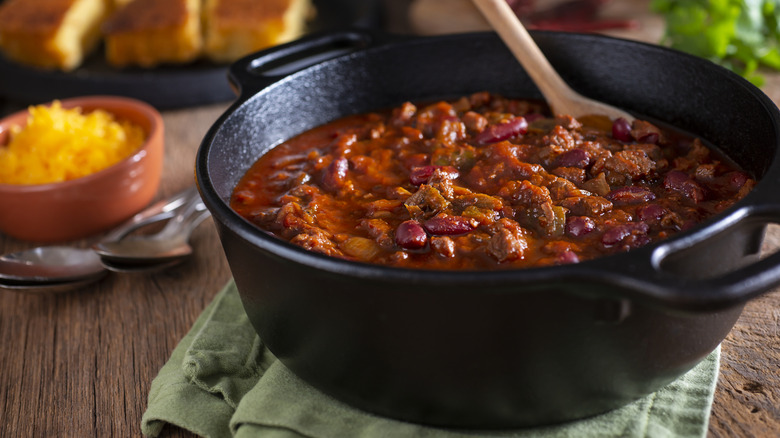
While it's difficult to lay down a definitive origin for this spicy meat dish, chili seems to have been a culinary fixture among different communities in Texas since at least the 19th century, and possibly before. A spicy, flavorful dish that made the most of limited ingredients, chili's simplicity did not impact its popularity. Consisting mostly of meat and chili peppers with some added spices, the spiciness turned this into a dish that priests scorned but cowboys adored.
It's possible that chili might have evolved from Native American influence, as there is a recipe from sometime around 1850 describing "chili bricks," which were taken on cattle drives for easy meal prep. Made of dried meat, chilies, and spices pounded and held together with fat, these bars of dehydrated stew mix resemble pemmican, an indigenous food that can keep for years. This Native American staple was made from dried meat, nuts, and fruit pounded together, and could be easily prepared in a pot by simply boiling the whole thing with water. Whether this was the origin of chili or not, it was a resourceful form of convenience cooking.
Post cattle drive culture, chili later evolved into a dish prepared with fresh ingredients. Recipes have evolved over the years from the simple cowboy stew into elaborate fixings, including different varieties of beans. How Tex-Mex differs from Mexican cuisine is all in the ingredients, and though chili isn't really a classic south of the Texan border, it's now a Tex-Mex cornerstone.
2. Sourdough
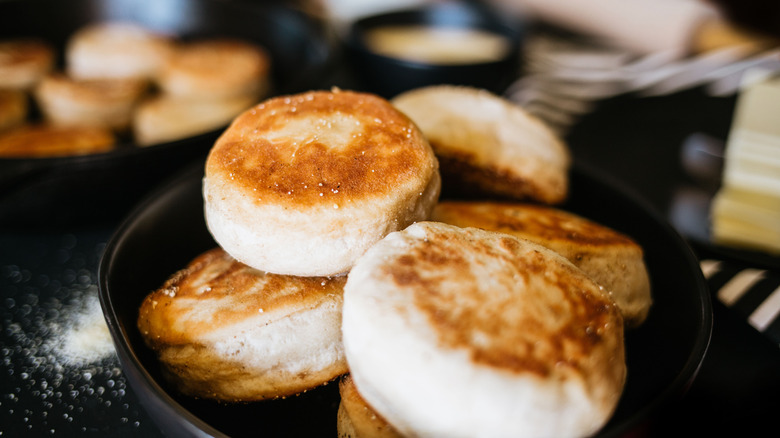
While protein was an important part of cowboys' diets, carbohydrates were another significant energy source that horsemen valued to keep them fueled after a hard day of work, whether on the ranch or on the trail. While out on cattle drives, bread would have been prepared by the trail cook, and likely in the omnipresent Dutch oven. With limited resources available and restricted cooking equipment, sourdough was the only kind of leavened bread that could be prepared from the chuckwagon, and sourdough biscuits were its most common form. The cookie, as he was often known, would carefully nurture the sourdough starter daily while on the trail, and sourdough biscuits paired nicely with soups and stews, rounding out any trail meal after a long day. These could also be served with gravy for a hearty breakfast.
Sourdough could also be molded into more than just biscuits. Another common cowboy use for it was in the preparation of pancakes. Using this leavened dough meant that pancakes would come out nice and fluffy even without the typical yeast to prepare them. Commonly known as flapjacks, these were likely served with molasses. In the U.S., the difference between flapjacks and pancakes is all in the name, but no matter what cowboys called them, these sourdough flapjacks were another hearty way to start the day. After their success in the Old West, flapjacks retain an important place at breakfast tables across the country, and sourdough is still the traditional alternative to more common breads throughout the States.
3. Huevos rancheros
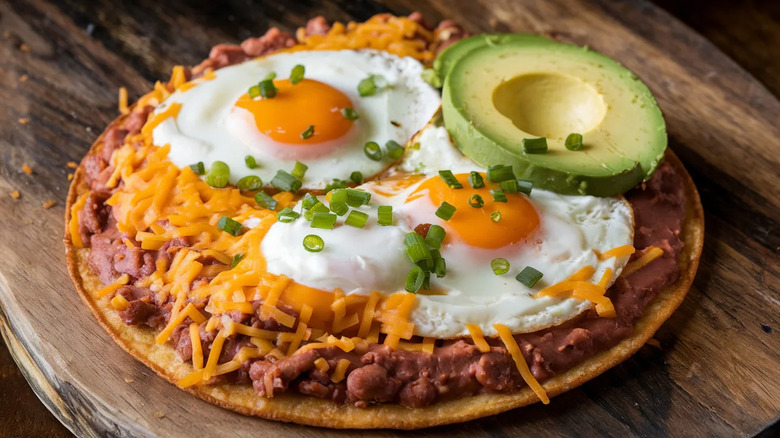
The origins of this Mexican breakfast favorite are also in the name. Huevos rancheros were a popular pick-me-up meal after a long morning of working on ranches in Mexico, possibly dating back as far as the 1500s. Requiring more elaborate ingredients than might have been possible on the move, huevos rancheros would have been more easily served to horsemen while they were stationed at a ranch, rather than on a cattle drive. A plate typically included rice, beans, potatoes, and tortillas — with fried eggs on top, of course. Though a distinctly vegetarian meal compared to most cowboy staples, this was still a hearty, flavorful, and welcome way to reward a morning's hard work.
Timelessly delicious, huevos rancheros have remained a popular breakfast or brunch meal for centuries, and are just as beloved today. While toppings might not have been so elaborate back in the days of the Old West, today's huevos rancheros typically come accompanied with cheese, guacamole, and chiles on top. Variations differ across Mexico and the Southwestern U.S., where this dish is especially popular in New Mexico. Today, diners have the choice of many similar variations, and it's often a decision between huevos rancheros vs. chilaquiles when ordering breakfast out. Though the two dishes are similar, huevos rancheros remain the classic brunch à la cowboy.
4. Carne guisada
Another group of horsemen responsible for some enduring cowboy cuisine were the vaqueros, the original cowboys of the Americas. The first vaqueros were indigenous men trained by the Spanish in the 1500s to herd cattle on horseback. They became renowned throughout Mexico for their horsemanship and impressive lasso skills. These abilities inspired the archetype for the cowboys of the United States, who are more commonly remembered today as the horsemen of the Old West. But not only did cowboys borrow from vaquero horsemanship traditions, they just as importantly took influence from vaquero cuisine.
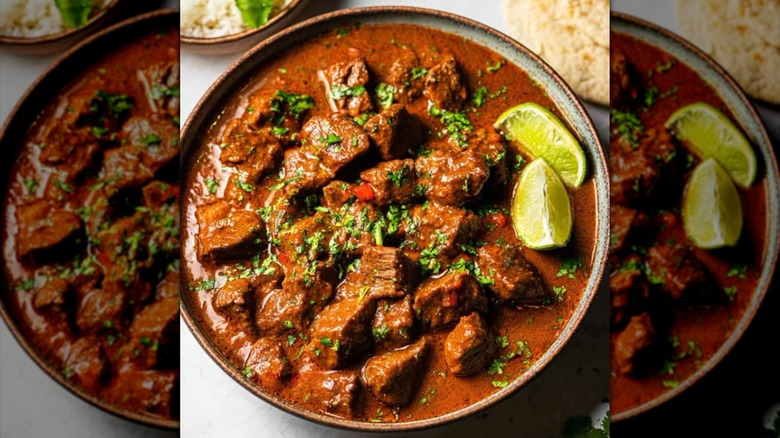
Carne guisada was one of these dishes, first popularized by the vaqueros, which was a success with cowboys north of the Mexican border. Working with cattle, there was no shortage of beef, and vaqueros perfected the art of grilling strips of it over wood in the 19th century. This smoky, seared meat is the basis for carne guisada, a beef stew in which the meat is mixed in a flavorful sauce of tomatoes and jalapeños. Beloved for a reason, it was something cowboys could easily prepare with any surplus beef. The classic flavors are what have made this dish enduringly popular well after the golden days of ranching in the West.
5. Enchiladas
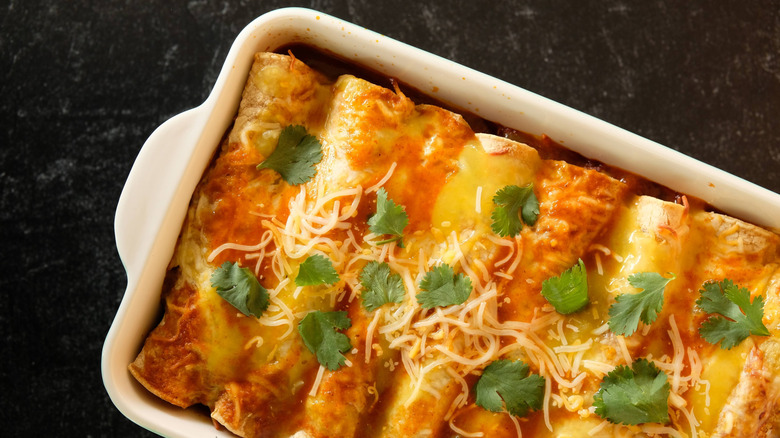
A delicacy enjoyed throughout the Aztec Empire, enchiladas were once quite different from the saucy dish we recognize today. When observing a feast in Tenochtitlán in 1519, Bernal Díaz del Castillo, a Spanish conquistador, was thoroughly impressed by a tortilla-based dish served to King Montezuma II between courses. Originally known as chīllapīzzali, the dish consisted of tortillas filled with meat, beans, eggs, and vegetables, and dipped in a chili paste. Consumed by royalty and commonfolk throughout the empire, this predecessor to the enchilada was tasty, spicy, and beloved by all.
Despite going on to destroy the Aztec Empire, the conquistadors adopted Aztec recipes. Chīllapīzzali became popular among Spanish colonizers because it was tasty, but also because it could be prepared and eaten on the go. With Spanish influence, recipes evolved over the centuries to include cheese, different meats, and sauces that replaced the original chili paste. A culinary fixture in the Spanish colony that would eventually become Mexico, these enchiladas — a name which means they were served "in chili" — became a cornerstone of Mexican cuisine, and remained prized for their portability. This same convenience that appealed to the conquistadors made this dish a convenient meal for cowboys in the 19th century, too. Elaborate versions slathered in sauce could be prepared in the Dutch ovens omnipresent in cowboy cooking on cattle drives. Today, no one disputes their deliciousness, but plenty of people have strong opinions over whether they're best with red or green enchilada sauce.
6. Beef jerky
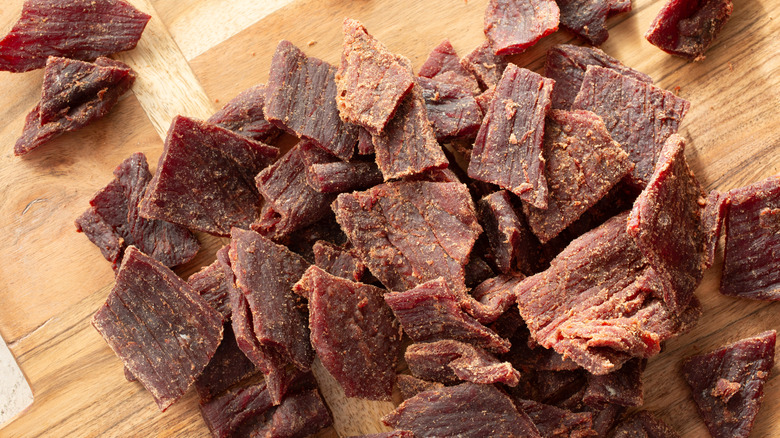
With origins in Native American cuisine, beef jerky was a resourceful form of food preservation in a time long before canned or refrigerated foods. Fresh game would be cut into thin slices and hung to dry, either in the sun or over the smoke from an open fire. Both methods preserved meat by removing the moisture. This would either be stored in strips or pounded into a mash used to prepare the pemmican, commonly stored as a reserve protein source for winter months, when less game was available.
While indigenous peoples typically prepared this using bison meat, cowboys used the beef that was easily accessible to them. Though fresh meat was also consumed, beef that had been dried into jerky was more versatile and easier to keep on hand during cattle drives. Cowboys might eat it plain as a snack or a quick meal. It was also common to rehydrate some jerky by boiling it into a stew. Either way, jerky was an invaluable, portable protein source that sustained cowboys through many a long cattle drive, and it remains a popular snack today. Despite being long prized for its shelf life, however, modern industrial production has led to some gnarly beef jerky recalls over the years. Nevertheless, this ancient American tradition is still beloved for its savory chewiness, even if these days it might be consumed more for pleasure than necessity.
7. Charro beans
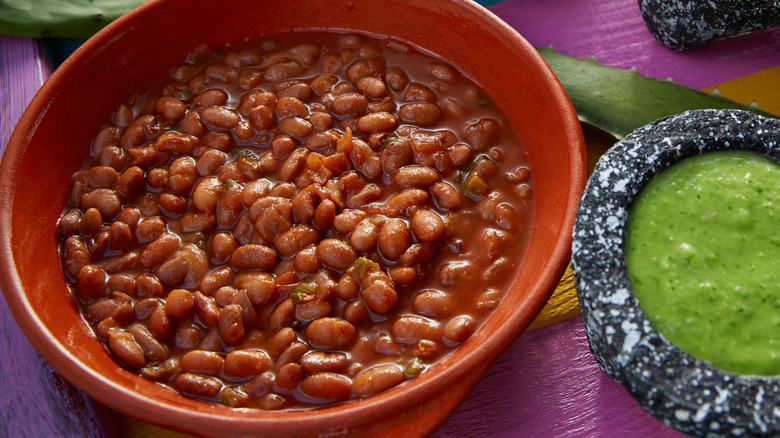
This dish is named for the charros who became emblematic figures in Mexico. Upper-class ranchers who took appearances seriously, these horsemen dressed to impress, and are best known for their elaborate sombreros. Living and working in dry desert conditions, charros were known to improvise meals for their ranches with whatever was available. As legend has it, charro beans are one timeless dish that came out of this necessity.
The truth is likely close to the lore, in which resourcefulness brought charros to prepare a sort of thick stew with the leftover vegetables and ample beans they had available. After becoming a staple among the horsemen in northern Mexico, charro beans proliferated into the Southwestern U.S., where they were an ideal meal for cowboys to prepare either at the ranch or on the trail.
Hearty, filling, and easy to whip up for a crowd, this dish was naturally suited to the ingredients chuck wagons were already outfitted with. Beans could be dried, which made them easy to transport and ensured they kept well until they were ready to cook. Well-adapted to flavor profiles, both sweet and savory, beans were already a highlight for cowboys when prepared with molasses, but the introduction to charro beans would have provided a nice savory variety using the same legumes for a base. Today, charro beans are still a beloved dish, and might be prepared with or without meat. If left vegetarian, they typically accompany other meat dishes as a side.
8. Cornbread and Johnnycakes
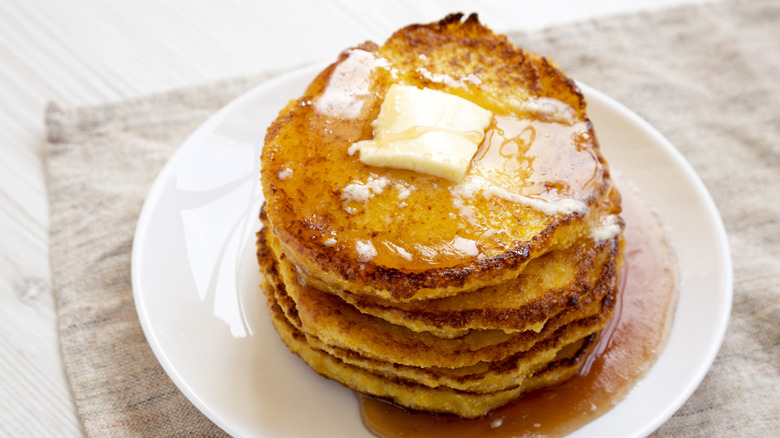
Cornmeal was another invaluable food source for cowboys on the trail, and recipes for this staple also come from Native American culinary traditions. Dried and pulverized to a consistency just slightly grainier than flour, cornmeal was another shelf-stable ingredient that kept well in the chuck wagons on cattle drives, and could be used to make a variety of starchy staples. Cornbread was a favorite among cowboys, and could be prepared in the trusty Dutch oven to accompany coffee for breakfast or meat stews for dinner.
Johnnycakes were another common cornmeal recipe that became a trail staple. First adopted from indigenous recipes by early colonists, these cornmeal flatbreads travelled west with settlers in later years. Possibly the simplest recipe for cowboys on cattle drives, these required only cornmeal, water, and maybe a little salt to prepare. Resembling pancakes, Johnnycakes could be enjoyed as something either sweet or savory. While they might likely have been served to cowboys with coffee for breakfast before tackling another long day (and topped with sorghum molasses if it was available), they also could have accompanied soups or stews in the evening. Today, Johnnycakes are more commonly eaten like pancakes. They don't require much more than butter and syrup to transform into a delicious way to start the day.