

The Vintage Baking Tool That Makes The Perfect Pie Centerpiece
We may receive a commission on purchases made from links.
For home bakers, few things can be as frustrating as putting together the perfect pie only for the filling to spill over, the crust to sink, or the dreaded soggy bottom to develop. Of course, one of the most well-known ways around these dessert disasters is to cut slits in the top crust to let steam escape, or opt for a lattice crust. There is a much more whimsical way, though, to ensure your pies stay pristine: use a pie bird.
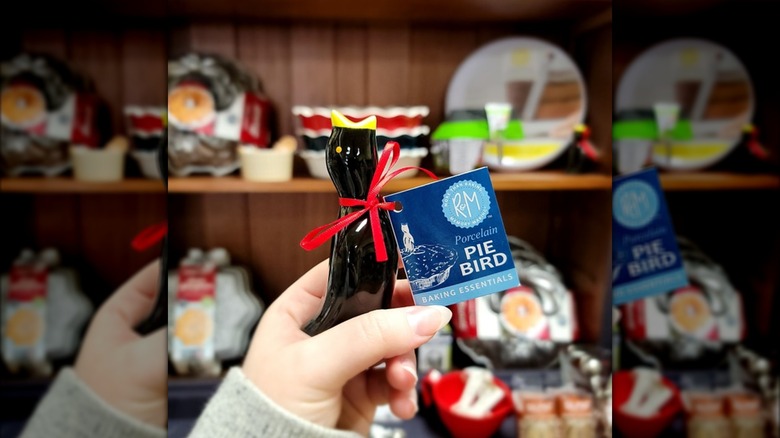
Pie birds (also known as pie chimneys, pie vents, pie funnels, and pie whistles) are designed to stay in your pie as it bakes, funneling steam from the hot filling up and out of the hollow shape, and into the oven. Yes, many of them are shaped like birds, although you can find them in several shapes and designs, and the steam typically comes out of a hole that's placed on the bird's beak. While they might not be completely necessary for keeping steam and excess moisture out of your pies, they do put the "fun" in functional, and look charming for presentation.
The idea for pie birds is largely believed to have come from Britain during the mid- to late-19th century when pastry chefs found it useful to place a cylinder tube or funnel in their fruit and meat pies to release steam. By the 1930s, they'd morphed primarily into ceramic bird shapes that people are familiar with today. Ironically, you still have to cut into the crust to make room for the bird.
How to use a pie bird
The most important thing to remember about pie birds is that they go into your pie before the filling does. Once you've lined your pie dish with the bottom crust, place your bird in the center, on top of the dough. Pour your pie filling around the bird and even it out. You can cut an "x" shape or small hole in the center of your top crust and slip this right over the bird so its head and beak poke through. You can press the dough around the bird so it seals. If your pie requires any pie crust washes or sugar topping, you can do these right before the pie goes into the oven.
If all goes well with your bird, your bottom crust should be fully baked, there shouldn't be any filling seeping out of the sides, and the top crust should stay upright and attractive. You don't necessarily need a pie bird for single-crust or lattice-crust pies, although feel free to use one if you just like the look of them.
Pie birds are fairly easy to find online, in kitchen stores, and maybe even in your grandparents' house with their other classic kitchen tools. Overall, they are affordable, but vintage and collectible ones can be costly. We found several shaped like birds, as well as other animals and characters, on eBay, asking hundreds of dollars.