

The Common Bologna Myth You Can Stop Believing
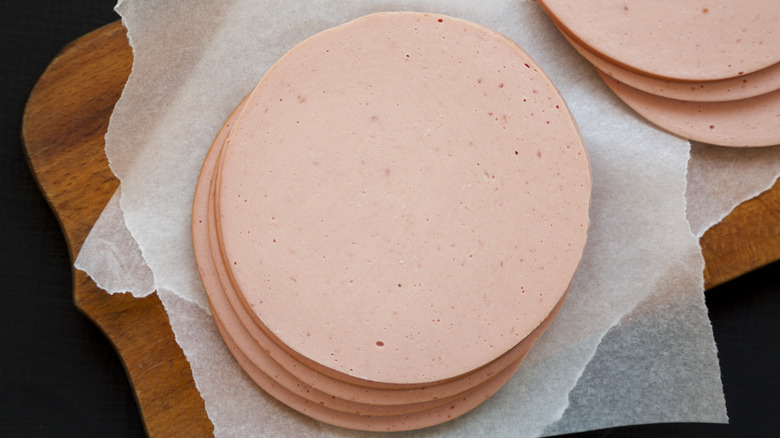
We all have different tastes, favorite cuisines, and foods we simply wouldn't want to live without. Sure, there are some things that seem to be universally lauded (like, perhaps, ice cream or pizza), but there are also those foodstuffs that are deeply polarizing, like good ol' bologna. You either love it or hate it, right? To those who find it repulsive, we can't help but wonder if part of that is because of the belief that bologna is nothing more than a frightening mixture of mystery meat and organs. The good news is that this claim is pretty much bogus. In fact, the lunchmeat that people love to hate is typically made with beef or pork (or a mix of the two), plus spices, curing agents, and preservatives.
All bologna must pass strict USDA guidelines, which include the mandates that bologna must be made of raw skeletal muscle from livestock, cannot contain more than 30% fat or 10% water, and may not include more than 3.5% of non-meat binders (like dried milk or grains). Now, this doesn't mean that bologna isn't highly processed, but there is usually nothing mysterious about the meat any particular brand uses. There are even versions made with turkey and chicken.
Bologna is actually a descendant of Italian mortadella from the city of Bologna in the north of the boot-shaped country. In fact, without the ancient sausage, we probably would never have the bologna we know. Many consider this cured meat a gourmet delight, with even Anthony Bourdain utilizing it in his favorite sandwich.
How exactly is bologna made?
Naturally, there are a lot of different versions of bologna, from mega-produced, lower-cost brands to those that are considered higher quality. The latter are often made with minimal ingredients. Regardless of the type, every American-made bologna must meet those vigorous standards listed above, which would make using "mystery meat" as an ingredient quite difficult for producers.
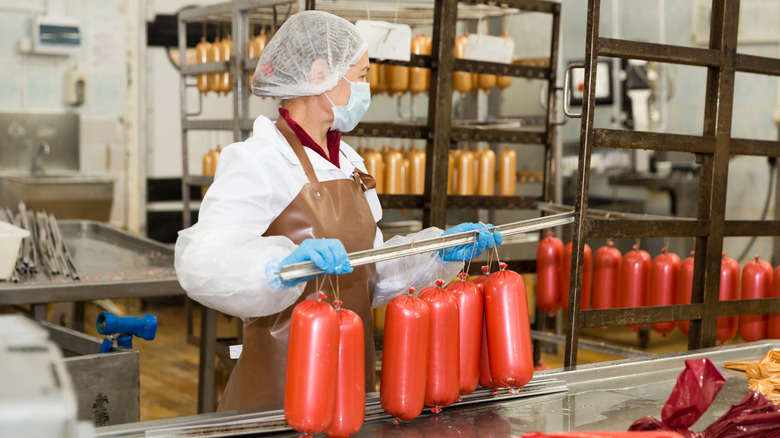
It starts with the meat, which itself also must meet USDA guidelines. After selection, the meat or meats are trimmed and prepped before being finely ground. Water and fat are added, and the mixture is then emulsified, which transforms it into a very fine, silky paste. At this point, other flavorings are added along with any preservatives that are being included. To get that classic bologna flavor that so many of us are familiar with, producers typically include salt, pepper, coriander, nutmeg, allspice, celery powder, myrtle berry, and sometimes corn syrup into their flavoring ingredient list.
This combination is then pumped into casings and formed into round logs, which are cooked and sometimes smoked. Finally, the bologna is cooled, sliced, and packaged. And that's basically what bologna is, a concoction of meats and flavorings, which essentially makes it just like a hot dog, only a lot bigger and something you can transform into a fried bologna sandwich. Bologna haters, even if you haven't tried this food yet, it just might make you see your least-favorite lunch meat in a whole new light.