

The 2 Ingredients That Give American Mustard Its Iconic Yellow Color
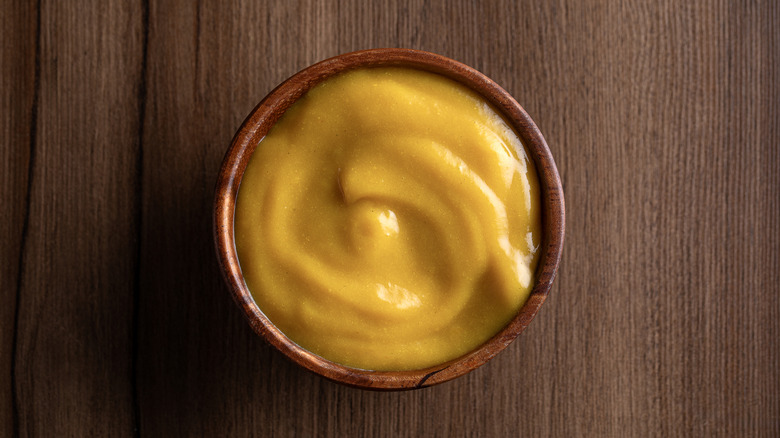
Mustard is one of the most common hot dog and hamburger toppings out there, and one of America's favorite types is the classic yellow mustard, sometimes appropriately known as American mustard. While it's true that a lot of brightly-colored American foods use artificial dyes to get their bright hues, that actually isn't the case for yellow mustard.
Rather than synthetic dyes like Yellow 5 or 6, yellow mustard traditionally gets its vibrant color from a combination of ground yellow mustard seeds and turmeric, a golden orange spice common in some Asian cuisines and many yellow-colored foods around the world.
Mustard seeds come in a variety of colors, with lighter colors having a less intense flavor, and the yellow seeds that go into yellow mustard are among the brightest. Also called white mustard seeds, they are actually closer to beige than either named color. Most of the distinctive hue comes from turmeric, whose intense colors make for both an excellent natural food dye and an extremely stubborn stain to remove from fabrics.
What yellow mustard can and cannot do

Mustard snobs may turn their noses up at it, but yellow mustard really is one of the mustard varieties you should get to know. Beyond just burgers, hot dogs, and other sandwiches, American mustard is a great choice for a barbecue rub, meat glaze, deviled eggs, Chicago-style Bloody Marys, homemade dips, and more.
Despite its versatility, though, yellow mustard can't do everything its more flavorful cousins can. You may want to think twice before using yellow mustard in a salad vinaigrette, even though it's often recommended online. The vinegary flavor may not match well with the vinegar already in the dressing-to-be. But yellow mustard also has less of a seed coating called mucilage than other mustards, a coating which helps blend oils and vinegars in salad dressings.
Another problem common to mustards of any type is that, in some households, an open container might hang around for a while before it's fully used. But thankfully, yellow mustard has a decently long shelf life of about 1 year after opening, meaning there's plenty of time for delicious sandwiches, barbecues, and cocktails through the seasons before it needs to be replaced.