

The Decision Anthony Bourdain Made That Changed Everything For His Career
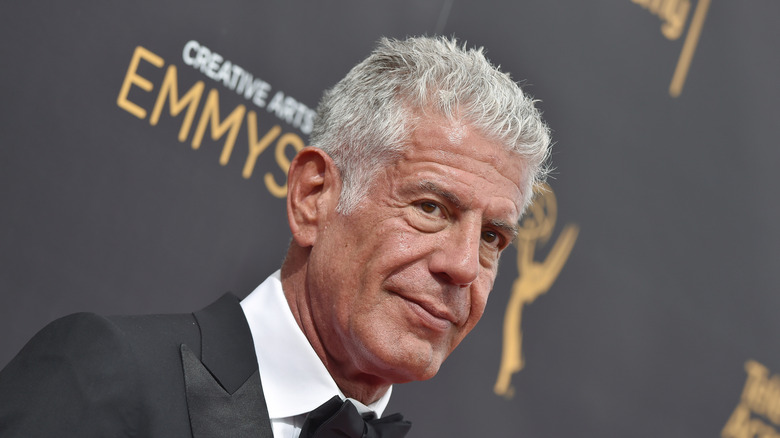
Anthony Bourdain didn't start out with the goal of visiting Iran, going upriver in the Congo, or sharing a bowl of bún chả in Vietnam with a sitting president. When he started washing dishes in Provincetown, Massachusetts, his only goal was to make rent. His life-altering New Yorker essay that launched his career was just meant to give restaurant workers a laugh. When he started making TV, he saw it as a way to fund his writing. Then, when he was serious about making good television, he made one decision that transformed him from a food personality to a cultural journalist: He left the Travel Channel and moved to CNN.
The intention behind the move was to open up the world to Bourdain and his crew. While the Travel Channel allowed him to go to Haiti after the earthquake, parts of the world were still off limits. What made Bourdain aware of his boundaries with the channel was the 2006 Beirut episode of "No Reservations." When war broke out, and the U.S. Marines came to extract him, the first person he took note of was CNN correspondent Barbara Starr coming into the country. There were places Bourdain wanted to go but couldn't find a way in, and, as he told Ad Week in 2012, "CNN has the infrastructure and inclination to make those places doable."
What This Decision Allowed Bourdain to Do
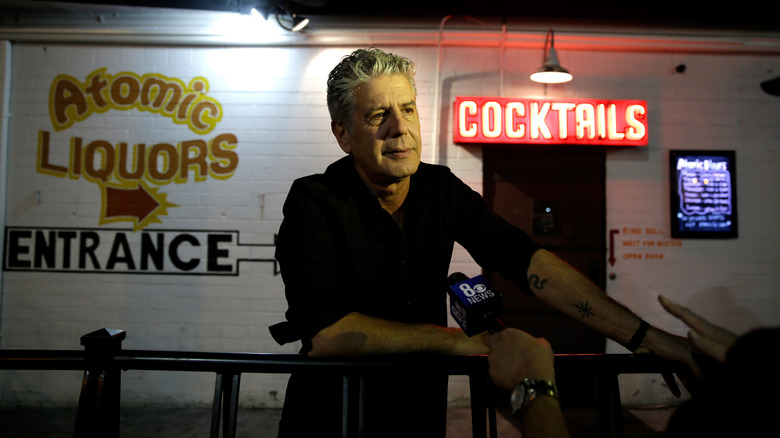
In the Adweek interview, Bourdain listed three places he wanted to visit once he had the resources of CNN: The Congo, Israel, and Myanmar. His first episode of "Parts Unknown" on CNN was in Myanmar, which had just begun allowing foreigners in. He also got to follow up on a lifelong dream of living out "Heart of Darkness" in the Congo in that first season. The chef still had episodes in gastronomic capitals like Lyon, France, that explored amazing food without increased concerns for safety or using the moments in the kitchen to get to know misrepresented people (like he did with his episode visiting Palestinian homes in Jerusalem).
Bourdain credited CNN's resources for making both his Libya and Iran episodes possible. The team found the post-revolution Libya episode among their most difficult shoots. The Iran episode, while dangerous to shoot, introduced him to some of the friendliest people he ever met. The network also gave him latitude to do things his way. When he returned to one of his favorite food cities in the world, Tokyo, he focused on the darker underbelly of the city, rarely seen in travel show portrayals.