

Keep Cut Watermelon Fresh For A Week With This Type Of Food Container
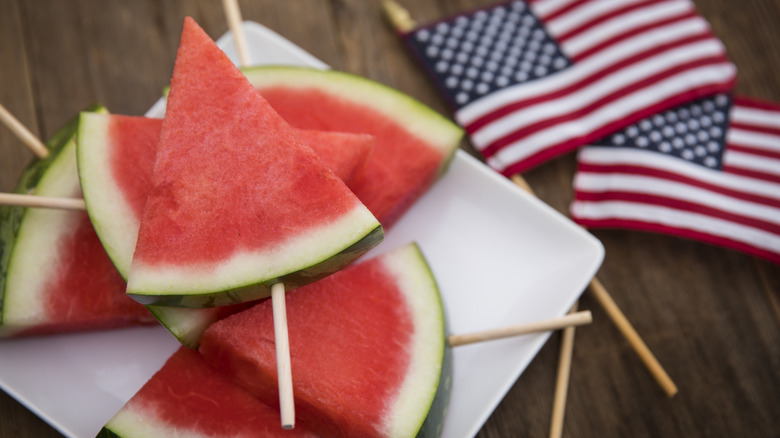
Fruit is one of summer's great pleasures, with crisp, juicy watermelon rising to the top of the list of must-eat on repeat during these fleeting months. However, anyone who has ever cut into one of these green bowling ball-shaped melons knows that once you make that first incision, the clock on its freshness starts its countdown. It doesn't take long for those wedges and chunks of red flesh to lose their sweet juices, and in turn, their rigid structure. So, what is the best contraption to store that perfectly picked watermelon in? Believe it or not, a simple glass container with a lid that keeps it airtight can work longevity magic for cut watermelon.
In fact, this type of container can keep watermelon fresh for up to 8 days. Why an airtight container? Simply put, air is cut watermelon's kryptonite. Once you slice into that rind, you are compromising the barrier that keeps oxygen at bay, and the fruit starts decomposing. This rapidly leads to the mushy texture that makes it unappetizing. But keeping the air out is only part of the equation.
Temperature and cut matter
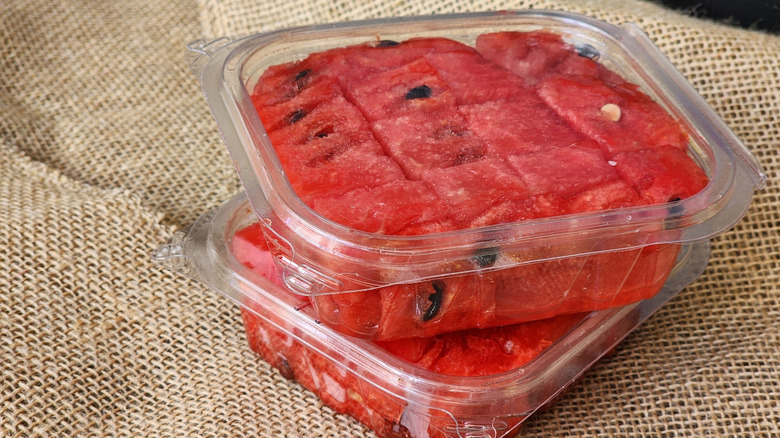
Cut watermelon of all varieties also needs to be immediately refrigerated if you aren't using it to make a boozy watermelon salad or transforming those wedges into a fun watermelon pizza. But before you stick the tip of the knife into the rind, the USDA recommends that you store the watermelon at 41 degrees Fahrenheit or below for up to 24 hours. Starting with a pre-chilled fruit will also help keep this melon fresh longer, slowing bacterial growth.
Of course, how you cut your melon is also going to factor into its shelf life. That rind has a superpower. If you cut your watermelon into halves, quarters, or into wedges and leave the rind intact, it will extend the watermelon's freshness. But if you chop it into cubes, this will speed up the spoilage process.
If you don't own an airtight container and don't want to purchase one, you can use a Ziplock bag. Just make certain to push all of the air out before you close it. You can also place the slices on a plate and cover them tightly with plastic wrap. The key is to make certain there is not an opportunity for air exposure.