

Frozen Vs Canned Corn: Is One Better Than The Other?
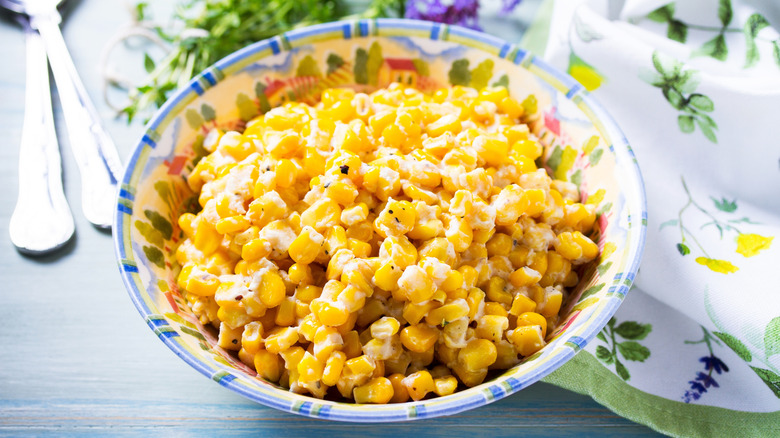
It might sound counterintuitive, but frozen and canned vegetables can be more nutritious than their fresh counterparts due to the way they're harvested and processed. The speedy freezing and canning process reduces their exposure to light and air, which preserves their nutrients and prevents spoilage. But if you're wondering whether frozen corn is better than canned, the answer really lies in what you're cooking.
While you can freeze corn on the cob, it's much easier to grab a ready-prepped bag from the freezer aisle at the grocery store. Plus, the frozen stuff can actually taste better. The reason frozen corn is often so much sweeter than fresh is that it's flash frozen on the day it's picked. This move locks in the natural sugars, guaranteeing that each kernel tastes as good as the day it was harvested. However, the overall quality of the corn also depends on the variety and the amount of naturally occurring sugar content inside.
Frozen corn is ideal for scattering into bubbling chili, stews, or casseroles that are bound for the oven or dumping into a hot skillet to make charred corn. Each kernel heats through at speed but retains its toothsome texture, which lends dishes plenty of bite, vibrancy, and dietary fiber. That said, it can be left out to thaw first and stirred into corn salads if preferred. Alternatively, it can be steamed, boiled, or even microwaved if you want to serve it as a simple side with some protein and potatoes.
Canned corn is ready-to-eat but softer-textured
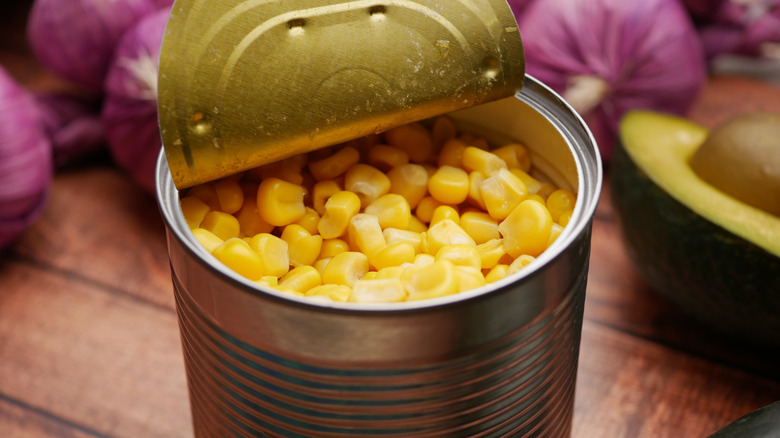
Meanwhile, canned corn can be eaten immediately without any prep. This means you can open a can and dump it onto a plate to act as a quick veggie for a fussy toddler, scatter it into a burrito, incorporate it into a salad, or mix it into a fresh salsa in seconds. Moreover, canned corn has a longer shelf life than frozen corn, which means it can sit in your pantry indefinitely as long as the can is free from deep dents, isn't swollen, or leaking. However, the texture of canned corn is much softer and squishier than frozen. This means it takes longer to char and take on a caramelized flavor if you're making a dish like Mexican esquites. If you're after a firmer mouthfeel, opt for the frozen stuff to make the job easier.
One of the mistakes people make with canned corn is overcooking it and adding it to dishes far too early. As it's blanched before it's canned, it only needs to be warmed through rather than simmered or boiled in stews. The soft texture of canned corn also makes it incredible for making creamed corn, which is supposed to be yielding, velvety, and rich by nature.