

7 Store-Bought Pizza Dough Brands, Ranked Worst To Best
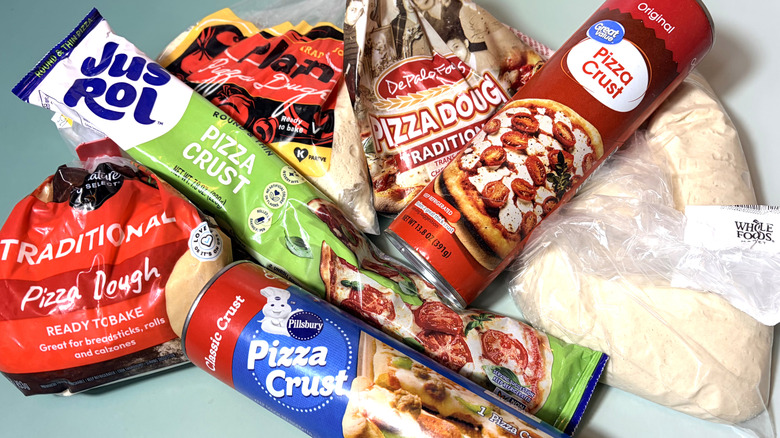
We all love a homemade pizza night, but there's not always time to make your own crust from scratch (and let's face it, sometimes you just don't want to put in that effort). There's no need to open a delivery app, though, thanks to the convenience of store-bought pizza dough. When you want a pizza that looks and tastes homemade, there are plenty of pre-made pizza dough brands out there that offer the perfect shortcut.
I selected seven pizza dough brands from my local grocery stores in order to test them out and find the best one. Points were scored for the dough being easy to work with and shape, for cooking evenly, and, of course, for taste and texture. Price and value also came into play. Once I had tasted each of these doughs, both plain and with traditional toppings, I ranked them against one another. Here they are, from worst to best.
7. Great Value
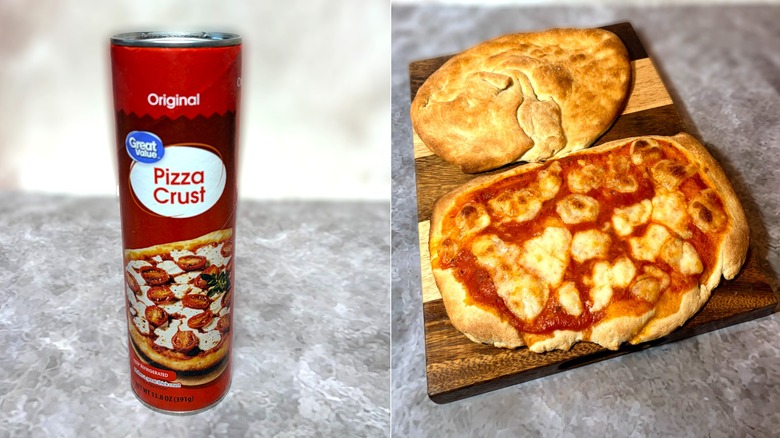
Walmart's house brand, Great Value, can often be a pleasant surprise with its quality and affordability. Unfortunately, this wasn't the case with pizza crust. The dough comes rolled up in a can, only requiring you to pop it open and unroll it, then stretch it into your desired shape and size. This proved to be the first hurdle. As you can see from the photo, the dough was difficult to work with. As I tried to stretch it to the edges of my pizza steel, it split and tore, and no amount of kneading would put it back together.
It did bake to a nice, toasty golden brown, but the interior of the crust was on the dense side with a close crumb and none of the layers and air bubbles I typically look for in a pizza base. The flavor is quite sweet, lacking any sort of savoriness, saltiness, or tang. As for the price, it's around $3 for 13.8 ounces of crust. There are much better options on this list that will give you a lot more for your money.
6. Pillsbury
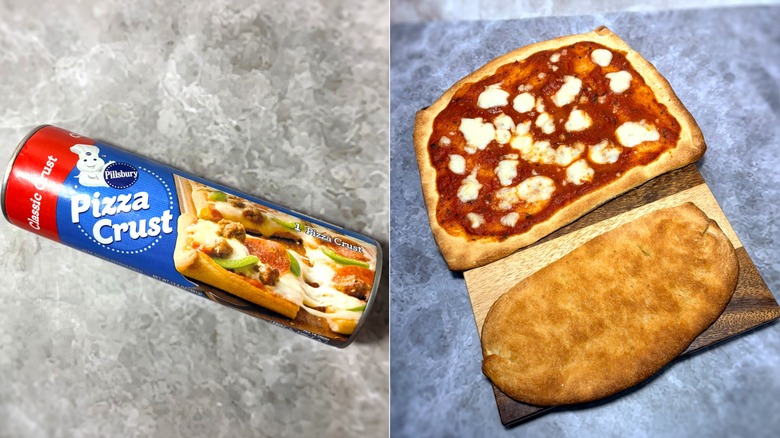
Scroll through the photos of all the pizzas on this list, and you'll probably notice that this Pillsbury pizza is the odd one out. While the plain version cooked well, the topped pizza was the only one in this ranking that came out looking unfinished. I attribute this to the baking method from the package. This was the only one that required a pre-bake, followed by a topped bake at 400 F, which is 50 to 100 degrees lower than any of the other pizzas' temperature recommendations. Thanks to that low temp and short baking time for the toppings, the cheese never fully melted or blistered, the sauce never melded with the crust, and the bottom of the crust was limp and floppy.
The interior had a lovely fluffy texture, but it was more like a fluffy biscuit than an airy pizza crust. There were no bubbles or air pockets to be found. The flavor was slightly sweet but mellow, not unpleasant but nothing remarkable. Perhaps this crust would be more successful with some tweaks to the cooking method and temperature, but I'm not going to go out of my way to find out. Pillsbury's crust was just under $4 for a 13.8-ounce can, making it the second-most expensive option per ounce, and you don't really get what you pay for here.
5. JusRol
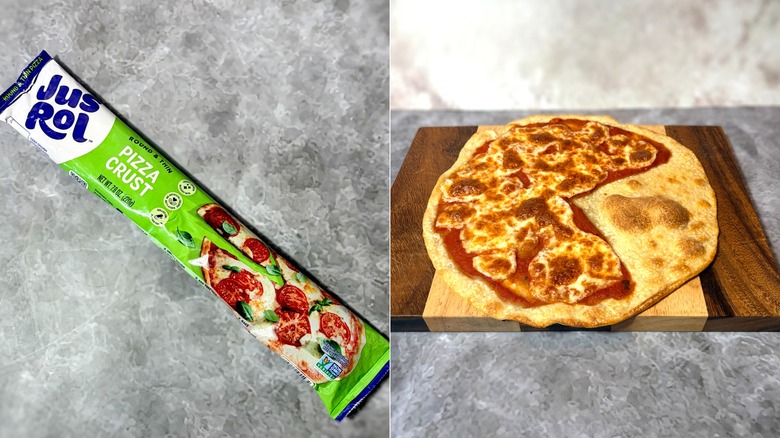
I was unfamiliar with JusRol until I took on this project, and while the brand's pizza crust was not my favorite, it has some advantages over the others. Unlike the bags of dough, it already comes shaped and rolled with a layer of parchment paper, and unlike the canned dough sheets, it requires no separating or stretching. It's hard to compare JusRol with the other doughs because it's so different — it's very thin, and its texture reminded me more of a wonton wrapper than a pizza crust.
If you love a thin-crust pizza and don't want to spend all the time and effort to tame a springy dough, this crust is for you. It felt flat and lifeless when I unrolled it into my pizza steel, but it did bake up with some great airy layers and bubbles. Despite its thinness, it held strong under the toppings, though big slices were a little unwieldy with the crust's slightly floppy texture. I did find this crust to have too much chew, which surprised me given the airiness inside. That toughness and the fact that this is the most expensive crust per ounce ($3.43 for 7.8 ounces) are why it's not higher. Those looking for an easy, quick thin crust might not mind shelling out some extra cash for convenience.
4. Whole Foods
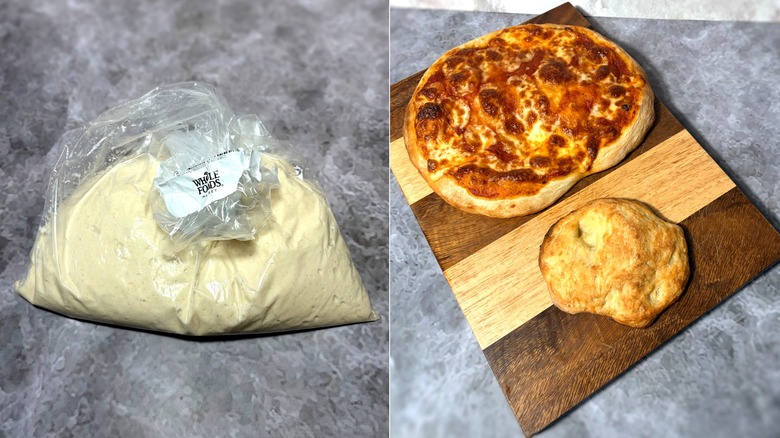
There's a lot to love about Whole Foods' pre-made pizza dough. It boasts the simplest list of ingredients, including organic flour and olive oil. This goes along with the store's commitment to eliminating problematic additives from the food it sells, and of all the crusts, this one definitely gave me the most "homemade" vibe. It's also a good buy, at around $5 for 22 ounces. There's enough here to make several pizzas, so if you've got a lot of hungry folks to feed, this is a great option.
Of all the doughs, Whole Foods gave me the hardest time. It comes with no directions, so I did some digging online to see what people recommended. I ended up leaving two balls of dough at room temperature for an hour under a damp towel, but they proved incredibly resistant to stretching and shaping. After another hour, it was a bit easier, but still a challenge. Not wanting to spend all night fighting with gluten, I eventually gave up and went with the shapes I had. This resulted in the thickest crust by far, but I can't deny that it was delicious — malty with tinges of sourness and yeasty sweetness, and a puffy interior riddled with air pockets and flaky layers. If I could figure out how to easily tame this dough, it would be higher up. As is, for the effort needed, I might as well make my own from scratch.
3. Trader Joe's
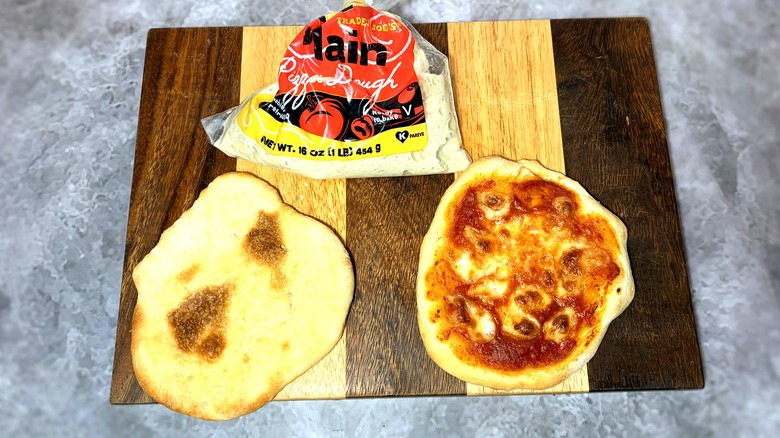
I'm no stranger to Trader Joe's pizza dough. I pick up a bag of it just about every visit. It's the cheapest option on this list, costing me only $1.69 for 16 ounces. There are so few things you can buy at any grocery store these days for under two bucks, so it's hard to resist. While this brand will probably remain my everyday go-to, it takes the bronze medal in this ranking, not because there's anything particularly objectionable about it. There were just a few other brands that outperformed it, nudging it down the ladder.
The instructions on Trader Joe's plain pizza dough package say to either stretch it or use a rolling pin. Since I stretched all the others, I opted to use that technique. Though I've been told by some pizza pros in the past that a rolling pin is an absolute no-no, it is a method that some people embrace to get a thin, uniform crust. Trader Joe's pizza dough is easy to work with by hand, especially at room temperature, holding its shape nicely with a little effort. It doesn't have quite the complexity of flavor that some of the others do, though there's a pleasant tang to it, but it tastes just fine and bakes to a golden hue. This is a great dough to have around for when you get the urge to whip up a quick, cheap, easy pie.
2. Signature Select
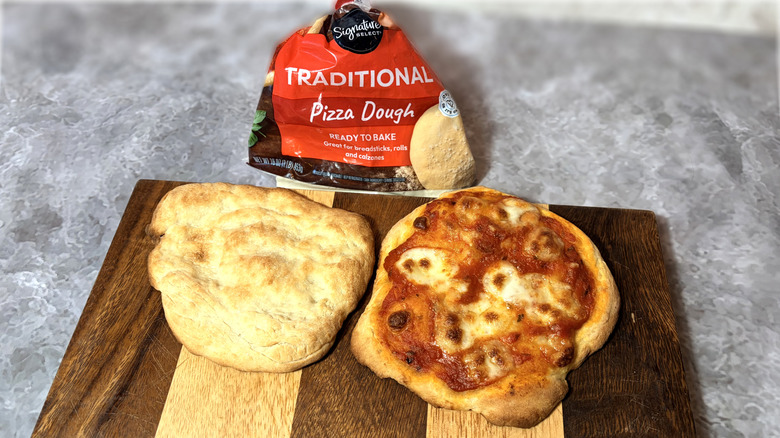
Deciding first and second place turned out to be quite a challenge. Both doughs in these spots have the exact same ingredient list, cost exactly the same ($2.99 for 16 ounces), and baked up nearly identically. I thought that maybe these two were just the same dough with different branding, but no, they are made by completely separate companies, as far as I can tell. Since the competition was so neck-and-neck, I ended up doing a second round of testing with just these two brands, starting with this one, the silver medalist: Signature Select.
What I loved about the Signature Select crust was its perfectly evenly-cooked bottom, a lattice of gold and brown that showed remarkable strength and pliability. The edges of the crust puffed up and browned while still remaining soft and chewy. Air pockets throughout the interior offered a lightness in contrast to the crispy, chewy exterior. What landed this in second place was its flavor — it was just a touch too far on the sweet side, and just on the edge of bland. That said, it's a fantastic store-bought crust option, fairly easy to work with, and a good value.
1. DePalo Foods
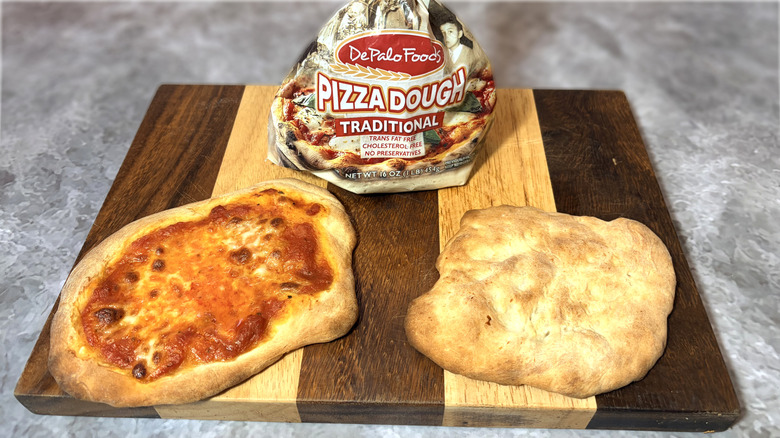
In the end, though Signature Select put up an admirable fight, DePalo Foods' traditional pizza dough ended up on top. It shares many of the qualities with our second-place finisher, particularly in texture: layered and airy inside, evenly browned along the bottom, puffy and crispy along the edges. I didn't have too much of a hard time shaping it (as you have surely noticed by now, my pizza-shaping skills fall into the "rustic" category, but that's more my ineptitude than any fault of the dough's). The DePalo crust provided a supple yet strong base that the sauce and cheese basically melted into, creating a pizza that was not a collection of three elements, but one cohesive whole.
Flavor-wise, this dough had a perfect balance of sweet, salty, and malty, with a slight fermented tang. Whatever they're doing over there at DePalo Foods, they've got pizza dough on lock. I look forward to trying the other varieties that this brand offers, as well as trying my hand at the brand's recipes for calzones and garlic knots. It's a testament to the quality and deliciousness of DePalo's pizza dough that even after tasting this much crust, I'm excited to have more.
Methodology
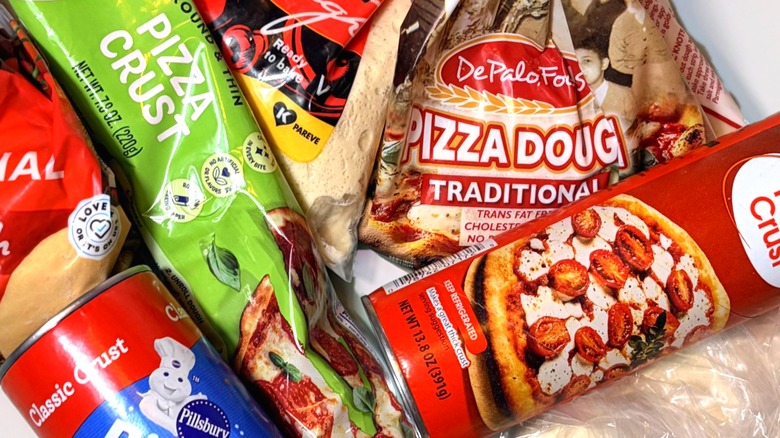
I checked a variety of my local grocery stores and found these seven ready-to-bake pizza dough options, omitting anything from the freezer section, pre-baked, gluten-free, or flavored. To prepare them, I followed the recommended directions on each package. Each crust was made two ways: simply topped with olive oil and sea salt, and traditionally topped with tomato sauce and mozzarella cheese. While pizza comes in nearly endless varieties around the world, I tried to keep all of these pizzas as similar as possible in order to judge them fairly.
First, I tasted the plain cooked crust to get a sense of its flavor and texture. Then I tasted the traditional pizza. I looked for the crust to be cooked all the way through with no raw or doughy spots, a golden brown bottom, and browned but not burnt edges. I noted each crust's overall flavor and texture, and how well it held up under sauce and toppings. In addition to these criteria, I also factored in value.