

9 Tips For Smoking Meats At Home, According To Pitmasters
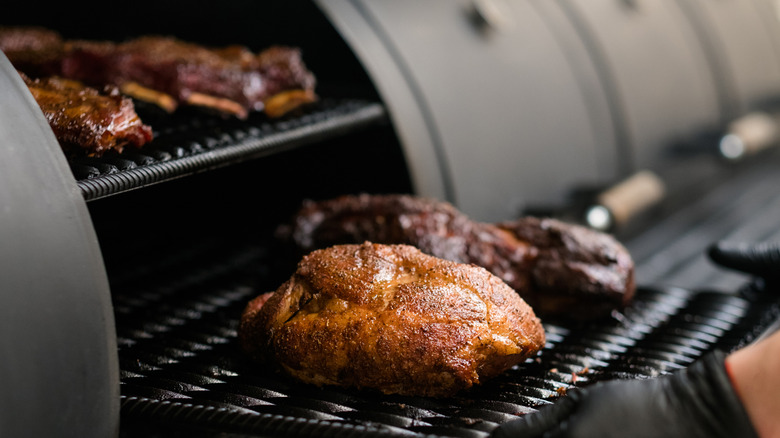
Is there anything more synonymous with an American summer than BBQ? We're not talking about hot dogs and burgers, but the smoke-infused ribs and briskets people line up for hours for. The low-and-slow cooking of BBQ gives us tender, smoky, and flavorful meats that are hard to resist. If this summer is the time you plan to finally try your hand at smoking some meat yourself, we've got your back with some tips from the professional pitmasters themselves.
To help you get started the right way, we interviewed Chef Winnie Yee from Smoke Queen BBQ in Garden Grove, California, and Sam Jones from Sam Jones BBQ in Raleigh, North Carolina. Winnie Yee is the first female Asian American BBQ cookbook author with her new book, "Chinese-American Barbecue." Sam Jones BBQ is known for the "whole hog" regional barbecue style of North Carolina. Whether you're attempting to smoke some pork shoulder, chicken, or going big with Texas-style brisket, here are nine tips from our expert pitmasters on how to smoke meats at home.
1. Give yourself plenty of time
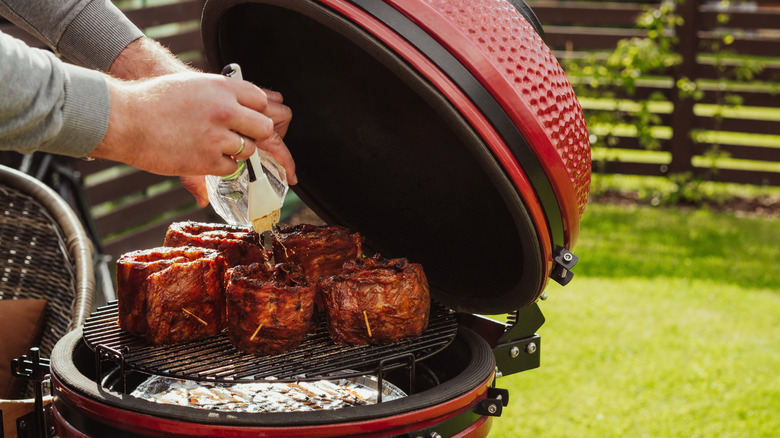
Sam Jones says that the biggest mistake beginners make when smoking meat is not giving themselves enough time. Smoking meat takes a while, especially if you're smoking beef. For example, brisket usually needs to smoke for 1.5 hours for each pound of meat. You should plan for more than enough time to avoid panicking if you make a mistake.
"It's not like grilling hamburgers or cooking hot dogs, you know, where, if you mess it up, you can just throw it away and put another one on," says Jones. Jones notes that when smoking meats, at some point "it will hit a little stall where, you know, it just hangs in that ... 155 or 160 [degrees] range." He says that if you don't allow yourself plenty of time, you may panic at this point and increase the temperature too high, and end up overcooking the meat.
2. If you're looking, you're not cooking
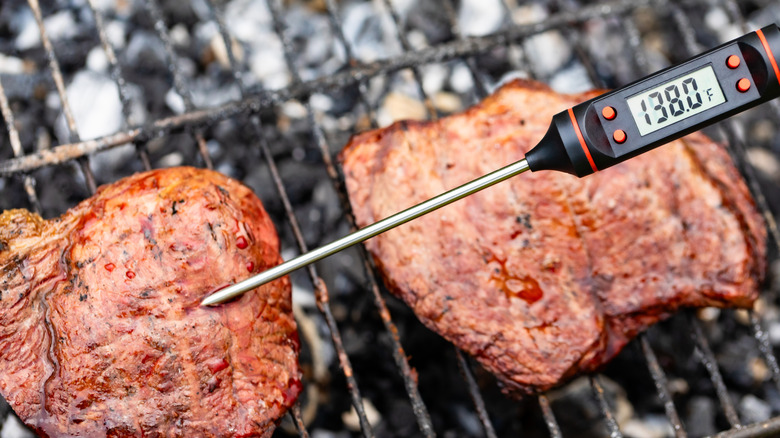
As a beginner, you might have the urge to keep checking on your meat while it's smoking to check how far it is from being done. However, as Sam Jones says, "if you're looking, you're not cooking." If you keep opening the smoker to check on the meat, the temperature in the smoker will drop, and your meat won't be cooking as it should.
If you do need to check on the meat, however, Jones recommends using a meat thermometer so you can tell the internal temperature quickly and close the smoker as soon as you can. It's important to make sure your meat thermometer is accurate, which may mean calibrating it before you barbecue. Of course, the more you've smoked meats, the better idea you will have of how long these things take, so you won't need to check on it quite as often. As they say, practice makes perfect.
3. Start with meats and cuts that are easier for beginners
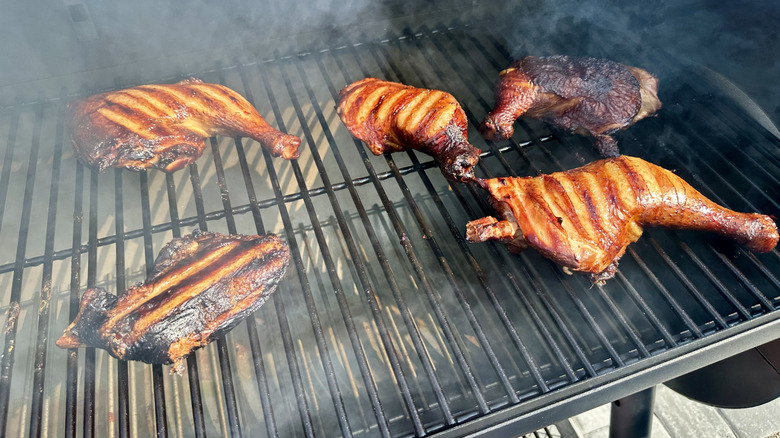
There's a first time for everything, but if you're just starting out smoking meat at home, you might want to choose smoking something easier and more forgiving. Winnie Yee recommends starting out with meats like chicken, pork butts, or even pork belly. "Pork belly is also very forgiving because of the layers of alternating layers of meat and fat," says Yee, noting that because of the fat content of cuts like pork butts or pork belly, it's very hard to dry out.
On the other hand, if you really want to get into it, pulled pork is the perfect entry point into the world of barbecue. Sam Jones recommends smoking pork shoulder, which you can make into pulled pork. "You've got to have something of some size and density to even get your feet wet," says Jones. He says a tougher cut is better suited to smoking low and slow, and pork shoulder would be good for practice.
4. You can finish cooking in the oven
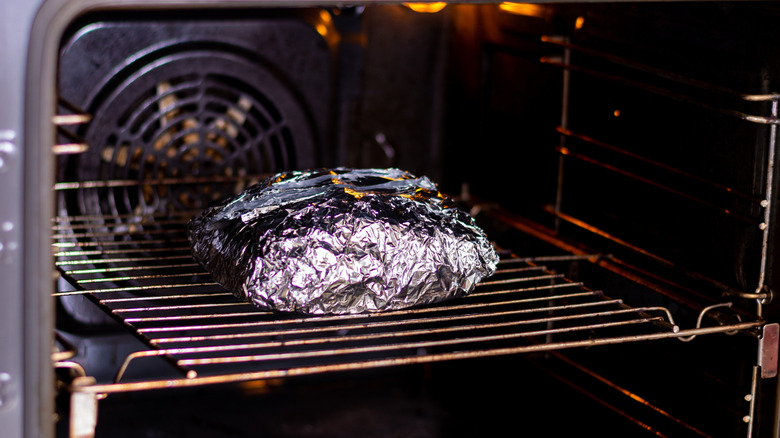
As a home cook, you can make things easier on yourself by finishing the meat in the oven. "Once you smoke it, there's going to be a point where the bark has already formed, flavor, color's there, but the meat is still tough," says Winnie Yee. This is the point where Yee says you can wrap the meat in foil and finish cooking it in the oven.
After smoking it for a period of time, Yee says the smoke flavor is already there and will remain even if you finish it in the oven instead of in the smoker. When you're dealing with a smoker, you have to keep feeding the smoker with wood to keep the temperature up. With the oven, you can set the precise temperature and can leave it cooking for a certain amount of time while you get other things done.
5. You can inject a liquid to keep the meat juicy
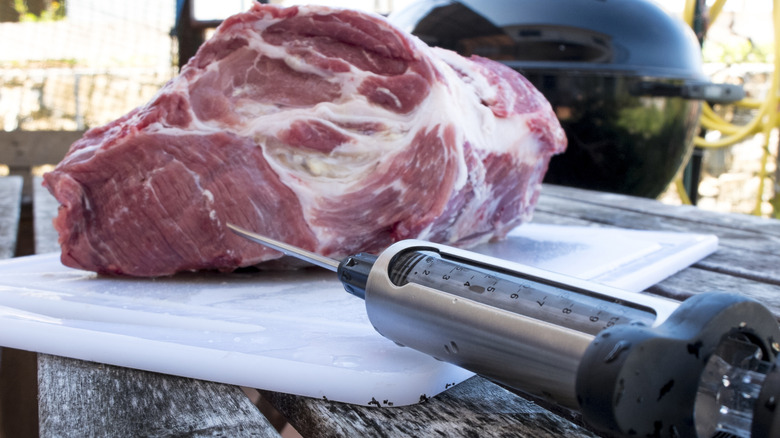
For juicier meat, one trick is to inject liquid into the meat before smoking it. According to Sam Jones, this is usually done for competition BBQ. But home cooks can use this technique, too. Winnie Yee says that if you want to add extra flavor to a very thick cut of meat, you can inject liquid (like seasoning, broth, or stock) to add salinity. After all, marinating or smoking the meat only adds flavor to the outside, while the interior remains unseasoned.
As an example, Yee recommends injecting beef with some beef bouillon. "I would take beef bouillon, add half the amount of water that is called out on the recipe of the box, and use that to inject into the meat," Yee explains. You can also boil the stock first with some herbs to introduce herb flavors. As a reminder, Yee adds, "adding moisture to the meat will extend the cook time."
6. You need time to rest the meat
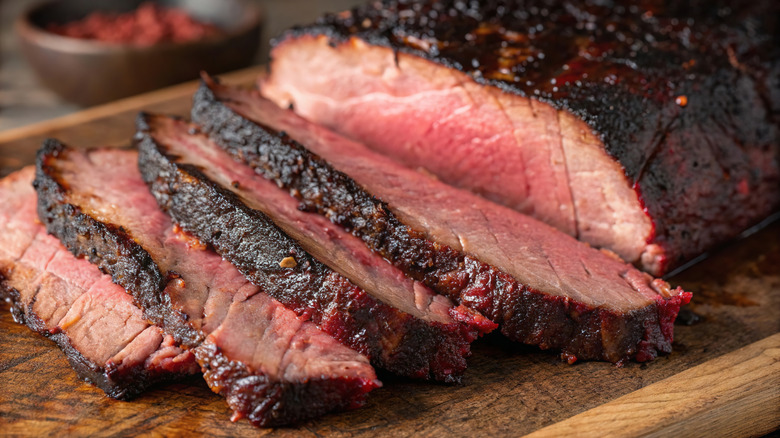
Just like steak, you should rest the meat after cooking BBQ in the smoker. The reason to rest meat is that right after cooking, the juices are concentrated in the center. Resting it for some time away from the heat allows time for the juices to redistribute, which results in a more tender and juicy piece of meat.
Winnie Yee's rule of thumb is to rest it for about half the time that it was cooking in the smoker. "So, for example, a brisket was in the smoker or cooking for 12 hours, I like to give it like at least four to six hour rest," says Yee. She suggests wrapping it and placing it in an insulated container to keep it warm.
Sam Jones likes to wrap the meat in foil while it's resting to keep all the juices and fat renderings in. At the end, you can even take the juices that have dripped onto the foil and pour them back onto the meat.
7. How to achieve that perfect bark
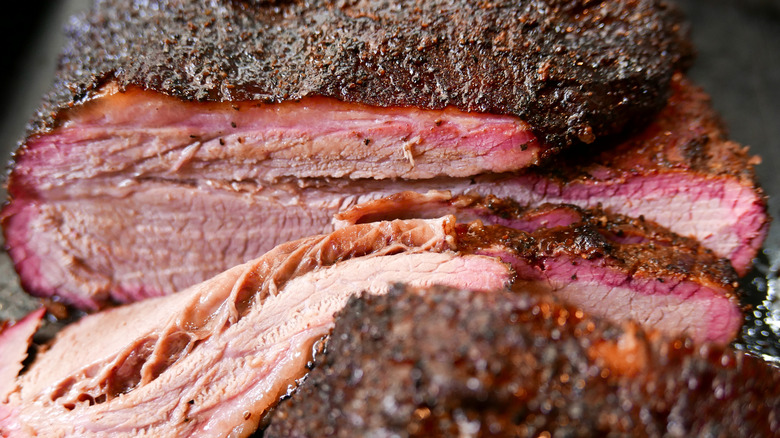
The "bark" is often people's favorite part of BBQ'd meats. The bark is the dark crust that forms around the outer part of the meat, like brisket, as you smoke it, and it is often the most flavorful part.
According to Sam Jones, you need some sort of BBQ rub if you want to achieve that mahogany color you typically see on barbecued meats. "The smoke is going to only provide so much color," says Jones. Jones cautions that all BBQ rubs have some sugar in them, so there is a chance of burning and overcooking the exterior if the heat is too high.
Winnie Yee notes that you don't want to have another piece of meat sitting on the rack directly above, as it will drip moisture onto the meat and keep it wet. If the meat is wet from moisture from another piece of meat, the bark won't form properly. "The whole point is you want it to dry out," Yee says. According to Yee, drying it out would make the meat sweat out the natural oils, and "you want that oil to get that glistening bark."
8. Make sure the meat cooks evenly
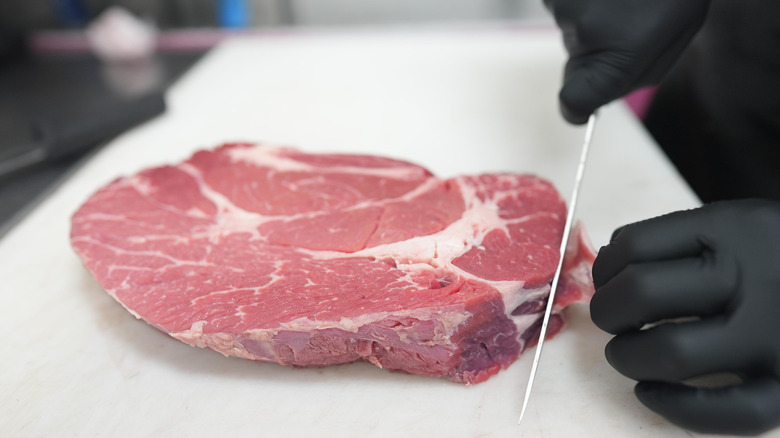
Chef Winnie Yee recommends cuts of meat with rounded corners for more even cooking. You don't want any frills or edges of the meat hanging out "because that will eventually just burn and turn into jerky," says Yee. She notes that you'd want "a solid center of mass that is as aerodynamic as possible." At her restaurant, Yee trims the brisket very aggressively to round out the corners while still leaving some fat on it.
Another trick Yee recommends is to spritz meat that's cooking too quickly with a solution, like water or apple cider vinegar. "You spritz only parts of it that looks like it's cooking faster than the other part," says Yee. By spritzing it, you cool down that part of the meat to prevent it from overcooking. For example, if one part is closer to the heat source and cooking faster than the other, you can spritz that part, then rotate the meat.
9. Make sure the smoker you're using is up for the task
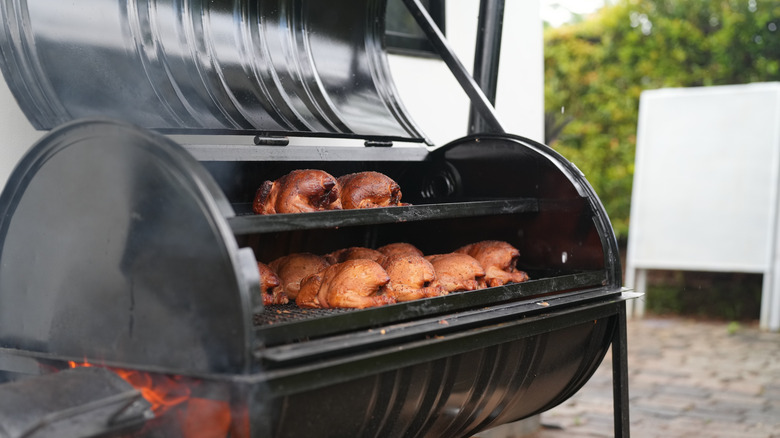
Another thing Sam Jones wants home smokers to remember is to make sure you have the right-sized smoker for what you're trying to cook. "You're not going to be able to take a grill that you're normally cooking hot dogs and hamburgers on and cook a pork shoulder on," says Jones. The smoker needs to have enough depth so that "you're not putting so much radiant heat that close to the meat. There's a difference in 225 degrees, you know, in something that's ... 30 inches deep. And 225 degrees and something that's 12 inches deep."
There are many different types of smokers out there, from wood smokers to electric smokers, with different configurations, such as an offset smoker. When trying to figure out what kind of smoker to invest in, you should consider what you're trying to do. The rule of thumb is to have at least 1 square inch of grill grate space for each pound of meat.