

Don't Let Your Outdoor Grill Rust: Choose This Cover Material For The Most Protection
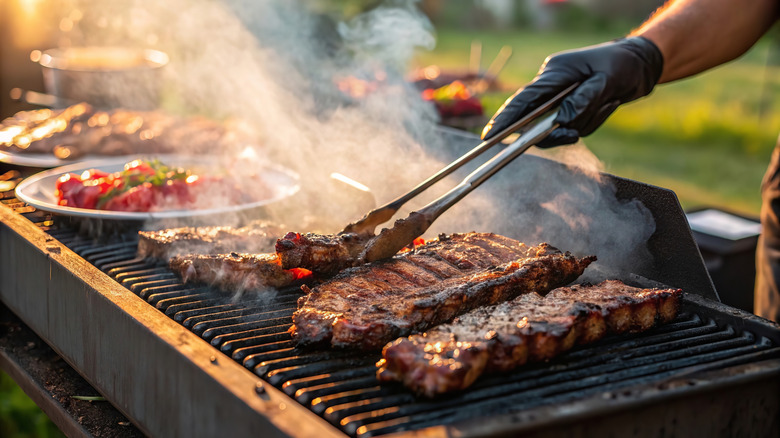
Investing in a premium outdoor grill might put a temporary dent in your savings, but it's worth it for all those tender steaks, flame-grilled burgers, and caramelized sausages you'll be able to enjoy with the family in the backyard. During the summer months, you'll likely be using your grill regularly and cleaning it consistently. However, during the colder season, you'll need to wrap it up well under a proper cover to prevent rust and protect your newest culinary asset from damage. In this case, it's best to select a cover that's made with a durable polyester that can withstand the changing weather and safeguard your beloved grill from corrosion.
Over time, moisture from rain, sleet, and snow can cause a grill to develop patches of rust, which can corrode the metal grates and even thin them down if left unchecked. Rust can also trap grease and residue, causing any food that's placed on top to stick. Of course, a clean grill is essential to get an immediate sizzle – any unwanted substances on the surface will hamper your steaks and meats from searing properly. Covering your grill with a proper cover made of tightly woven polyester that has strong stitching at the seams and a heavy gauge will prevent rust from developing. Both durable and weather-resistant, polyester is an excellent choice because it sits somewhere in the middle between a canvas option (more expensive) and a vinyl alternative (cheaper but more likely to tear and develop holes).
Polyester grill covers should be weighty, have secure fastenings, and air vents
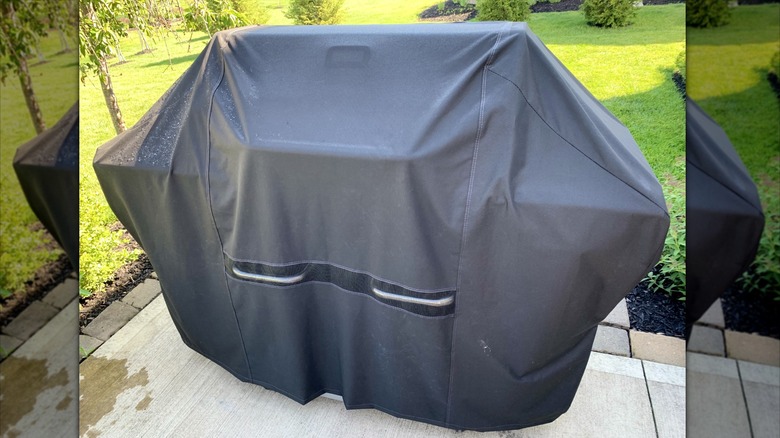
Aside from the material, a quality grill cover should have secure fastenings that completely encase the entire appliance. This is vital to preventing unwanted mildew and rust, but it also impedes any critters and creepy crawlies from making a home for themselves inside during the winter months. Covers with elastic hems will safeguard the grill legs and prevent uplift from the wind, too. That said, a premium cover should include air vents to allow any trapped moisture to escape and thereby curb the risk of rust. However, it's the quality and thickness of the material that is the most important feature — a high-denier polyester cover won't tear on corners, become cracked, or lose its density over time. While the color may fade under the sun, it should remain fit for the job for an extended period, so it's worth making an investment in a higher-quality material versus a thinner option made of vinyl.
If your grill has been poorly protected and has since become a victim of rust, you'll need to clean it first before replacing it with a new, polyester cover. The best way to clean rusty grill grates is to coat them in a mixture of dishwashing detergent and lemon juice before scrubbing them with a brush. For stubborn areas, allow the mixture to remain on the grates overnight. You should be cleaning your grill after every use (give it an extra deep clean over the summer when used more regularly).